Mitigating conflicts between agriculture and migratory geese: is shooting a viable option or just passing on the problem?

Following the recent article, Shooting may aggravate rather than alleviate conflicts between migratory geese and agriculture, Silke Bauer explains why management plans for migratory goose populations need to be considered across a broader scale. A challenge with developing management plans for migratory populations is that these populations use several sites in their annual cycle. Therefore, local actions may not only affect how migratory animals behave … Continue reading Mitigating conflicts between agriculture and migratory geese: is shooting a viable option or just passing on the problem?
Where do wintering cormorants in Europe come from – and does it matter?

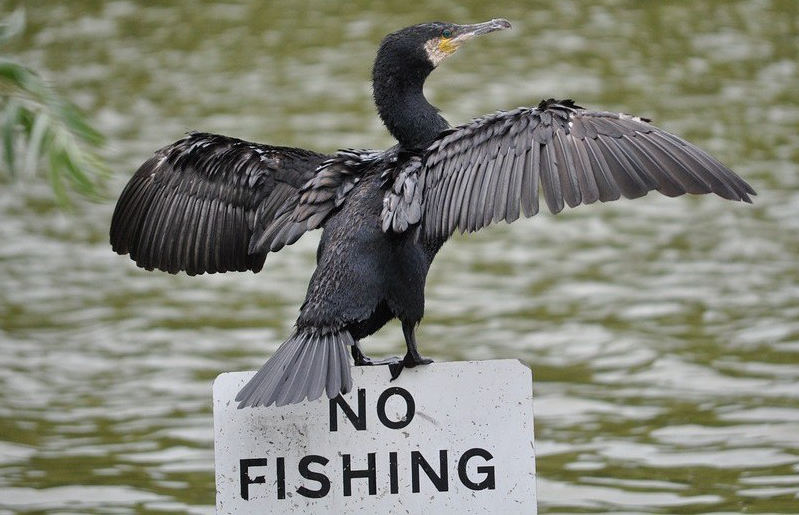
Morten Frederiksen discusses conflicts between wintering cormorants and fisheries, following the recent article, Where do wintering cormorants come from? Long-term changes in the geographical origin of a migratory bird on a continental scale. Cormorants are very efficient predators of fish in shallow waters. They are particularly good at exploiting artificially high densities of fish. Predictably, this has led to widespread conflicts with human fisheries interests. Although fishermen … Continue reading Where do wintering cormorants in Europe come from – and does it matter?

How did the squirrel glider’s genes cross the road? Wildlife crossing structures are no joke

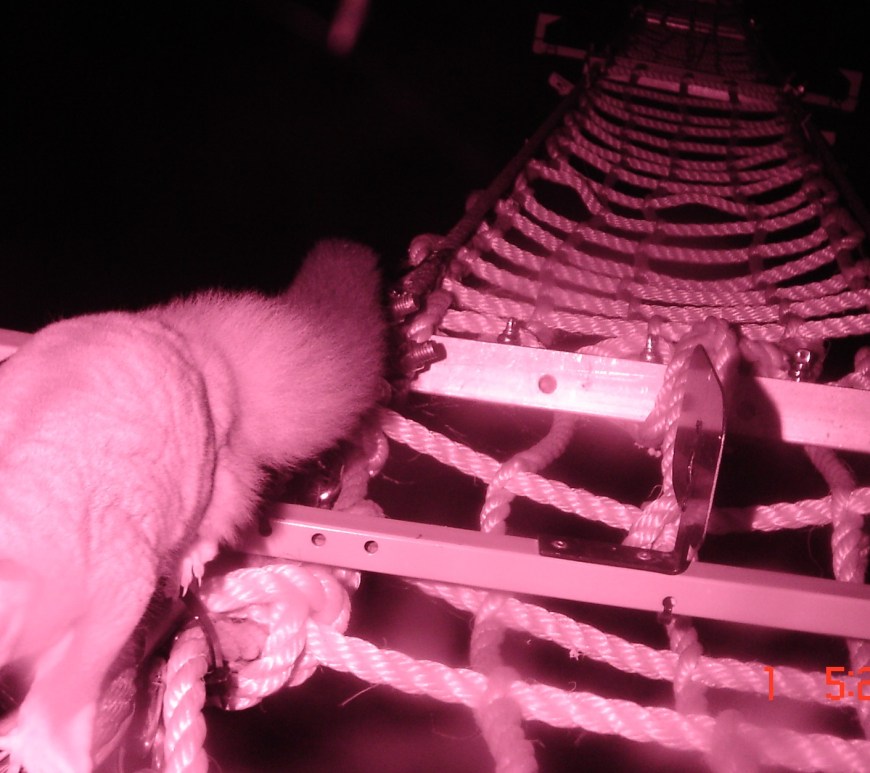
Punchlines aside, in this blog Kylie Soanes shares insights from her recent article, Evaluating the success of wildlife crossing structures using genetic approaches and an experimental design: Lessons from a gliding mammal. Wildlife crossing structures are a common answer to the age-old question: ‘How did the animal cross the road?’ Tunnels and bridges for wildlife are being built and used by animals all over the world, … Continue reading How did the squirrel glider’s genes cross the road? Wildlife crossing structures are no joke

New techniques for Atlantic sturgeon conservation

In this post Associate Editor Verena Trenkel discusses a paper she recently handled from Michael Melnychuk and colleagues ‘Informing conservation strategies for the endangered Atlantic sturgeon using acoustic telemetry and multi-state mark–recapture models‘ According to the International Union for Conservation of Nature (ICUN), ten out 17 sturgeon species are currently critically endangered. Among the two species listed as least concern is Atlantic sturgeon which occurs … Continue reading New techniques for Atlantic sturgeon conservation

Not all herbivores are created equal – Characterizing population-level damage potential in migratory pests

In this post Gina Angelella discusses the recent paper from Sanford Eigenbrode and colleagues ‘Host-adapted aphid populations differ in their migratory patterns and capacity to colonize crops‘ When encountering a migratory insect such as a winged aphid, how confidently can one predict its origins and threat to crops? It is tricky enough to track the dispersal of a homogeneous species, but the addition of population-level … Continue reading Not all herbivores are created equal – Characterizing population-level damage potential in migratory pests

Radar technology may help design raptor-proof wind farms in the future

In this post, Miguel Ferrer and Des Thompson discuss the recently published paper by Sergio Cabrera-Cruz and Rafael Villegas-Patraca ‘Response of migrating raptors to an increasing number of wind farms’ This study has for the first time used radar trajectories of more than 3.7 million migrant raptors, over six years, to measure responses to a wind farm. Essentially, in an experimental situation of pre- and … Continue reading Radar technology may help design raptor-proof wind farms in the future

Using maths to guide conservation law enforcement

In this post Kiran Dhanjal-Adams discusses her recent paper ‘Optimizing disturbance management for wildlife protection: the enforcement allocation problem’ For International Women’s Day, we asked Kiran about her career in science and the challenges and improvements she is seeing in STEM. You can read all of our posts for International Women’s Day here. Determining where and when to carry out enforcement patrols can be a … Continue reading Using maths to guide conservation law enforcement

The Yellow Sea – a rapidly narrowing bottleneck for migrating shorebirds

The shrinking of mudflats along the coasts of the Chinese Yellow Sea is an increasing problem for birds trying to migrate between Siberia (for breeding) and Australia and New Zealand (for survival when not breeding). Research by an international team of ecologists from The Netherlands, Australia and China, led by the Chair in Global Flyway Ecology at the University of Groningen and staff member of … Continue reading The Yellow Sea – a rapidly narrowing bottleneck for migrating shorebirds

The development of fencing policies and its relevance to the Convention of Migratory Species

In this post, Sarah M. Durant and Roseline C. Beudels-Jamar write about their article ‘Developing fencing policies for dryland ecosystems’, which is the first Policy Direction article for the Journal of Applied Ecology. Policy Directions are a new article type relating to policy implementation and decision making. The focus of these articles is to inform and improve policy over a wide range of subjects by … Continue reading The development of fencing policies and its relevance to the Convention of Migratory Species

To fence or not to fence, that is the question

In this post Executive Editor, Marc Cadotte discusses the first Policy Direction article ‘Developing fencing policies for dryland ecosystems’ for the Journal of Applied Ecology. Policy Directions are a new article type relating to policy implementation and decision making. The focus of these articles is to inform and improve policy over a wide range of subjects by providing a broader policy context for the topic and … Continue reading To fence or not to fence, that is the question