Mapping risk: new method to synthesize spatial data on human and animal use of coastal waters

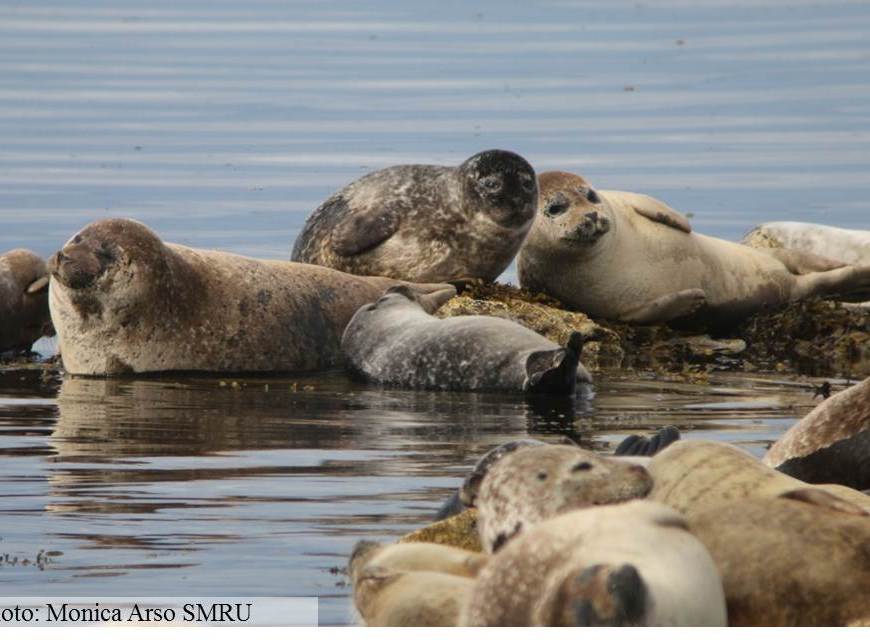
In this post Erin Ashe discusses a new article from Esther Jones and colleagues ‘Seals and shipping: quantifying population risk and individual exposure to vessel noise‘ An exciting new paper (Jones et al. 2017) outlines a rigorous and widely applicable framework to predict ship noise levels in coastal waters, assess noise exposure for two seal species, and explicitly incorporate these results into risk assessments and … Continue reading Mapping risk: new method to synthesize spatial data on human and animal use of coastal waters

Uncertainty matters in modelling, but it can be overcome if some simple rules are followed

In this post Associate Editor Andre Punt discusses a recent Commentary from E. J. Milner-Gulland and Katriona Shea ‘Embracing uncertainty in applied ecology‘ Models are core to many working in the various fields that constitute applied ecology. However, models can mislead researchers and decision makers if used incorrectly.  Uncertainty is pervasive in applied ecology, and if not handled correctly can lead those using models having … Continue reading Uncertainty matters in modelling, but it can be overcome if some simple rules are followed

Editor’s Choice 54:2 – Optimizing the use of species distribution maps for planning new protected areas

The Editor’s Choice for Issue 54:2 is written by Kulbhushansingh Suryawanshi, who is taking part in our Associate Editor mentoring opportunity. The article chosen by the Editors as this issue’s Editor’s choice article is ‘Limitations and trade-offs in the use of species distribution maps for protected area planning‘ by Moreno Di Marco and colleagues. Protected Areas have been the ‘big idea’ of biodiversity conservation over … Continue reading Editor’s Choice 54:2 – Optimizing the use of species distribution maps for planning new protected areas

Measuring dark diversity: what do we know and where do we go from here?

In this post Chris Wilson (The Flory Lab) discusses a recent article from Jesper Moeslund and colleagues ‘Using dark diversity and plant characteristics to guide conservation and restoration‘ Central to ecology and conservation biology is the quest to understand and, more importantly, conserve biodiversity. However, generally you can’t manage what you can’t measure, and you can’t measure what you can’t define! Biodiversity is traditionally defined … Continue reading Measuring dark diversity: what do we know and where do we go from here?

Prioritizing conservation and management efforts with new methods to predict invasive species occurrence and impact

In this post Johanna Bradie discusses her recent paper with Brian Leung ‘Estimating non-indigenous species establishment and their impact on biodiversity, using the Relative Suitability Richness model‘ Invasive species are one of the leading causes of biodiversity loss and established invaders are nearly impossible to eradicate. Conservation efforts should therefore focus on preventing the establishment of invasive species. Managers need to be able to predict which … Continue reading Prioritizing conservation and management efforts with new methods to predict invasive species occurrence and impact

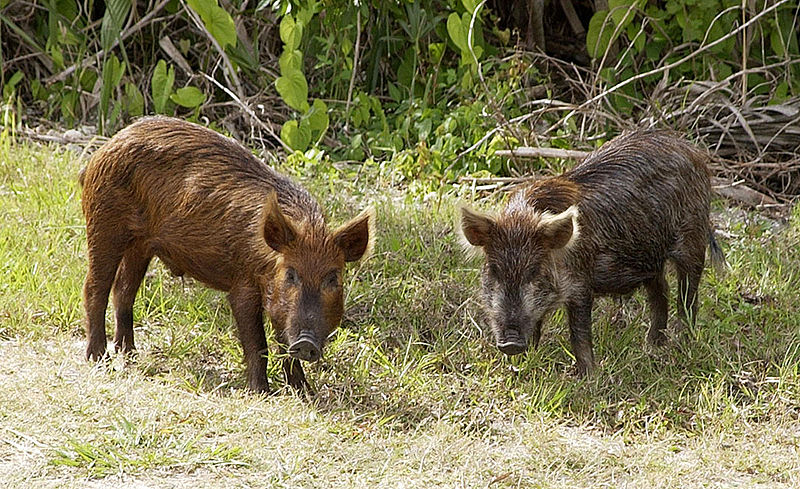
Invasive wild pigs making themselves at home throughout the USA

In this post Nathan Snow discusses his recent paper ‘Interpreting and predicting the spread of invasive wild pigs‘ The eruption of invasive wild pigs Sus scrofa throughout the world exemplifies the need to understand the influences of exotic and non-native species expansions. In particular, the continental USA is precariously threatened by a rapid expansion of these wild pigs, and a better understanding of the rate … Continue reading Invasive wild pigs making themselves at home throughout the USA

New techniques for Atlantic sturgeon conservation

In this post Associate Editor Verena Trenkel discusses a paper she recently handled from Michael Melnychuk and colleagues ‘Informing conservation strategies for the endangered Atlantic sturgeon using acoustic telemetry and multi-state mark–recapture models‘ According to the International Union for Conservation of Nature (ICUN), ten out 17 sturgeon species are currently critically endangered. Among the two species listed as least concern is Atlantic sturgeon which occurs … Continue reading New techniques for Atlantic sturgeon conservation

Choosing the appropriate analytical resolution for protected area planning

Blog post by Moreno Di Marco, Centre for Biodiversity and Conservation Science, The University of Queensland, Brisbane, Australia. Based on: Di Marco, M., Watson, J.E.M., Possingham, H.P. & Venter, O. (2016). Limitations and trade-offs in the use of species distribution maps for protected area planning. J. Appl. Ecol. doi 10.1111/1365-2664.12771. From local-scale management to global scale policy, conservation decisions are influenced by the knowledge of … Continue reading Choosing the appropriate analytical resolution for protected area planning

The birds and the Bayes – new statistical approaches to modelling seabird flight heights

In this post Viola Ross-Smith discusses her recent paper ‘Modelling flight heights of lesser black-backed gulls and great skuas from GPS: A Bayesian approach‘. Although the need for renewable energy and its benefits are now widely recognised, this technology does not come without implications for biodiversity and the environment. For this reason, it’s important to assess and quantify the potential risks of renewables to wildlife … Continue reading The birds and the Bayes – new statistical approaches to modelling seabird flight heights