Field Diaries: Using remote sensing to help restore landscapes

In our ‘Field Diaries’ series, The Applied Ecologist is sharing stories from a range of different fieldwork experiences. In this post Guilherme Castro shares his research on using remote sensing to better understand how to restore landscapes. About the Author Guilherme Castro, he/him Affiliation: Royal Holloway University of London & Royal Botanic Gardens Kew Ecology interests: Landscapes, restoration, remote sensing Overview of fieldwork I am a PhD student … Continue reading Field Diaries: Using remote sensing to help restore landscapes

Remote sensing: A key to monitoring tropical forest restoration

Laura Vedovato introduces readers to a range of remote sensing tools, explaining how they can be applied to topical forests to monitor the effectiveness of restoration efforts. Read more in the original Review article. Introduction In recent years, global commitments to forest restoration, like the UN Decade on Restoration and the Global Biodiversity Framework, have highlighted the need for scalable, effective ways to track progress. … Continue reading Remote sensing: A key to monitoring tropical forest restoration

Revealing the hidden lives of non-breeding Black-tailed Godwits

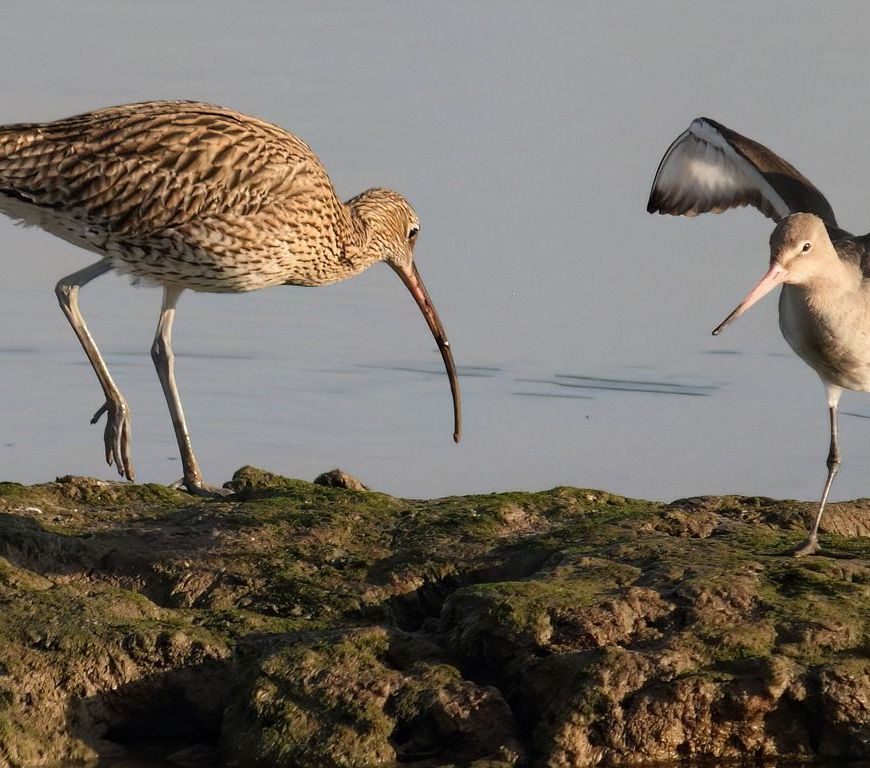
In this blog post, Taylor Craft discusses the use of GPS tracking and satellite imagery to uncover the lives of Black-tailed Godwits in the Senegal Delta. You can read their latest study, published alongside co-authors, here. A pressing challenge The landscapes of the endangered continental Black-tailed Godwit face increasing pressures at nearly every key site along their migratory route. With poor recruitment limiting population growth, … Continue reading Revealing the hidden lives of non-breeding Black-tailed Godwits

ECR Journeys: remote sensing in forest restoration

This month, The Applied Ecologist is amplifying the voice of early career ecologists from around the world working in the field of applied ecology to help inspire the next generation. In this post, Fellice Catelo, a PhD student at the University of the Sunshine Coast, Australia shares her story. My background I’m pretty easy and chill! In my free time, I watch horror/thriller films and … Continue reading ECR Journeys: remote sensing in forest restoration

Wide-scale rangeland condition monitoring: Measurement of increased vegetation cover following stock removal and conservation management

Angus Retallack explains how, using remote sensing data over a 22-year observation period, vegetation recovery after the removal of livestock and the introduction of conservation-focused management can be assessed. Arid and semi-arid rangelands cover close to 50% of the Earth’s land surface and are relied upon by a diverse range of stakeholders including Indigenous people, pastoralists and environmental conservationists. Sustainable use and conservation of these … Continue reading Wide-scale rangeland condition monitoring: Measurement of increased vegetation cover following stock removal and conservation management

Georgina Mace Prize 2023: Winner announced for early career researcher award

We’re excited to announce Melanie Dickie as the winner of the 2023 Georgina Mace Prize, celebrating the best article in the journal by an author at the start of their career. Winner: Melanie Dickie Article: Applying remote sensing for large-landscape problems: Inventorying and tracking habitat recovery for a broadly distributed Species At Risk About the research For many species at risk, population declines can be traced … Continue reading Georgina Mace Prize 2023: Winner announced for early career researcher award

Applying remote sensing techniques to wide-scale vegetation inventories

Feature image © InnoTech Alberta Originally posted and adapted from The Alberta Biodiversity Monitoring Institute Blog. Author Sydney Toni describes their latest study that explores a more cost-effective way of using remote sensing to better understand landscapes at larger scale for habitat monitoring and management. Ideally, the information we collect to manage wildlife habitat is many things: high-resolution, consistent and covering all areas of interest. The … Continue reading Applying remote sensing techniques to wide-scale vegetation inventories

Does logging help or harm Borneo’s bats?

Natalie Yoh and Dave Seaman discuss their recently published research article that uses remote sensing to investigate the effects of logging on aerial insectivorous bats in Southeast Asia. Findings indicate that logged forests can provide an important refuge and several species that respond predictably to logging could be targeted for biodiversity monitoring using acoustic and capture-based methods. “Bats make up around 40% of Borneo’s mammal … Continue reading Does logging help or harm Borneo’s bats?

The surprising connections between deer and the forest canopy

Ungulates place immense consumptive pressure on forest vegetation globally, leaving legacies of reduced biodiversity and simplified vegetative structure. In their latest research, Samuel Reed and colleagues sought to determine whether browse-induced changes occurring early in succession ultimately manifest themselves in the developed forest canopy. Herbivores are incredibly influential around the world and can re-shape entire ecosystems over time. In North American temperate forests, white-tailed deer … Continue reading The surprising connections between deer and the forest canopy

Seeing in the dark: Detecting and protecting cryptic nesting species using UAV thermal cameras

Authors Mike Shewring and Jim Vafidis share a video summary of their latest From Practice article using UAV-mounted thermal imaging to detect cryptic nesting European Nightjars in Wales, UK. Confirming the presence and location of cryptic nesting species is a significant fieldwork challenge in ecological monitoring. Nest sites can be located through direct observation or capture and radio tracking of breeding individuals; however, such work … Continue reading Seeing in the dark: Detecting and protecting cryptic nesting species using UAV thermal cameras