Fauna sentinela: como o seguimento por GPS de espécies necrófagas fornece informação sobre o cumprimento dos regulamentos de gestão de cadáveres


Patrícia Mateo Tomás fala-nos do novo estudo que visa avaliar como o rastreio remoto da vida selvagem pode contribuir para uma melhor monitorização das leis ambientais. Através do rastreamento experimental de lobos e abutres via GPS, os pesquisadores conseguiram localizar um total de 489 carcaças de gado em Espanha e Portugal. Continue reading Fauna sentinela: como o seguimento por GPS de espécies necrófagas fornece informação sobre o cumprimento dos regulamentos de gestão de cadáveres
Fauna centinela: cómo el seguimiento GPS de especies necrófagas informa el cumplimiento de la normativa de gestión de carroñas

Patricia Mateo Tomás nos habla sobre el nuevo estudio de ella y sus colegas que tiene como objetivo evaluar cómo el seguimiento remoto de la vida silvestre puede contribuir a un mejor monitoreo de las leyes ambientales. A través del seguimiento experimental de lobos y buitres a través de GPS, los investigadores pudieron localizar un total de 489 cadáveres de ganado en España y Portugal. Continue reading Fauna centinela: cómo el seguimiento GPS de especies necrófagas informa el cumplimiento de la normativa de gestión de carroñas

Sentinel wildlife: GPS-tracking of scavengers to inform compliance with regulations on carcass disposal

Patricia Mateo Tomás talks us through her and colleagues’ new study which aims to assess how remotely tracking wildlife can contribute to the better monitoring of environmental laws. Through experimentally tracking wolves and vultures via GPS, researchers were able to locate a total of 489 livestock carcasses across Spain and Portugal. Continue reading Sentinel wildlife: GPS-tracking of scavengers to inform compliance with regulations on carcass disposal

Use of avian GPS tracking to mitigate human fatalities from bird strikes.

Air traffic has increased significantly in recent years, from 1.674 billion passengers in 2000 to 4.397 billion passengers in 2019.  However, this growth has come at a cost. In their latest research, Arrondo et al. review and quantify the characteristics of bird strikes in Spain, and analyse flight patterns of the species that caused aircraft crashes in Europe. Bird strikes have been a feature of … Continue reading Use of avian GPS tracking to mitigate human fatalities from bird strikes.

Long-term European LIFE project key for the recovery of an endangered Egyptian vulture population

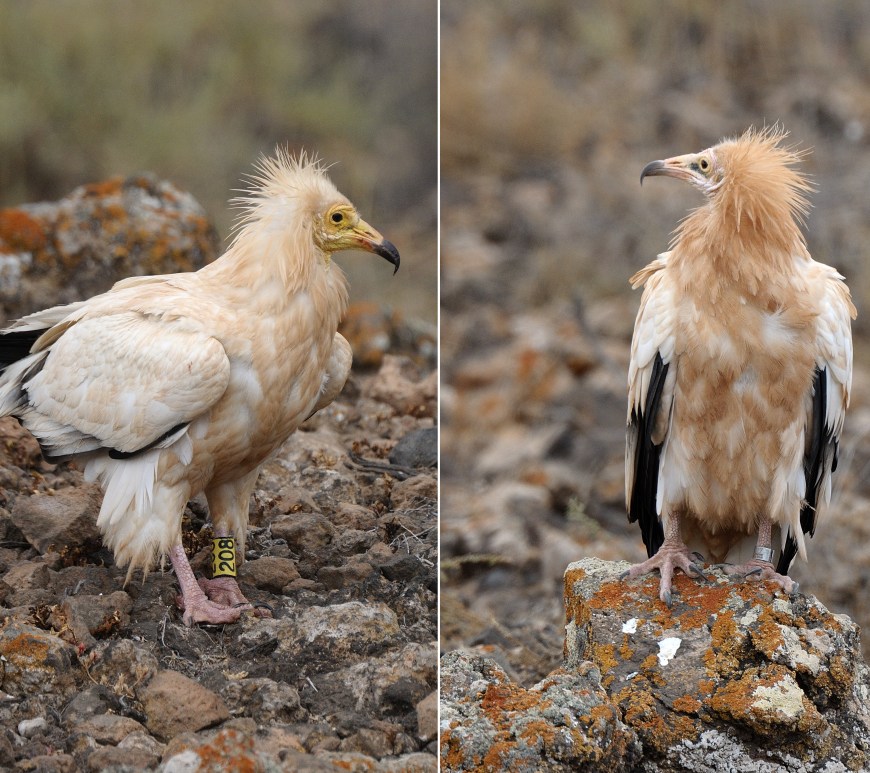
In new research, Jaume Adrià Badia‐Boher and colleagues highlight the need for long-term monitoring of conservation programmes. Here, co-author, Ana Sanz‐Aguilar demonstrates one success story of this nature, in conservation of the Canary Egyptian Vulture. The population of one of the most endangered raptors in Europe, the Canary Egyptian Vulture (Neophron percnopterus majorensis), is recovering. This is one of the main conclusions reached by an international … Continue reading Long-term European LIFE project key for the recovery of an endangered Egyptian vulture population

Editor’s Choice 55:3 – Targeted supplementary feeding supports reintroduction of endangered raptors

The Editor’s Choice for issue 55:3 is by Associate Editor, Des Thompson. The selected article is Reintroducing endangered raptors: A case study of supplementary feeding and removal of nestlings from wild populations by Miguel Ferrer et al. In his classic book Population Ecology of Raptors (1979), Ian Newton (one of the co-authors of this featured paper) concluded: ‘…in the absence of human intervention almost every aspect of … Continue reading Editor’s Choice 55:3 – Targeted supplementary feeding supports reintroduction of endangered raptors