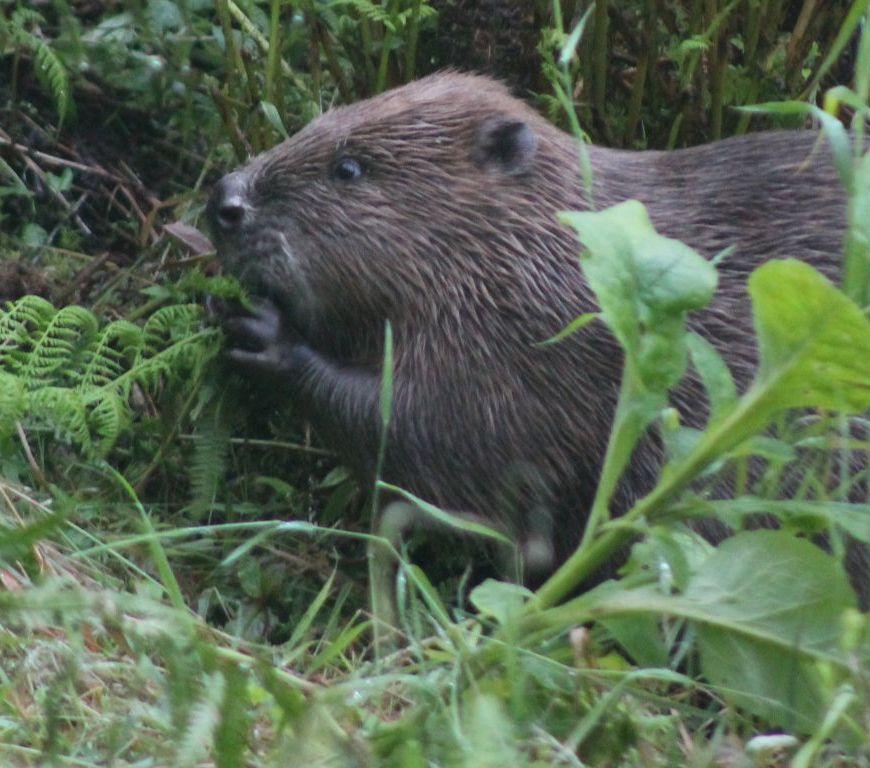
Beaver wetlands create a buzz and a flutter for pollinators

Patrick Cook discusses the impacts of beaver wetlands on pollinator communities, summarising recently-published research. Can beaver wetlands create a buzz and a flutter for pollinators? That’s a question that has occupied my mind since 2022. It began one evening sat at the edge of a beaver wetland looking at Greater Spearwort and wondering what pollinators visit the yellow flowers of this gigantic buttercup! Subsequently the … Continue reading Beaver wetlands create a buzz and a flutter for pollinators

Indigenous brigades change the spatial patterns of wildfires, and the influence of climate on fire regimes

In their new study, Oliveira et al. express the importance and value of Indigenous knowledge and Indigenous brigades for the management of increasingly occurring wildfires. Fire has been present in different biomes for millions of years and is a factor that can shape vegetation distribution patterns. However, lately there has been observed a higher frequency of growing wildfires that can cause great impacts on society … Continue reading Indigenous brigades change the spatial patterns of wildfires, and the influence of climate on fire regimes

The need for a code of practice for mosquito management in European wetlands

Bringing together multidisciplinary expertise, Martinou et al. build a framework that aims to balance the priorities of wetland conservation and mosquito control.  

Wetlands provide essential resources to human societies, and the associated biodiversity associated with wetlands has an estimated value ranging from US $44,597- ($)195,478 per hectare per year. Governments around the world have enacted legislation, policies and regulations including the Clean Water Act (United States) and the Water Act (Australia) to protect wetlands from a variety of human activities. Continue reading The need for a code of practice for mosquito management in European wetlands