Some plants can do more than survive in polluted mining lands—they can adapt to harsh conditions, become dominant, and create better conditions for other plants. We show how a native plant can help drive the natural recovery of plant communities in a mine that has been abandoned for about 70 years.
Mining often leaves behind polluted soils and damaged ecosystems long after extraction has stopped. Yet abandoned mines can also provide opportunities to observe how nature responds to severe and persistent environmental stress. We studied a long-abandoned lead–zinc mine in southwestern China and focused on Artemisia lavandulaefolia, a native plant that has successfully established and become one of the dominant plants in the polluted area. We compared this plant and its surrounding soil with those from an uncontaminated area to understand how it survives pollution and influences its environment.
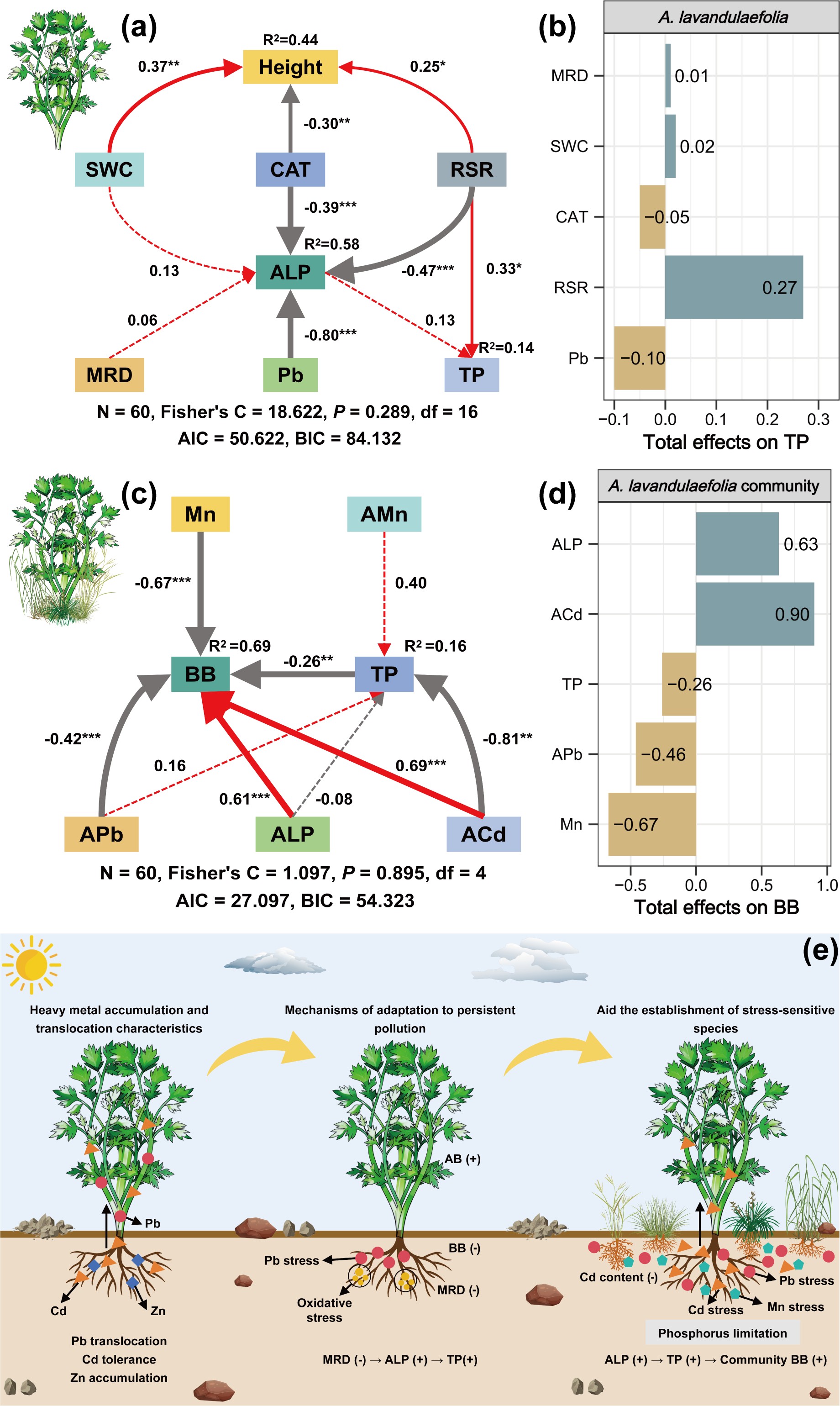
We found that cadmium was the main harmful metal in the mining area. A. lavandulaefolia could take up and transport large amounts of cadmium, which may help it tolerate the polluted soil and establish as a dominant plant. Plants growing in the mine also differed from those in the uncontaminated area in their inherited characteristics, with less variation among individuals, suggesting that long-term pollution has shaped the plant over many generations.
Importantly, the plant did not simply tolerate pollution. It also changed its root growth and improved conditions in the soil around its roots. These changes increased the availability of an essential nutrient, phosphorus, supporting plant growth and contributing to a more stable plant community. By reducing soil toxicity and creating more suitable conditions around its roots, A. lavandulaefolia may also provide opportunities for other pollution-tolerant plants to establish.
Our findings highlight an important pathway for the natural recovery of abandoned mines: native plants can adapt to long-term pollution, become dominant, improve their local environment, and create conditions that allow other plants to follow. This provides a scientific basis for using nature-based approaches to support the restoration of abandoned metal-mining lands.

