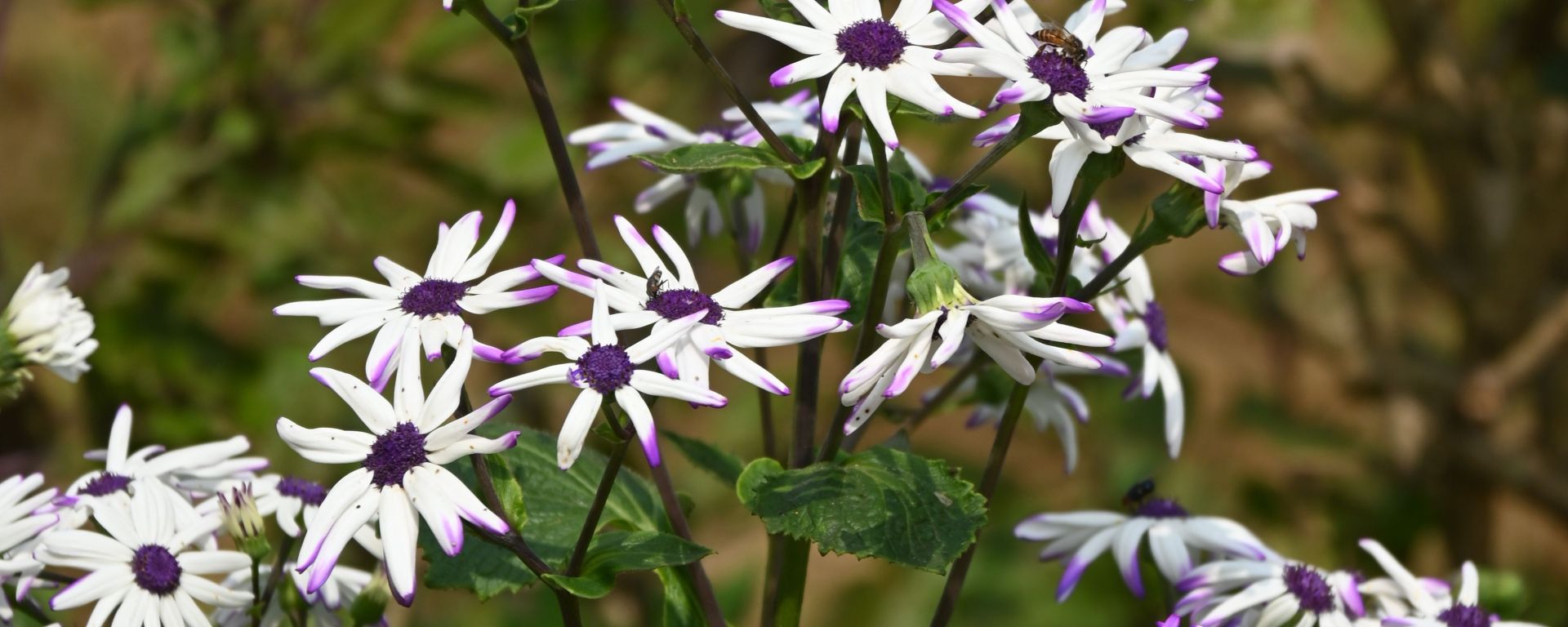
Under the dual pressures of climate change and overgrazing, poisonous weeds are spreading rapidly across grasslands, gradually displacing grasses and sedges that livestock prefer. While soil microbes are widely recognized as “hidden allies” that help plants grow, how underground microbial communities change during the rapid spread of poisonous weeds remains poorly known.
We focused on Stellera chamaejasme, one of China’s most destructive poisonous weeds, and conducted a survey along a grassland transect spanning nearly 3,000 km to track how soil bacterial communities shift following Stellera invasion. We found that in Stellera-dominated grasslands, soil bacteria were not only more diverse and better at dispersing, but also showed stronger resistance to environmental fluctuations. This suggests that Stellera can reshape the soil bacterial community, forging a more robust “underground army”; these bacteria, in turn, may help Stellera establish and expand across various climates and environmental conditions.
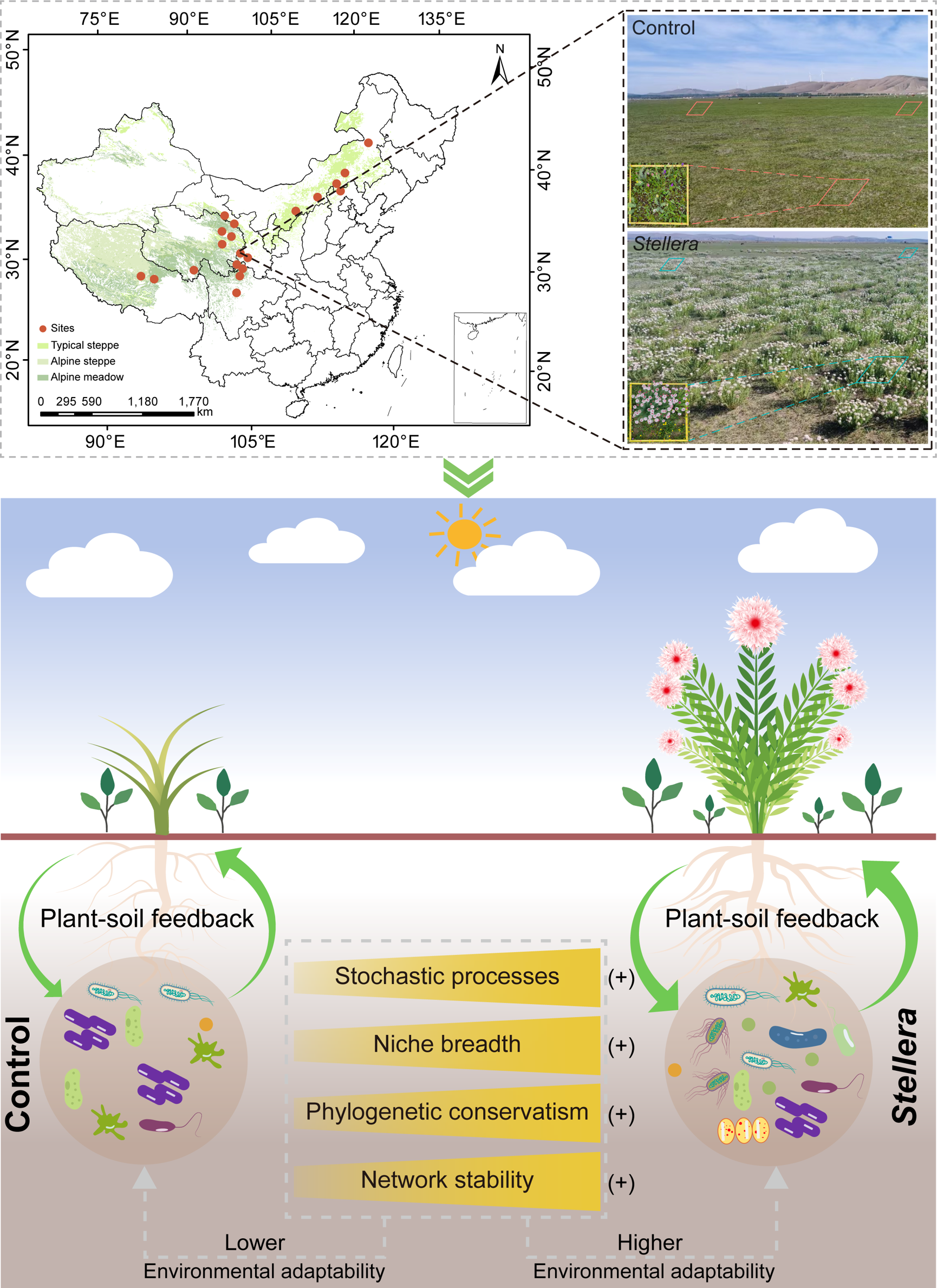
Therefore, restoring grasslands requires not only removing Stellera itself, but also breaking the self-reinforcing cycle mediated by microbes and rebuilding a soil microbiome that favors desirable forage species. Shifting soil bacteria from “aiding invasion” to “promoting restoration” will provide tangible support for grassland recovery from belowground.

