Diversifying plant communities in vineyards to increase natural pest control services

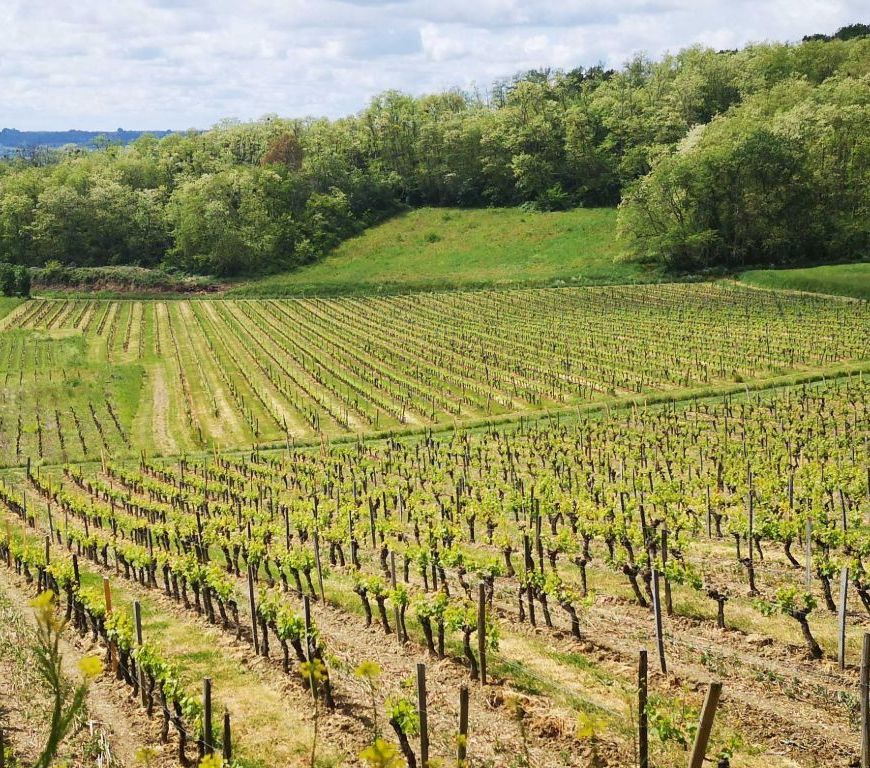
Léa Beaumelle and Adrien Rusch introduce their team’s latest research exploring different landscape contexts to identify ways to best foster natural pest control on agricultural lands. Insects and arthropods play key roles in agricultural systems. Arthropods comprise pests, such as aphids or caterpillars, but also beneficial organisms: predators such as spiders and ground beetles (natural enemies) prey upon insect pests and limit pest populations. As … Continue reading Diversifying plant communities in vineyards to increase natural pest control services

A deep learning model for pollinator plant surveys

Buff-tailed bumblebee (Bombus terrestris) feeding on the nectar of Creeping thistle (Cirsium arvense) flowers © Damien Hicks Authors Damien Hicks and Christoph Kratz introduce their team’s latest research demonstrating the use of machine learning for quadrat surveys to improve accessibility and resource efficiency of current methods for floral vegetation monitoring. The nectar sugar contained in flowers is a key driver of pollinator abundance and diversity. … Continue reading A deep learning model for pollinator plant surveys

Sundarbans in peril: interlinkages between science and society for addressing climate change

This year’s UN Climate Change Conference (COP26) will be held in Glasgow in November. In the lead up to the conference, we’re asking our editors and authors to share their research at the interface of climate and ecology. In this post, Associate Editor Punyasloke Bhadury explains why protecting ecosystems is a priority not just for nature, but for society. Sundarbans, the world’s largest continuous mangrove … Continue reading Sundarbans in peril: interlinkages between science and society for addressing climate change

Research stories: The power of participatory research

Lead author Rachel Aronoff recalls her discovery of Hackuarium, a community laboratory, whose study on lake water quality demonstrates how meaningful environmental monitoring can be achieved with participatory research. It was late in 2015 when I first encountered Hackuarium and its ‘biohacker’ members while organising a biosensor course in collaboration with several of its members – I had never seen anything like it. Who were … Continue reading Research stories: The power of participatory research

Rewilding old fields: why additional effort is needed to restore wildflowers

Why has restoring old fields been a challenge for practitioners for decades? In their latest research, Tina Parkhurst, Suzanne Prober and Rachel Standish explore the efficacy of intervention efforts to understand limitations in current practices. Globally, there is a trend towards widespread abandonment of marginal agricultural land. Land abandonment is often associated with land degradation following long-term unsustainable agricultural practices, resulting in low productivity. Whilst … Continue reading Rewilding old fields: why additional effort is needed to restore wildflowers

Challenges and opportunities for evidence-based development mitigation

With increasing demand in housing and investment in infrastructure, are the guidance to protect and mitigate for biodiversity effectively implemented in practice? Hunter and colleagues evaluate the evidence supporting current development practices in their latest research. Originally posted and adapted from Conservation Evidence blog. What is ecological mitigation? In the UK, the legal protection of species means that, if an infrastructure development is set to … Continue reading Challenges and opportunities for evidence-based development mitigation

Calling all seabirds: restoring long-lost colonies on Desecheo Island

Lead author Jose Luis Herrera-Giraldo describes his team’s latest study using fake birds and loudspeakers to help conservationists restore the long-lost seabird colony of Desecheo Island, Puerto Rico. For scientists and conservationists, life on Desecheo National Wildlife Refuge in Puerto Rico is harsh with the islands’ rugged terrain, blazing hot sun beating down year-round, and fire ant. But for seabirds the island is paradise – … Continue reading Calling all seabirds: restoring long-lost colonies on Desecheo Island

Bee abundance estimates vary by collection method and flowering richness

Monitoring bee populations is becoming increasingly important and commonplace, but do current methods produce reliable estimates of bee communities? Authors Marirose Kuhlman and Philip Hahn explore this question in their latest research. Wild bees are the main pollinators in nearly all terrestrial ecosystems and are essential to the reproductive cycles of many native plants, agricultural crops, and to the success of habitat restoration projects. Because … Continue reading Bee abundance estimates vary by collection method and flowering richness

Behind the cover 2:3 – Sand addition augments gharial nesting in degrading aquatic habitats

Gaurav Vashistha and colleagues describe their latest research attempting to reverse the observed decline in gharial nesting by improving nesting site conditions. Find out more about the research behind the cover of our latest issue. The gharial (Gavialis gangeticus) is a critically threatened, freshwater crocodile. Gharials nest in sandy substrates such as river banks and mid-river sand bars where females dig holes and lay their … Continue reading Behind the cover 2:3 – Sand addition augments gharial nesting in degrading aquatic habitats

ESE Editor’s Choice 2:2 – Restoring ecosystems and our well-being

Associate Editor Elizabeth Bach introduces our latest Editor’s Choice article by Patrick Swanson who calls for a new paradigm in ecosystem restoration called ‘Restorative recreation’. Ecosystem restoration seeks to reunite native plants and animals in degraded ecosystem, improving biodiversity and ecosystem functioning. Many people deeply involved in ecosystem restoration also recognize the process of learning and restoring an ecosystem deepens our understanding of the natural … Continue reading ESE Editor’s Choice 2:2 – Restoring ecosystems and our well-being