Rewilding old fields: why additional effort is needed to restore wildflowers

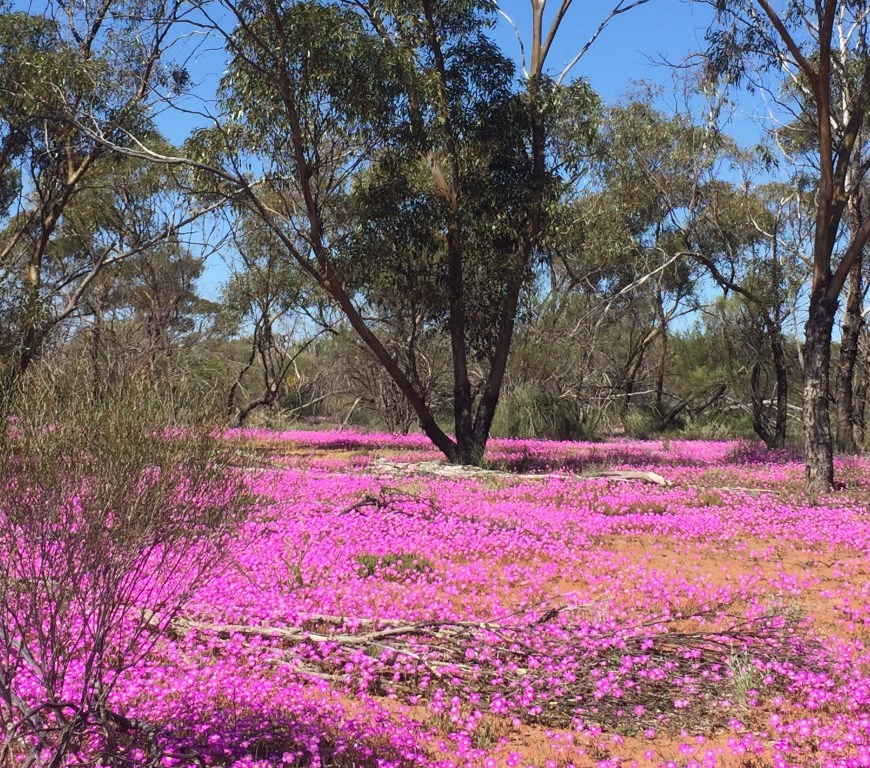
Why has restoring old fields been a challenge for practitioners for decades? In their latest research, Tina Parkhurst, Suzanne Prober and Rachel Standish explore the efficacy of intervention efforts to understand limitations in current practices. Globally, there is a trend towards widespread abandonment of marginal agricultural land. Land abandonment is often associated with land degradation following long-term unsustainable agricultural practices, resulting in low productivity. Whilst … Continue reading Rewilding old fields: why additional effort is needed to restore wildflowers

Challenges and opportunities for evidence-based development mitigation

With increasing demand in housing and investment in infrastructure, are the guidance to protect and mitigate for biodiversity effectively implemented in practice? Hunter and colleagues evaluate the evidence supporting current development practices in their latest research. Originally posted and adapted from Conservation Evidence blog. What is ecological mitigation? In the UK, the legal protection of species means that, if an infrastructure development is set to … Continue reading Challenges and opportunities for evidence-based development mitigation

Calling all seabirds: restoring long-lost colonies on Desecheo Island

Lead author Jose Luis Herrera-Giraldo describes his team’s latest study using fake birds and loudspeakers to help conservationists restore the long-lost seabird colony of Desecheo Island, Puerto Rico. For scientists and conservationists, life on Desecheo National Wildlife Refuge in Puerto Rico is harsh with the islands’ rugged terrain, blazing hot sun beating down year-round, and fire ant. But for seabirds the island is paradise – … Continue reading Calling all seabirds: restoring long-lost colonies on Desecheo Island

Bee abundance estimates vary by collection method and flowering richness

Monitoring bee populations is becoming increasingly important and commonplace, but do current methods produce reliable estimates of bee communities? Authors Marirose Kuhlman and Philip Hahn explore this question in their latest research. Wild bees are the main pollinators in nearly all terrestrial ecosystems and are essential to the reproductive cycles of many native plants, agricultural crops, and to the success of habitat restoration projects. Because … Continue reading Bee abundance estimates vary by collection method and flowering richness

Behind the cover 2:3 – Sand addition augments gharial nesting in degrading aquatic habitats

Gaurav Vashistha and colleagues describe their latest research attempting to reverse the observed decline in gharial nesting by improving nesting site conditions. Find out more about the research behind the cover of our latest issue. The gharial (Gavialis gangeticus) is a critically threatened, freshwater crocodile. Gharials nest in sandy substrates such as river banks and mid-river sand bars where females dig holes and lay their … Continue reading Behind the cover 2:3 – Sand addition augments gharial nesting in degrading aquatic habitats

ESE Editor’s Choice 2:2 – Restoring ecosystems and our well-being

Associate Editor Elizabeth Bach introduces our latest Editor’s Choice article by Patrick Swanson who calls for a new paradigm in ecosystem restoration called ‘Restorative recreation’. Ecosystem restoration seeks to reunite native plants and animals in degraded ecosystem, improving biodiversity and ecosystem functioning. Many people deeply involved in ecosystem restoration also recognize the process of learning and restoring an ecosystem deepens our understanding of the natural … Continue reading ESE Editor’s Choice 2:2 – Restoring ecosystems and our well-being

Restorative recreation: One landowner’s restoration experience in Iowa’s Loess Hills

In his latest From Practice article, author and landowner Patrick Swanson describes his experience restoring a native prairie remnant in Iowa’s Loess Hills and introduces a new paradigm that maximizes benefits to personal wellbeing while improving the landscape for other species. This article is part of the cross-journal, cross-society Special Feature on the UN Decade on Ecosystem Restoration. Ecosystems worldwide are under mounting stress from … Continue reading Restorative recreation: One landowner’s restoration experience in Iowa’s Loess Hills

Effectively integrating experiments into conservation practice

How can evidence be generated from conservation practice? In their latest review, Nancy Ockendon and colleagues seek to raise awareness of opportunities to embed experiments in conservation and restoration management, in order to generate new evidence and ultimately improve practice. Originally posted and adapted from the Endangered Landscapes Programme. Why do we need more experiments? It’s widely understood that it is important to consider the … Continue reading Effectively integrating experiments into conservation practice

Research Stories: The hunt for arctic aliens

Authors Ronja Wedegärtner and Jesamine Bartlett recall their team’s expedition in the high-Arctic Svalbard to monitor alien flora and publish their latest research which presents the most comprehensive survey of alien vascular species in the archipelago to date. Whilst we do not hunt for extra-terrestrial aliens that may or may not be hidden under the ice (as some on the more unbridled sections of the … Continue reading Research Stories: The hunt for arctic aliens

Ecological Solutions and Evidence Prize 2020: early career researcher winner announced

We’re excited to announce Christina Service as the winner of the inaugural Ecological Solutions and Evidence Prize, celebrating the best Research Article in the journal by an author at the start of their career. Winner: Christina Service Research: “Spatial patterns and rarity of the white‐phased ‘Spirit bear’ allele reveal gaps in habitat protection” About the research While the American black bear (Ursus americanus) is a … Continue reading Ecological Solutions and Evidence Prize 2020: early career researcher winner announced