Small fields, big benefits: But only with semi-natural habitats nearby

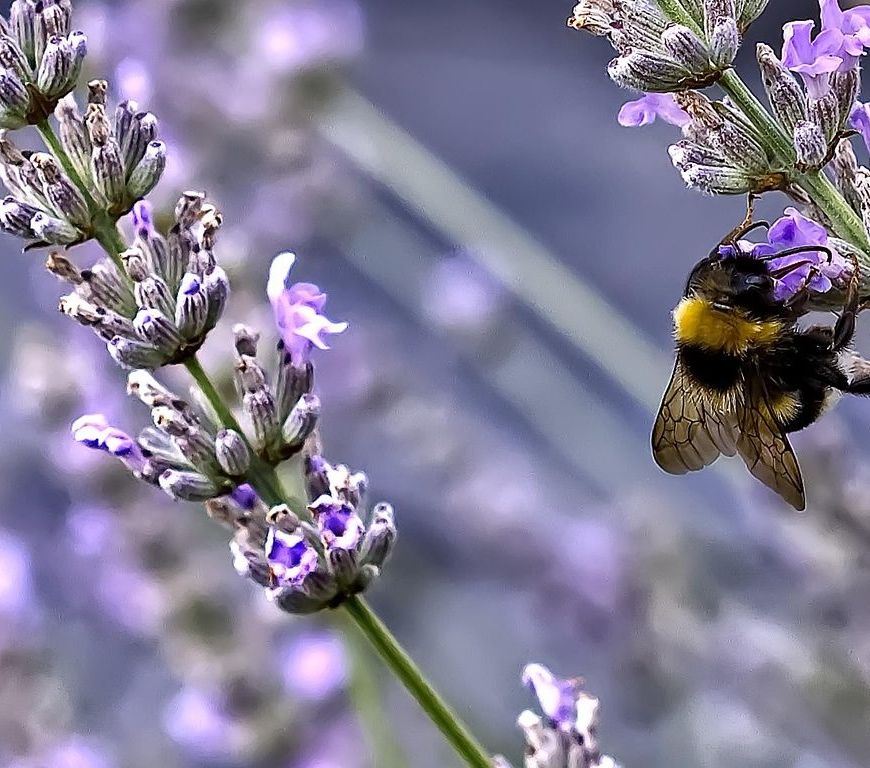
Pollinators, like bumblebees, are essential for agriculture, yet they’re declining due to landscape simplification and habitat loss. In this blog post, Riho Marja and colleagues tell us more about their study. Riho Marja and his team explored the effect of field size on Bumble bee populations in Austria and Hungary. They explored this by setting up 56 commercial bumblebee colonies in Eastern Austria and Western … Continue reading Small fields, big benefits: But only with semi-natural habitats nearby

Cover crop mixtures enhance multiple ecosystem functions: A global meta-analysis

In this blog post, Yunhui Liu and team share insights from their recent global meta-analysis on how cover crop mixtures can enhance agricultural sustainability by promoting multiple ecosystem functions. As agriculture faces growing challenges from climate change and land degradation, cover crops are increasingly recognized as an essential tool for improving soil health and farm resilience. While the use of single-species cover crops is well … Continue reading Cover crop mixtures enhance multiple ecosystem functions: A global meta-analysis

Field Diaries: A regenerative agriculture model rooted in Goan tradition

In our ‘Field Diaries’ series, The Applied Ecologist is sharing stories from a range of different fieldwork experiences. In this first-person pictorial account, Apeksha Khedekar explores their time spent researching the sustainability of homestead farming among tribal populations in Goa. About the author I was a master’s student in environmental science with a specialisation in ecological sciences at the Institute of Environment and Sustainable Development … Continue reading Field Diaries: A regenerative agriculture model rooted in Goan tradition

Janina Heinen: Diversified cropping strengthens herbivore regulation

Shortlisted for the 2024 Southwood Prize Janina Heinen talks us through her and colleagues’ latest study which explores how agricultural practices impact predation pressure across prey taxa. About the research Overview We explored predator-prey dynamics in agroecosystems by examining how carabid predator diet preferences shift throughout the crop growing season, and are influenced by the availability of prey under different agricultural management practices. By combining … Continue reading Janina Heinen: Diversified cropping strengthens herbivore regulation

Lessons from an Australian grazing study

As part of Journal of Applied Ecology’s efforts to discuss how real-world impact can be achieved following research, we’re talking to authors about their studies. In this post, David Eldridge shares insights into conducting a large-scale collaborative study which explores the effects of livestock grazing on conservation in eastern Australia. In late 2015 I was asked to be involved in a study to identify the … Continue reading Lessons from an Australian grazing study

Science communication: A sticky situation

As part of Journal of Applied Ecology’s efforts to discuss how real-world impact can be achieved following research, we’re talking to authors about their studies. In this post, Edward Straw discusses his first experience with sharing research via social media. I think it’s fair to say that my experience publishing my first paper was atypical. Not many papers, let alone first papers, end up glued … Continue reading Science communication: A sticky situation

Grassland nature reserves safeguard a high species richness and biomass of grasshoppers

This blog post is also available in German here. Dominik Poniatowski and colleagues describe how they evaluated the environmental drivers of species richness and biomass of grasshoppers in grasslands, comparing this between nature reserves and intensively-used agriculture landscape. Grassland exhibiting low land-use intensity is considered a hotspot of biodiversity in Central Europe. However, particularly since the mid-20th century, grassland land use has often been intensified, … Continue reading Grassland nature reserves safeguard a high species richness and biomass of grasshoppers

Naturschutzgebiete mit einem hohen Anteil an Grünland sichern einen hohen Artenreichtum und eine hohe Biomasse von Heuschrecken

Dieser Beitrag ist hier auch auf Englisch verfügbar. Dominik Poniatowski und Kollegen beschreiben, wie sie die Umweltfaktoren des Artenreichtums und der Biomasse von Heuschrecken im Grünland bewertet und dabei zwischen Naturschutzgebieten und intensiv genutzter Agrarlandschaft verglichen haben. Das extensiv genutzte Grünland gilt als Hotspot der Biodiversität in Mitteleuropa. Allerdings wurde insbesondere seit Mitte des letzten Jahrhunderts die Nutzung auf vielen dieser Flächen intensiviert oder das … Continue reading Naturschutzgebiete mit einem hohen Anteil an Grünland sichern einen hohen Artenreichtum und eine hohe Biomasse von Heuschrecken

Close to the edge: Spatial variation in plant diversity, biomass and floral resources in conventional and agri-environment cereal fields

Laura Sutcliffe discusses her latest study where, alongside colleagues, she investigated the spatial distribution of vascular plant species richness and their contribution to the food web via biomass and flower units in conventional and agri-environment cereal fields. The study: Arable plants Arable plants are usually simply referred to as weeds, reflecting their low status in society and also in biodiversity research. Whilst there is a … Continue reading Close to the edge: Spatial variation in plant diversity, biomass and floral resources in conventional and agri-environment cereal fields

Supportive effect of uncut refuge strips on grassland arthropods may depend on the amount and width of strips

In this blog post, author Kitti Révész and her team share their latest study exploring the effects of uncut refuge strips on the abundance and diversity of arthropods. What is the best management practice of hay meadows from an arthropod conservation point of view? Grassland arthropods are declining as a consequence of land-use change and intensive management. There are efforts to spread extensive management through … Continue reading Supportive effect of uncut refuge strips on grassland arthropods may depend on the amount and width of strips