Long-term Monitoring: The key to unlocking effective Marine Protected Area Management?

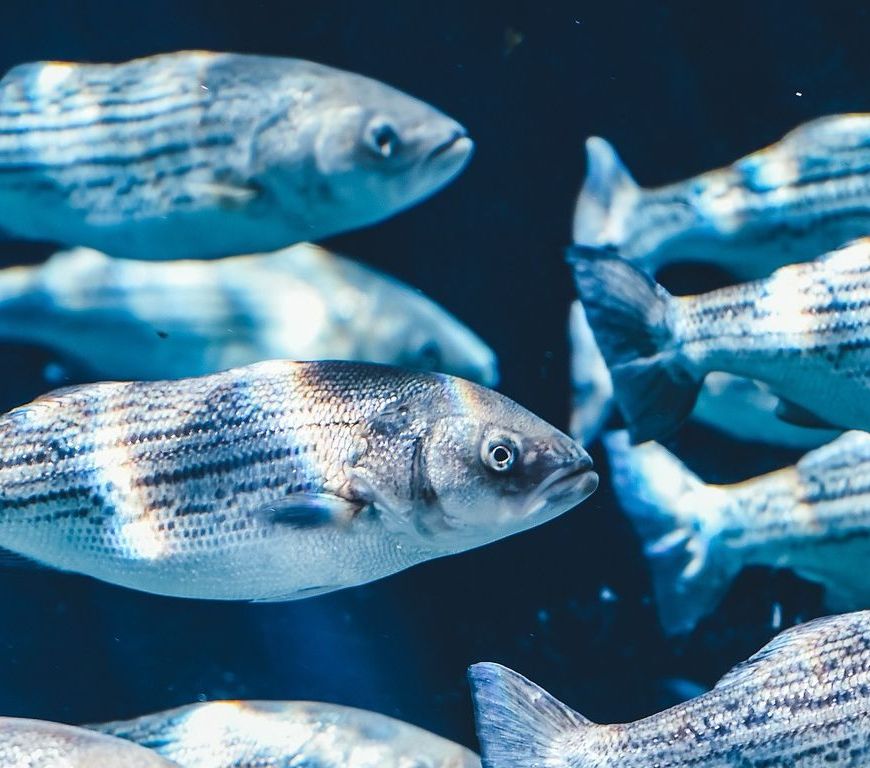
Christopher Honeyman talks us through recently published work which compared three Marine Protected Area (MPA) monitoring techniques, along with colleagues. Interestingly, each technique was shown to survey distinct groundfish community assemblages with varying levels of species diversity and richness. Therefore, combining multiple techniques may better allow managers to create the most comprehensive, effective and inclusive MPA monitoring regimes. A global phenomenon In response to human-caused … Continue reading Long-term Monitoring: The key to unlocking effective Marine Protected Area Management?

Editor’s Choice 60:10 Can management measures be used to reduce the impact of extreme events in the early life of fish?

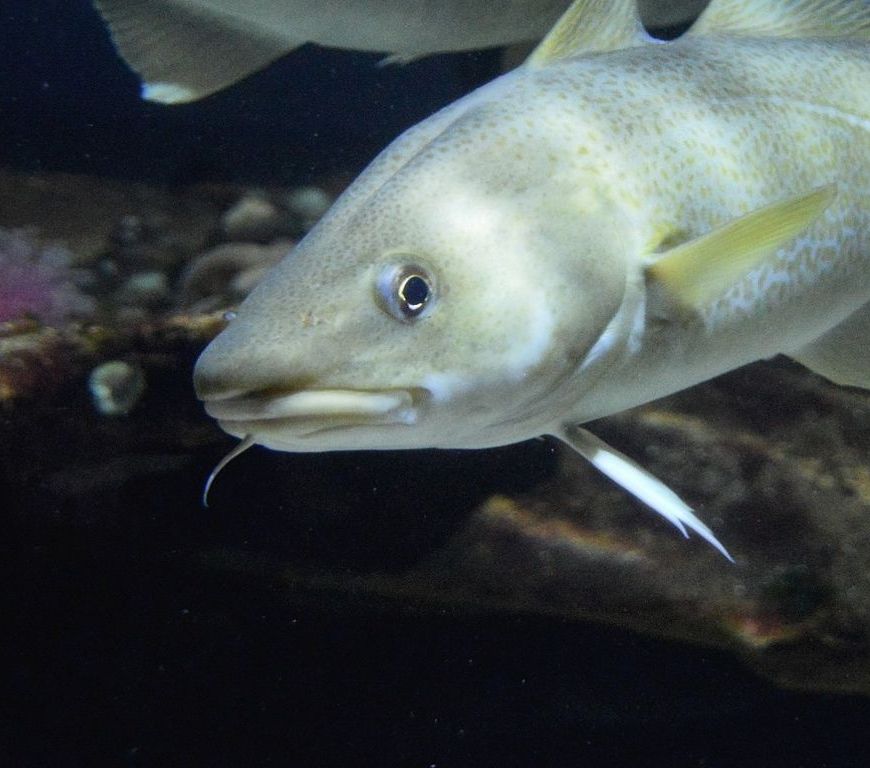
Author Lucie Buttay summarises Journal of Applied Ecology’s October’s Editor’s Choice research article. Conducted with colleagues, this study used a life cycle model to simulate ‘what if’ scenarios around Northeast Arctic cod eggs and larvae. Extreme climatic events, (e.g. heat waves and storms) are becoming more frequent and intense, and on top of that, the ever-growing development of human activities at sea, entails an increasing … Continue reading Editor’s Choice 60:10 Can management measures be used to reduce the impact of extreme events in the early life of fish?

Questioning the Evidence: Re-analyzing studies on the impact of mechanical dredging on invertebrate communities and associated bird life in the Dutch Wadden Sea

Eelke Folmer and Jaap van der Meer talk about their recent Forum paper which comments on an earlier research article, and discuss the importance of evidence based decisions in policy. Background In the coming decades, the growth of the global human population will lead to an increase in food demands. This, in turn, is likely to result in a rise in the extraction of marine … Continue reading Questioning the Evidence: Re-analyzing studies on the impact of mechanical dredging on invertebrate communities and associated bird life in the Dutch Wadden Sea

Implementing expert knowledge of seabird ecology in the Canadian Arctic with fuzzy cognitive mapping

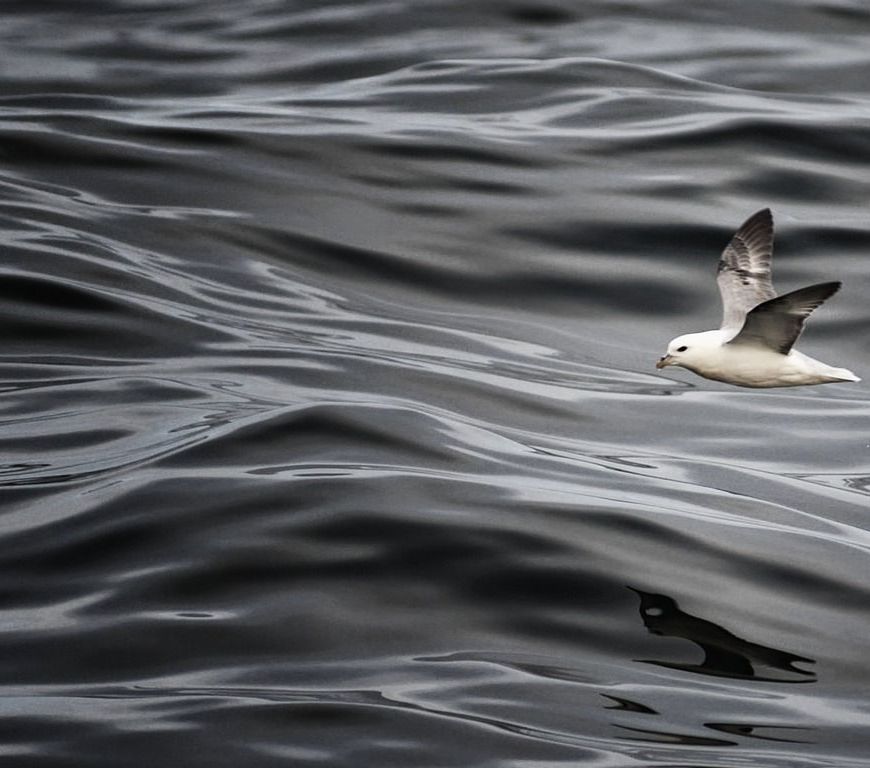
Author Jennifer Provencher shares her team’s latest study that trials a novel tool that helps factor the multiple stressors to seabirds in the Canadian Arctic identified by experts into a graphical ‘cognitive map’. Wildlife populations are commonly subject to multiple, interacting stressors (e.g. pollution, climate change), which makes predicting the outcomes of management actions and identifying priorities a challenge. In data-poor locations like the Arctic, … Continue reading Implementing expert knowledge of seabird ecology in the Canadian Arctic with fuzzy cognitive mapping

Drone-induced flight initiation distances for shorebirds in mixed-species flocks

Joshua Wilson discusses recent research at Moreton Bay, Australia which saw Wilson and colleagues conduct over 200 drone approaches of shorebird flocks to measure how the birds respond to drones. Particular attention is paid to the critically endangered Eastern Curlew. Stress responses Imagine you’re resting in your bed when, out of the corner of your eye, you see something scuttling along the roof towards you. … Continue reading Drone-induced flight initiation distances for shorebirds in mixed-species flocks

Modelling spatial variation in an exploited species across marine reserve boundaries

In their new study, Benn Hanns and Nick Shears evaluate common modelling assumptions used to assess the extent of spill-over and edge effects of marine species from protected-areas. Their findings highlight the potential for erroneous conclusions about these phenomena when inappropriate modelling strategies are used. Species dynamics in marine reserves Increases in exploited species within marine reserves can benefit adjacent fished areas as individuals move … Continue reading Modelling spatial variation in an exploited species across marine reserve boundaries

Editor’s Choice 60:6 Whale shark abundance forecast

Author Oscar Sosa-Nishizaki introduces Journal of Applied Ecology’s June Editor’s Choice research article which was identified by Editors for proposing strong applied ecological guidance. Sosa-Nishizaki et al’s studied whale shark abundance through modelling and photo identification, suggesting that local authorities apply the model each spring. Research conception The foundations of this study began around 2007 with the efforts of the Pejesapo community group from the … Continue reading Editor’s Choice 60:6 Whale shark abundance forecast

Using salt marshes for coastal protection: effective but hard to get where needed most

Beatriz Marin-Diaz talks about her and research colleagues’ latest article, where they monitored wave run-up on Dutch dikes over the course of 3 years. Through comparing different dike locations, some fronted by salt marshes and others fronted by bare tidal flats without vegetation, results could be linked to the long-term marsh development in the area. Introduction Salt marshes are wetlands in coastal areas that provide … Continue reading Using salt marshes for coastal protection: effective but hard to get where needed most

Towards environmentally friendly finfish farming: A potential for mussel farms to compensate fish farm effluents

Jonne Kotta explains new research which uses dynamic energy budget modelling to explore the potential of mussels for bioremediation at finfish farms. Kotta and colleagues suggest that environmentally sustainable finfish farming solutions may be possible in the eutrophic Baltic Sea region. The problem Global demand for fish has risen sharply in recent decades and will surely continue to rise during the next decade. However, this … Continue reading Towards environmentally friendly finfish farming: A potential for mussel farms to compensate fish farm effluents

Deqiang Ma: The consequences of coastal offsets for fisheries

Shortlisted for the Southwood Prize 2022 Deqiang Ma talks us through his and colleagues’ research article which uses a case study of mangrove and seagrass habitats in Queensland, Australia to consider different policies regarding offsetting impacts on fish habitats. The issue Globally, ecosystem services are imperiled due to development, especially in coastal and marine areas. To achieve no net loss of ecosystem services through offsetting … Continue reading Deqiang Ma: The consequences of coastal offsets for fisheries