Spearfishing-fish behavioural interactions as predator-prey systems to envision better management

Author Valerio Sbragaglia and his colleagues guide us through a recent study which advances the understanding of spearfisher-fish behavioural interaction by integrating ecological indicators (i.e., flight and post flight behaviour of fish) with spearfishers’ likelihood to catch a fish. Through modelling and simulating scenarios, their study sheds light on management implications in exploited fish populations. Exploring spearfishing and fish behaviour If you ask spearfishers, they … Continue reading Spearfishing-fish behavioural interactions as predator-prey systems to envision better management

Beneath the Waves: Estimating Marine Bird Abundances Outside the Breeding Season

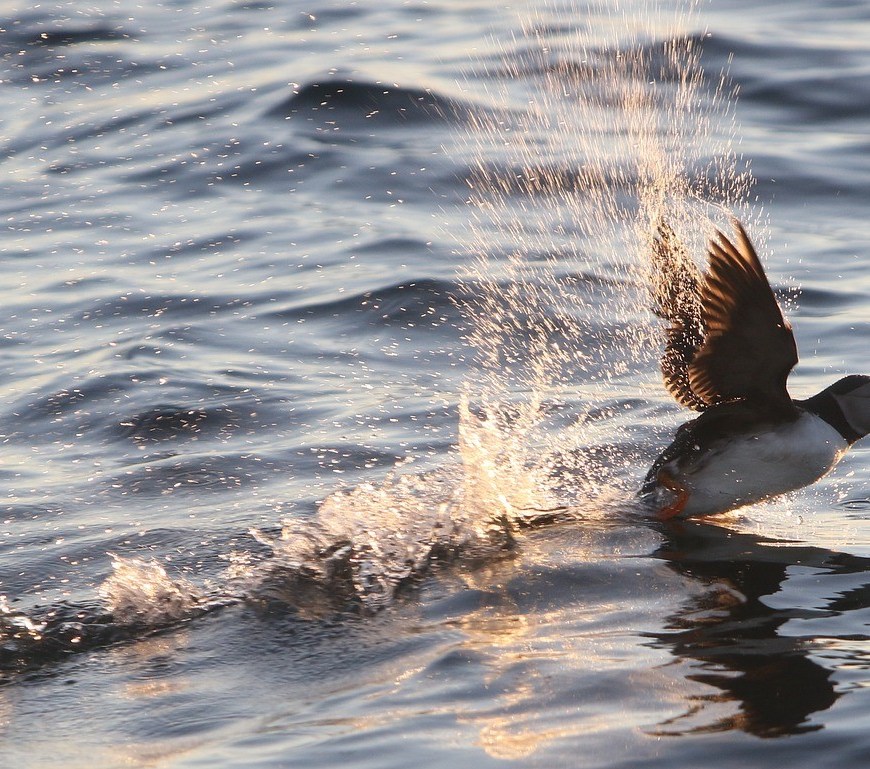
Ruth Dunn shares insights on her latest study where, alongside her colleagues, she investigated the number of marine birds, outside of their breeding seasons, that may be undetectable when underwater during at-sea surveys. Investing in renewable energy developments, as opposed to burning fossil fuels, has been hailed as a route through which humans might be able to counteract anthropogenic-induced climate change. Within western Europe, it … Continue reading Beneath the Waves: Estimating Marine Bird Abundances Outside the Breeding Season

Creating innovative solutions to manage aquatic invasive species impacts

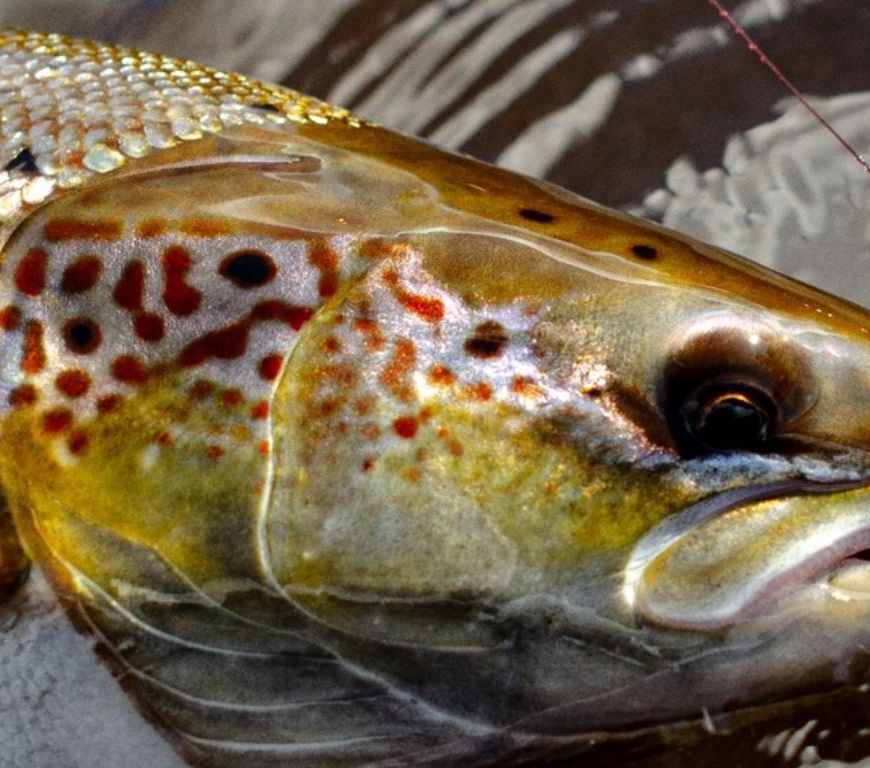
Author Sarah Kingsbury shares a new integrated management approach to better assess the effects and risks of aquatic invasive species on Atlantic salmon in Nova Scotia, Canada. Invasive species played key roles in the extinction of 60% of Earth’s plants and animals as reported by IPBES in 2023. While not all alien species introduced to new habitats become problematic (or even are able to establish … Continue reading Creating innovative solutions to manage aquatic invasive species impacts

A safe passage: Protecting migratory birds in the North Sea

Maja Bradarić summarises how, alongside colleagues, they used 5 years of tracking bird radar data, weather and phenological variables to develop seasonal forecasts of bird migration over the southern North Sea. These forecasts of nocturnal bird migration may be used to define curtailment thresholds for offshore wind energy. In May 2023, turbines in two offshore wind farms in the Dutch North Sea came to a virtual … Continue reading A safe passage: Protecting migratory birds in the North Sea

Does incorporating complexity into coastal engineering increase fish diversity along urban shorelines?

Authors of a recently published research article explain how, to enhance fish diversity, it is important to provide three-dimensional habitat architecture that incorporates a wide range of microhabitat sizes and types.  Habitat complexity Habitat complexity is a key driver of marine fish diversity and essential for determining structure and function of fish communities. Many fishes use benthic habitat features (e.g. holes, crevices, vertical reliefs, and … Continue reading Does incorporating complexity into coastal engineering increase fish diversity along urban shorelines?

Southwood Prize 2023: Winner announced for early career researcher award

Journal of Applied Ecology is delighted to announce Dominic McAfee as the winner of the 2023 Southwood Prize! The award is given annually to the best article in the journal by an author at the start of their career. This year, Dominic was chosen by the Senior Editors from a strong shortlist of 12 articles.  Winner: Dominic McAfee Research: Soundscape enrichment enhances recruitment and habitat building on new oyster reef … Continue reading Southwood Prize 2023: Winner announced for early career researcher award

Chico Mendes Prize 2023: Winner announced for early career practitioner award

We’re excited to announce Molly Mitchell as the winner of the 2023 Chico Mendes Prize, celebrating the best Practice Insights article in the journal by an author at the start of their career. Winner: Molly Mitchell Article: A marsh multimodel approach to inform future marsh management under accelerating sea-level rise About the research How do you make good decisions about managing resources when those resources are … Continue reading Chico Mendes Prize 2023: Winner announced for early career practitioner award

Conservation of future marshland

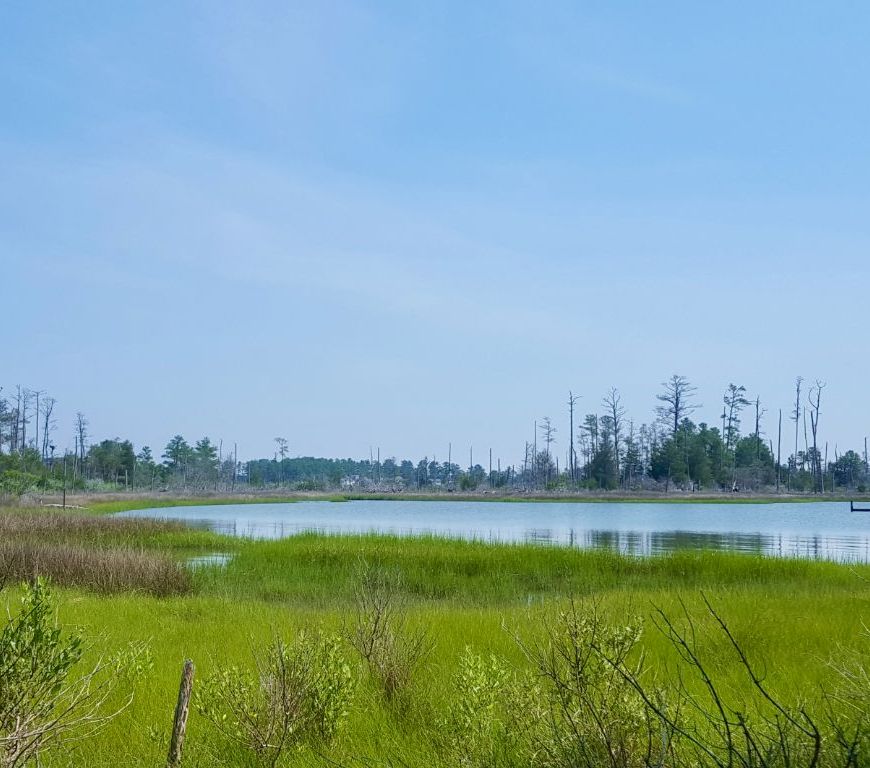
Shortlisted for the Chico Mendes Prize 2023 In this blog post, author Molly Mitchell describe her team’s Practice Insights article which demonstrates the value of using multiple models and data to inform marsh management, conservation and restoration practices. How do you make good decisions about managing resources when those resources are changing? This is the issue with which coastal managers have been struggling as sea … Continue reading Conservation of future marshland

Lucien Besnard: Mercury isotope clocks predict coastal residency and migration timing of hammerhead sharks

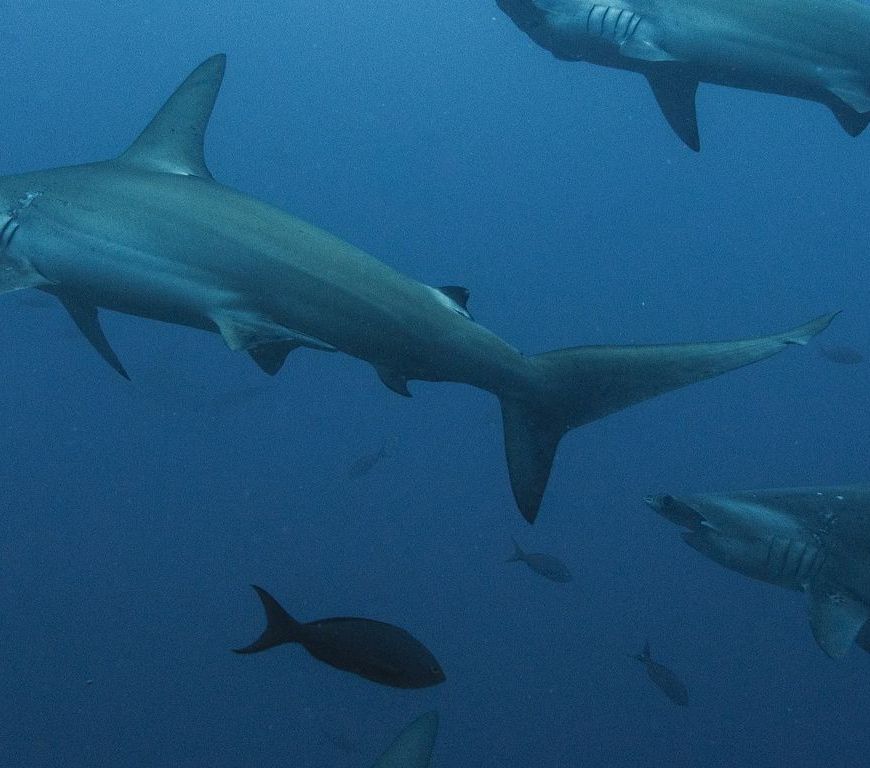
Shortlisted for the 2023 Southwood Prize Lucien Besnard reflects on how he and colleagues used mercury isotopes, within the framework of isotopic clocks, to provide a more precise assessment of hammerhead shark movement. As a result, this method may be used as a complementary tool for stock management through predicting the timing of animal migration – a key aspect in the conservation of marine taxa. … Continue reading Lucien Besnard: Mercury isotope clocks predict coastal residency and migration timing of hammerhead sharks

Samuel Fischer: How can invasive species management benefit from smartphone data?

Shortlisted for the 2023 Southwood Prize Samuel Fischer discusses how he and colleagues researched and utilised an angler smartphone app to build a stochastic model for angler traffic in the Canadian province of Alberta. Anglers facilitate the spread of whirling disease, a parasite-induced fish disease, meaning this model demonstrates the importance of individual-specific behaviour of vectors for propagule transport. From smartphone data to invasive species … Continue reading Samuel Fischer: How can invasive species management benefit from smartphone data?