Lessons from an exemplary private wildlife reserve in Spain

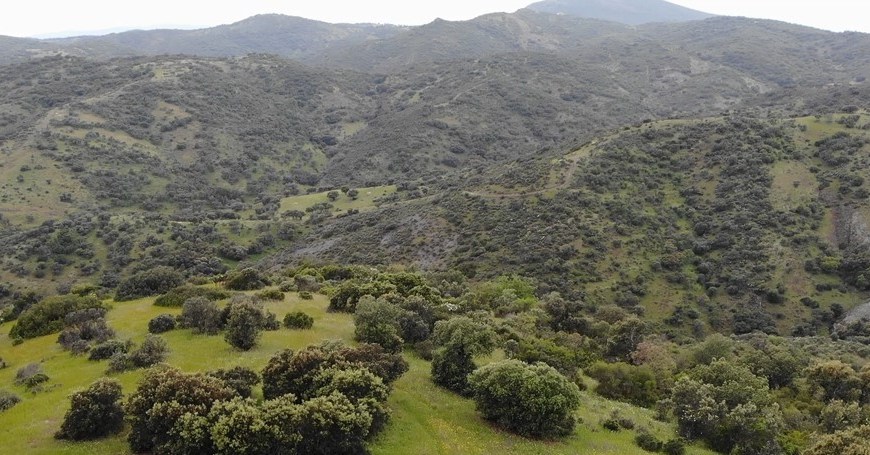
Global conservation targets mostly lean on public initiatives and resources but expanding conservation efforts to private land is paramount to halt biodiversity loss and recover wildlife. In their latest From Practice article, two applied scientists and two practitioners analyse a success story of a private wildlife reserve – the Los Barranquillos Wildlife Refuge in central Spain – which has been running for the past two … Continue reading Lessons from an exemplary private wildlife reserve in Spain

Igor Khorozyan: How to protect cattle from leopard attacks

In this Q&A, we discussed with author Igor Khorozyan the background behind his team’s recently published article: “Studded leather collars are very effective in protecting cattle from leopard (Panthera pardus) attacks” and the wider implications of the research, as well as finding a little bit more about the author himself. The research What’s your article about? In this article, we studied how good protective collars … Continue reading Igor Khorozyan: How to protect cattle from leopard attacks

How can movement ecology support marine protected areas in preventing illegal fishing?

In their recently published work, David Jacoby and colleagues combine long-term shark tracking data with that of enforcement patrols to see how behaviour can influence the vulnerability of marine life to illegal fishing in one of the world’s largest marine protected areas. Continue reading How can movement ecology support marine protected areas in preventing illegal fishing?

Why neonicotinoids? Interview with Southwood Prize winner, Ségolène Humann‐Guilleminot

Senior Editor, Romina Rader, recently spoke to Ségolène Humann‐Guilleminot, winner of our Southwood Prize early career researcher award, to find out more about her work on neonicotinoid insecticides in agricultural land.

Ségolène’s research has also been beautifully illustrated (above) by Rob Lang at Underdone Comics. Continue reading Why neonicotinoids? Interview with Southwood Prize winner, Ségolène Humann‐Guilleminot

The need for a code of practice for mosquito management in European wetlands

Bringing together multidisciplinary expertise, Martinou et al. build a framework that aims to balance the priorities of wetland conservation and mosquito control.  

Wetlands provide essential resources to human societies, and the associated biodiversity associated with wetlands has an estimated value ranging from US $44,597- ($)195,478 per hectare per year. Governments around the world have enacted legislation, policies and regulations including the Clean Water Act (United States) and the Water Act (Australia) to protect wetlands from a variety of human activities. Continue reading The need for a code of practice for mosquito management in European wetlands

Applied ecology in times of COVID-19

In these unusual and, often challenging times, Journal of Applied Ecology Senior Editor, Martin Nuñez raises the questions of how COVID-19 could influence the direction of, and priorities in, applied ecological research.  SARS-CoV-2 and COVID-19 have drastically changed our lives and routines – as I write this, my two-year-old is desperate for me to make her a cheese empanada out of playdoh. Aside from the … Continue reading Applied ecology in times of COVID-19

Identifying hotspots of threats to marine megafauna

In newly published research, A framework for mapping the distribution of seabirds by integrating tracking, demography and phenology, Ana P. B. Carneiro et al. present a new framework aiming to tackle challenges of tracking seabird movement and ultimately improve bycatch mitigation measures. There is increased global awareness that our oceans are under threat. Marine megafauna such as seabirds, marine turtles, marine mammals, sharks and rays … Continue reading Identifying hotspots of threats to marine megafauna

Editor’s Choice 57:02 – Understanding anglers as spatially mobile human predators in freshwater landscapes

Using the example of a spatial recreational fishery for lake trout in northern Canada, Wilson et al. present an exciting analysis of how human behaviour and local ecological dynamics interact to shape landscape-level outcomes. Associate Editor, Robert Arlinghaus highlights why this article has been selected as an Editor’s Choice. The field of applied ecology is increasingly moving towards studies that integrate human behaviour and ecological … Continue reading Editor’s Choice 57:02 – Understanding anglers as spatially mobile human predators in freshwater landscapes

Wildlife conservation modelling and Payment for Ecosystem Services schemes

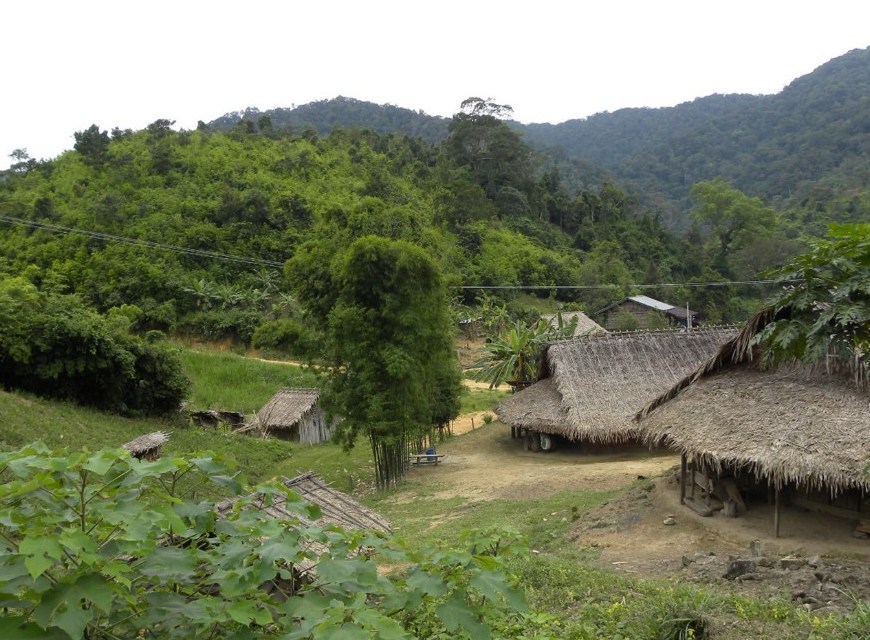
Payments for Ecosystem Services (PES) schemes are a way of bringing potential ‘buyers’ and ‘sellers’ of ecosystem services together for a mutually beneficial exchange. In their recently published work, Kragt and colleagues present an ecological model in the Lao People’s Democratic Republic that predicts how community-based patrolling can protect critically endangered species from poaching. Here they show how this model could benefit PES schemes. Laos … Continue reading Wildlife conservation modelling and Payment for Ecosystem Services schemes

Editor’s Choice 56:11 – badger behaviour compromises TB eradication efforts

Our November Editor’s Choice article raises the question of whether the culling of badgers could increase the risk of TB spread in cattle, as badgers in culled areas travel further. Associate Editor, Andrew Park, looks at context and management implications of Ham et al.’s recent findings. Bovine tuberculosis (TB) is an important livestock disease in the UK, where it has been increasing since the 1990s … Continue reading Editor’s Choice 56:11 – badger behaviour compromises TB eradication efforts