Holiday snapshots can help us to understand conservation sites

In their recent article, Quantifying wildlife watchers’ preferences to investigate the overlap between recreational and conservation value of natural areas, Mancini et al. discovered just how much a trawl through photo sharing and social media sites can tell us about conservation value. Associate Editor, Yolanda Wiersma explains more. We have all have experienced seeing someone’s holiday through their camera lens. Prior to the advent of … Continue reading Holiday snapshots can help us to understand conservation sites


Infographic: Dynamic management tools

Heather Welch et al. provide an operationalization framework for implementing dynamic management tools to tackle a range of disturbance management goals, including minimization of protected species bycatch. See their work presented as an infographic here: Read the full open access article, Practical considerations for operationalizing dynamic management tools in Journal of Applied Ecology. Continue reading Infographic: Dynamic management tools

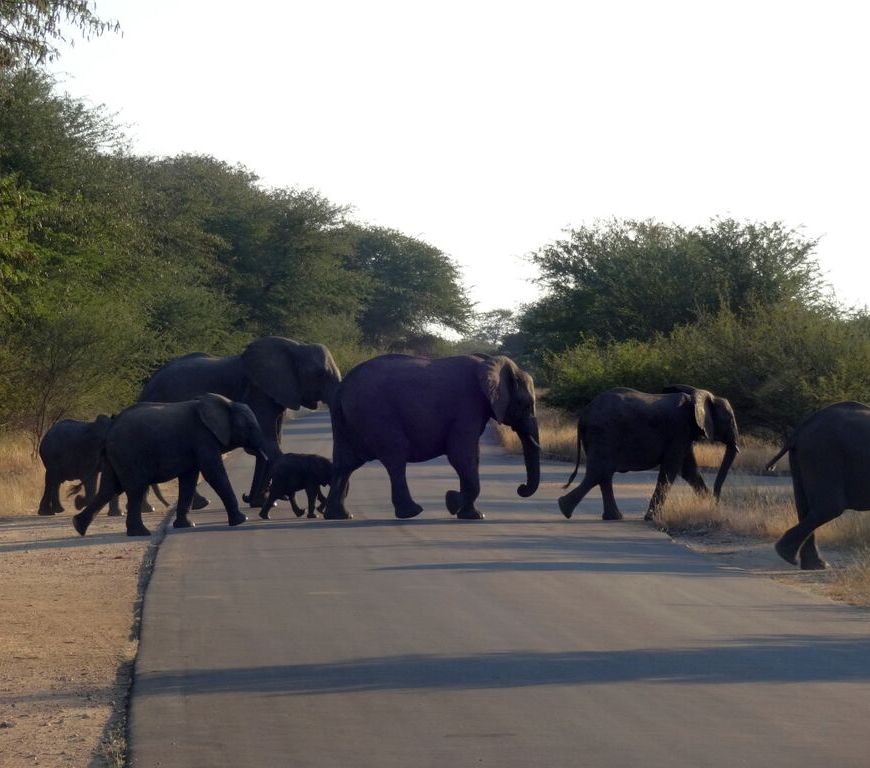
Is fencing the solution to human-elephant conflict?

Is fencing just a short-term solution for preventing human-wildlife conflict? In their recently published paper, Osipova et al. model the longer-term effects fencing can have on the vital movements of wildlife populations, using the African elephant as an example. See their work presented in this infographic: Read the full article, Fencing solves human‐wildlife conflict locally but shifts problems elsewhere: A case study using functional connectivity … Continue reading Is fencing the solution to human-elephant conflict?

Where should we build wildlife crossings?

With wildlife crossing locations difficult to pinpoint, how do we know where to build crossing structures? Associate Editor, Manuela Gonzalez-Suarez explains how Bastille-Rousseau et al.’s new method and recent article, Optimizing the positioning of wildlife crossing structures using GPS telemetry help answer this question. There are over 40 million km of roads in the world (100 times the distance from the moon to Earth), with many millions … Continue reading Where should we build wildlife crossings?

Focus on the predators: an in-depth look at songbird nest predation

Associate Editor, Marc-André Villard discusses the tricky business of managing nest predation and the recent article by Chiavacci et al. Linking landscape composition to predator-specific nest predation requires examining multiple landscape scales. Predation is, by far, the main cause of nest failure in songbirds.  Therefore, it is important to understand the factors putting certain species (or their nests) at risk.  For decades, researchers have tried to identify … Continue reading Focus on the predators: an in-depth look at songbird nest predation

One step back, two steps forward: impacts of disturbance on the population dynamics of an endangered species

Associate Editor, Bret Elderd discusses the ‘double-edged sword’ fire presents to endangered species, based around the recent article by Warchola et al, Balancing ecological costs and benefits of fire for population viability of disturbance-dependent butterflies. The article features in issue 55:2 of Journal of Applied Ecology. In their recently published paper in Journal of Applied Ecology, Warchola et al. tackle a problem of conservation concern … Continue reading One step back, two steps forward: impacts of disturbance on the population dynamics of an endangered species

Spotlight: Decision making under uncertainty

Issue 55:2 of Journal of Applied Ecology features a Spotlight on Decision making under uncertainty. Senior Editor, Michael Bode discusses these Spotlight papers, chosen by the Editors to showcase the latest research in this area. Professor John Shepherd famously compared fisheries management to forestry, except that the trees were invisible and were constantly moving around. Most applied ecologists would sympathise, while simultaneously casting an envious eye … Continue reading Spotlight: Decision making under uncertainty

If you build it, will it work?

Following the recent article, Evaluating the success of wildlife crossing structures using genetic approaches and an experimental design: Lessons from a gliding mammal by Kylie Soanes et al., Associate Editor, Yolanda Wiersma explores the world of wildlife crossing structures. Large-scale restoration projects represent human optimism in the face of anthropogenic change. In response to the negative effects of human activities on habitat loss and fragmentation, … Continue reading If you build it, will it work?

Understanding the distribution of a terrestrial mammal community

Associate Editor Matt Hayward discussed the importance of the recent paper from Lindsey Rich and colleagues ‘Using camera trapping and hierarchical occupancy modelling to evaluate the spatial ecology of an African mammal community’ with his PhD student, Lilian Sales (supervised by Rafael Loyola of the Conservation Biogeography Lab at the Federal University of Goias, Brazil) and below are her views on this paper. Monitoring wildlife … Continue reading Understanding the distribution of a terrestrial mammal community

Managing uncertainties associated with global declines of apex predators

Over three days we have posted a collection of blog posts on a topical Forum discussion published in Issue 2 about the methods used in wildlife conservation and in particular the role of dingoes in conservation. Following acceptance of a peer-reviewed Forum critique of another article in the Journal it is the Journal’s process to invite the original authors to write a peer-reviewed response to … Continue reading Managing uncertainties associated with global declines of apex predators