Showcasing developments in biologging and related methods in applied ecology

Following the recent Journal of Animal Ecology Special Feature on biologging, Associate Editor, Steph Januchowski-Hartley takes a look at how research in this and similar methods are affecting the field of applied ecology today. Advances in technology have allowed for small electronic loggers and transmitters to be developed not only for biomedical monitoring for humans (think of the tech we can use for monitoring hearts, … Continue reading Showcasing developments in biologging and related methods in applied ecology

Using tracking data to guide research and conservation efforts in long-distance migratory birds

Developments in tracking data are uncovering important conservation sites, the significance of which had previously been unknown. Associate Editor, Chi-Yeung explains more about the recently published work of Ying‐Chi Chan and colleagues. An increasing number of tracking studies on animals over the last few decades have revealed interesting behaviour and habits that are otherwise impossible to observe in the field. This is particularly the case … Continue reading Using tracking data to guide research and conservation efforts in long-distance migratory birds

Spotlight: management of wide-ranging species

In issue 56:8 we showcase the research, technology and mitigation efforts going into the management of wide-ranging species today. Join Associate Editor, Johan du Toit in exploring this selection of work, free to read in the journal for a limited time. The ability to range widely across our planet conveys a game-changing advantage to certain animals, as was realised by humans when they discovered that … Continue reading Spotlight: management of wide-ranging species

Carnivores without borders: management of transboundary populations when objectives differ

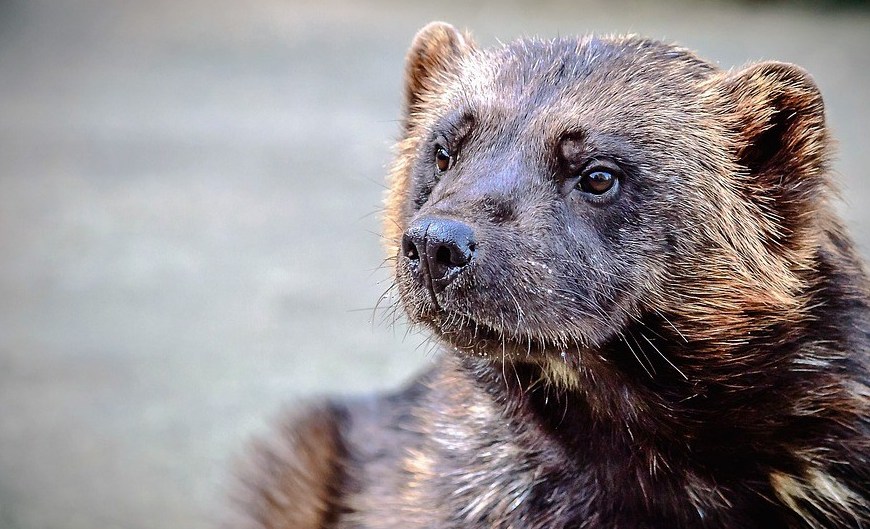
Using the recent case study of wolverines in Scandinavia as an example, Associate Editor, Kulbhushansingh Suryawanshi highlights why management initiatives for transboundary populations need to collaborate across borders – and what happens when they don’t. Globally, carnivore conservation has two very different objectives. First, to protect the population of the carnivore species from going extinct. Second, to mitigate the impact of the carnivore on the … Continue reading Carnivores without borders: management of transboundary populations when objectives differ

Dynamic technology for dynamic ecosystems

When it comes to developing management tools, how do we keep up with constantly changing ecosystems? Associate Editor, Annabel Smith explains the important step forward made by Welch et al’s research into dynamic management tools. Scientists have been very good at developing guidelines for management of natural systems. Streams of conceptual frameworks are published every year, to the point that we now have frameworks for … Continue reading Dynamic technology for dynamic ecosystems

Holiday snapshots can help us to understand conservation sites

In their recent article, Quantifying wildlife watchers’ preferences to investigate the overlap between recreational and conservation value of natural areas, Mancini et al. discovered just how much a trawl through photo sharing and social media sites can tell us about conservation value. Associate Editor, Yolanda Wiersma explains more. We have all have experienced seeing someone’s holiday through their camera lens. Prior to the advent of … Continue reading Holiday snapshots can help us to understand conservation sites

Infographic: Dynamic management tools

Heather Welch et al. provide an operationalization framework for implementing dynamic management tools to tackle a range of disturbance management goals, including minimization of protected species bycatch. See their work presented as an infographic here: Read the full open access article, Practical considerations for operationalizing dynamic management tools in Journal of Applied Ecology. Continue reading Infographic: Dynamic management tools

Is fencing the solution to human-elephant conflict?

Is fencing just a short-term solution for preventing human-wildlife conflict? In their recently published paper, Osipova et al. model the longer-term effects fencing can have on the vital movements of wildlife populations, using the African elephant as an example. See their work presented in this infographic: Read the full article, Fencing solves human‐wildlife conflict locally but shifts problems elsewhere: A case study using functional connectivity … Continue reading Is fencing the solution to human-elephant conflict?

Where should we build wildlife crossings?

With wildlife crossing locations difficult to pinpoint, how do we know where to build crossing structures? Associate Editor, Manuela Gonzalez-Suarez explains how Bastille-Rousseau et al.’s new method and recent article, Optimizing the positioning of wildlife crossing structures using GPS telemetry help answer this question. There are over 40 million km of roads in the world (100 times the distance from the moon to Earth), with many millions … Continue reading Where should we build wildlife crossings?

Focus on the predators: an in-depth look at songbird nest predation

Associate Editor, Marc-André Villard discusses the tricky business of managing nest predation and the recent article by Chiavacci et al. Linking landscape composition to predator-specific nest predation requires examining multiple landscape scales. Predation is, by far, the main cause of nest failure in songbirds.  Therefore, it is important to understand the factors putting certain species (or their nests) at risk.  For decades, researchers have tried to identify … Continue reading Focus on the predators: an in-depth look at songbird nest predation