Can ‘Citizen Scientists’ play a valid role in conservation management?

The emergence of citizen science in biodiversity monitoring has transformed the methods by which biodiversity surveys can be conducted. With the recent development of automatic visual identification tools, Pierre Bonnet and colleagues present two distinct case studies implementing citizen science and the use of Pl@ntNet, an automatic plant identification platform. This article is part of the BES cross-journal special feature on Citizen Science. Effective monitoring … Continue reading Can ‘Citizen Scientists’ play a valid role in conservation management?

Editor’s Choice 57:09 – Multi-species connectivity in a trans-frontier conservation landscape

As the September Editor’s Choice for Journal of Applied Ecology, research from Angela Brennan and colleagues moves away from a single-species approach and instead looks at movement corridors and connectivity on a large scale and across multiple species. Associate Editor, Kulbhushansingh Suryawanshi shares the important impact this could have on future conservation and development plans. Continue reading Editor’s Choice 57:09 – Multi-species connectivity in a trans-frontier conservation landscape

Targeting survey and monitoring efforts on roads could help us better understand population changes in introduced carnivores

Carnivores usually occur over large areas in low numbers, which sometimes makes them difficult to find. In their recently published article, Hayley Geyle and colleagues assessed the effectiveness of different camera trap survey designs for detecting feral cats and red foxes, and looked at how this influenced their ability to determine whether populations had changed in response to control through time. Introduced carnivores in Australia … Continue reading Targeting survey and monitoring efforts on roads could help us better understand population changes in introduced carnivores

Black and white fragmentation maps can be misleading

Recent research from Marina Antongionanni and colleagues estimates 47,000 fragments of Caatinga dry forests to be affected by chronic human disturbances. Here the authors look at how such effects are depicted, and demonstrate how this knowledge can help define large-scale conservation and management actions. Continue reading Black and white fragmentation maps can be misleading

Behind the Cover 1:1 – Q&A with Alex Braczkowski

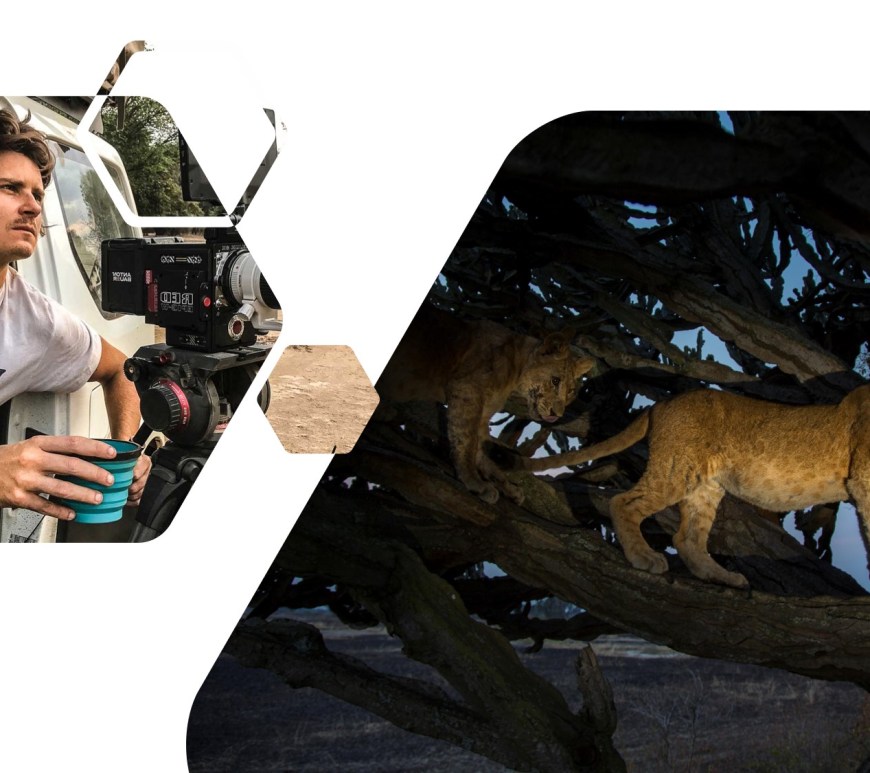
In this Q&A, we find out more about the author and research: “Detecting early warnings of pressure on an African lion (Panthera leo) population in the Queen Elizabeth Conservation Area, Uganda” behind the brilliant cover image of our inaugural issue. The research What’s your article about? Our article is about the status of African lions in western Uganda and how a recently developed population survey technique … Continue reading Behind the Cover 1:1 – Q&A with Alex Braczkowski

New study reveals rarity of the Spirit Bear and gaps in their protection in Canada’s Great Bear Rainforest

In their latest research, Service and colleagues map the distribution and frequency of the ‘Spirit bear’ allele to support conservation planning of these culturally important phenotypic variants. Author Christina Service shares her team’s findings below. Continue reading New study reveals rarity of the Spirit Bear and gaps in their protection in Canada’s Great Bear Rainforest

Using phenology to guide invasive plant management

Successful restoration of degraded land often depends on well-timed interventions to control invasive species. In their recently published article, Taylor and colleagues present a case study of the effects of incorporating phenology information into invasive plant control operations at Midway Atoll National Wildlife Refuge (NWR), USA. The authors share their story below. Towards the end of April, millions of birds, including warblers, tanagers, buntings, grosbeaks … Continue reading Using phenology to guide invasive plant management

Camera traps reveal hidden treasures of the rainforest

In their new research, Mattia Bessone and colleagues demonstrate how camera trap distance sampling can be used to develop conservation strategies and protect threatened species. The impact humans are exerting on the planet is accelerating the loss of biodiversity, with animal species disappearing at such unprecedented rate that scientists have labelled the current era ‘Earth’s sixth mass extinction’. To preserve the remnants of wildlife we … Continue reading Camera traps reveal hidden treasures of the rainforest

Fishing for mammals: using environmental DNA from rivers to monitor mammals on land

New research by Sales and colleagues looks at the monitoring of terrestrial mammal communities and compares the efficacy of landscape-level monitoring using environmental DNA (eDNA) to that of conventional methods. Here the authors summarise their findings. Accurately and effectively monitoring biodiversity is a key consideration in this rapidly changing world. Consistent and regular monitoring of species communities is pivotal for ongoing management, conservation and policy … Continue reading Fishing for mammals: using environmental DNA from rivers to monitor mammals on land

Identifying hotspots of threats to marine megafauna

In newly published research, A framework for mapping the distribution of seabirds by integrating tracking, demography and phenology, Ana P. B. Carneiro et al. present a new framework aiming to tackle challenges of tracking seabird movement and ultimately improve bycatch mitigation measures. There is increased global awareness that our oceans are under threat. Marine megafauna such as seabirds, marine turtles, marine mammals, sharks and rays … Continue reading Identifying hotspots of threats to marine megafauna