Tropical riparian forests in danger from large savanna wildfires

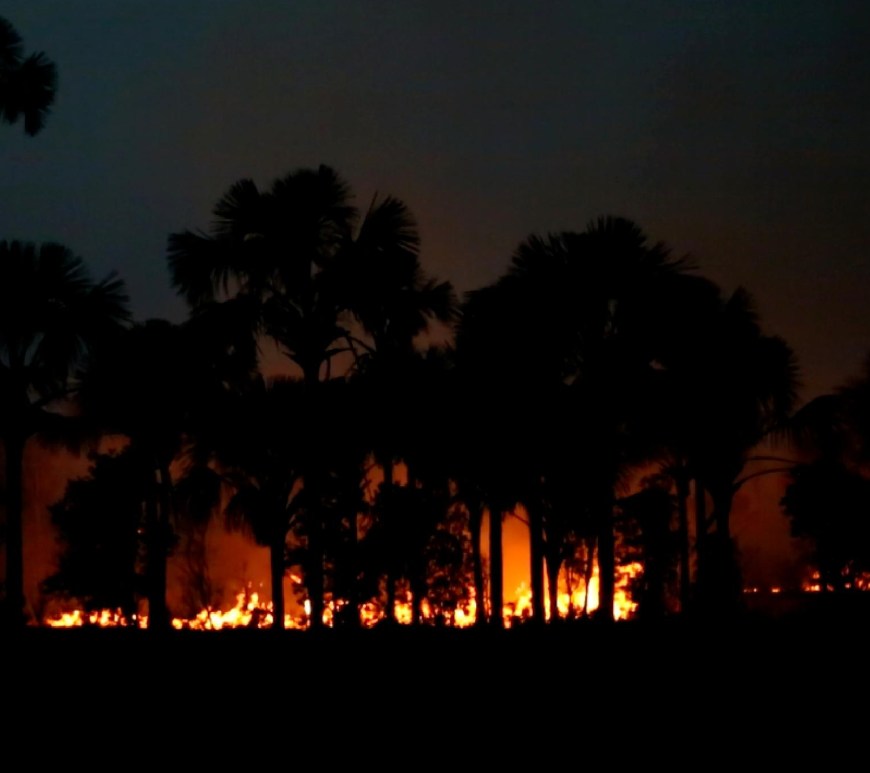
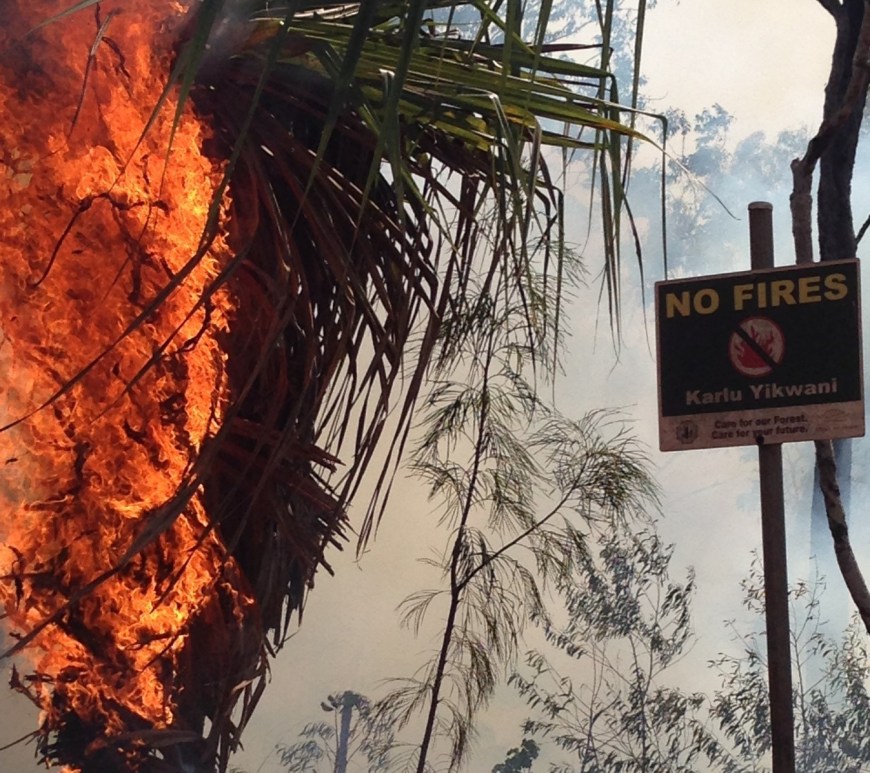
In their latest research, Flores and colleagues combine satellite image analysis with detailed field assessments, to quantify the impact caused by large wildfires on riparian forests in the Chapada dos Veadeiros National Park (CVNP). Large savanna wildfires are increasing across the tropics because of a synergism between climate change and unsustainable management practices. In Brazil, for instance, savannas of the Cerrado and Pantanal have recently … Continue reading Tropical riparian forests in danger from large savanna wildfires

ESE Editor’s Choice 1:2 – An ethical framework for using camera traps in the field

How should you react if you unintentionally capture illegal activity in photos from a wildlife camera trap? Associate Editor Dave Augeri introduces our latest Editor’s Choice article by Sharma et al. which addresses the ethics of using camera traps in wildlife research. Ethical principles are so fundamental to our work in conservation science that we often take it for granted. However, while we may naturally … Continue reading ESE Editor’s Choice 1:2 – An ethical framework for using camera traps in the field

Where do escaped farmed salmon go after unintentional release from aquaculture facilities?

The unintentional release of domesticated salmon poses a significant risk to wild Atlantic salmon populations. In their latest research, Mahlum and colleagues use a hierarchical species distribution model to determine the spread and potential impact of domesticated salmon, following escape events in aquaculture facilities. Atlantic salmon is a culturally and economically important species that has been subjugated to intense anthropogenic pressures over the last century. … Continue reading Where do escaped farmed salmon go after unintentional release from aquaculture facilities?

Investigating the effects of fire management on savanna biodiversity with grid‐based spatially explicit population simulations

The development of effective fire management regimes is a global challenge. New research from Davies and colleagues aims to develop a flexible modelling approach to investigate how the spatiotemporal application of fire influences savanna biodiversity. Despite the integral role that fire plays in the functioning of ecosystems around the world, there remain few areas where the occurrence of fire has not been disrupted, in some … Continue reading Investigating the effects of fire management on savanna biodiversity with grid‐based spatially explicit population simulations

Editor’s Choice 57:11 – An integrated approach using passive acoustic monitors and camera traps to measure hunting activity and its impacts on mammalian populations

Associate Editor, Sharif A. Mukul, introduces the November Editor’s Choice paper, which demonstrates that acoustic monitoring technologies detect far more instances of hunting than camera traps. Unsustainable hunting is one of the major challenges to wildlife and healthy forests worldwide. While subsistence hunting is widespread in many parts of the tropics, over-hunting can have a detrimental effect on wildlife populations, particularly mammals. In recent years, … Continue reading Editor’s Choice 57:11 – An integrated approach using passive acoustic monitors and camera traps to measure hunting activity and its impacts on mammalian populations

Catch them if you can! A combined effort by citizens and scientists to monitor mosquitoes in Germany

In their latest research, Pernat and colleagues evaluate the performance of the German citizen science project ‘Mückenatlas’, in comparison to professional mosquito monitoring efforts. Mosquitoes – everyone knows them, hardly anyone likes them, and as carriers of pathogens, they can also pose a threat to the health of humans and animals. These negative connotations associated with mosquitos have been put to use by Mückenatlas, a … Continue reading Catch them if you can! A combined effort by citizens and scientists to monitor mosquitoes in Germany

Infographic: Pollinator monitoring more than pays for itself

New research from Breeze and colleagues demonstrates that a well-designed monitoring scheme provides  excellent value for money, compared with traditional research funding models, and could help save species and protect UK food security. This infographic provides an overview of their work. ‘Our findings demonstrate that long‐term systematic monitoring can be a cost‐effective tool for both answering key research questions and setting action points for policymakers. … Continue reading Infographic: Pollinator monitoring more than pays for itself

Pollinator monitoring more than Pays for Itself

In their latest research, Breeze and colleagues evaluate the costs of running pollinator monitoring schemes against the economic benefits to research and the society that they provide Take a look at the accompanying infographic here Bees, hoverflies and other insects provide vital pollination services to crops and wild plants throughout the UK. There is a lot of information demonstrating that these insects are declining but … Continue reading Pollinator monitoring more than Pays for Itself

How does replanting of oil palm plantations affect arthropod biodiversity?

Palm oil plantations require replanting every twenty to thirty years but its effects on biodiversity are widely understudied. In their latest research, Pashkevich and colleagues assess the impact of replanting on arthropod communities in an industrial plantation. Biodiversity in oil palm plantations Oil palm plantations are often in areas that were once tropical rainforests, and this conversion has resulted in widespread declines in biodiversity and … Continue reading How does replanting of oil palm plantations affect arthropod biodiversity?

Uncovering the role of protected areas and private wildlife businesses for free-ranging carnivores

In their recent Journal of Applied Ecology research, Curveira-Santos et al. look at free-ranging carnivores in South Africa to highlight the importance of maintaining areas under long-term formal protection. Across southern Africa, the attribution of rights over wildlife has deeply transformed the conservation landscape. The private commercial wildlife industry (ecotourism and hunting) now plays an important role in augmenting and connecting formal protected areas. As … Continue reading Uncovering the role of protected areas and private wildlife businesses for free-ranging carnivores