U.S. policy-based management improves grassland bird nest survival – although finer-scale habitat has superior predictive ability

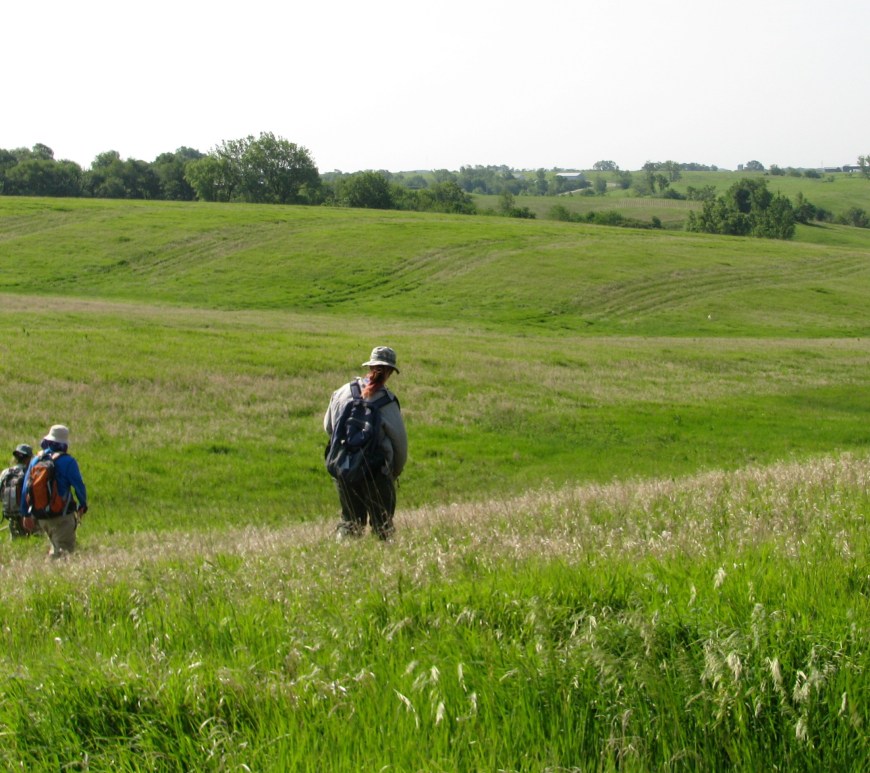
In a recent study, Justin Shew and colleagues found nest survival improved with policy-based management and establishing native grasses but conclude finer-scale details often have superior predictive ability from a multi-scale perspective. Read more about their findings here. A video summary of their work is also available. Grassland and farmland bird populations have been declining around the world and these declines are primarily attributed to … Continue reading U.S. policy-based management improves grassland bird nest survival – although finer-scale habitat has superior predictive ability
Benthos longevity matters …

Long-lived species take longer to recover from the effects of bottom trawling by commercial fisheries according to recent research from Hiddink et al. Watch this video from PROJECT BENTHIS to discover more about the importance of longevity and benthic animal traits. Introduction by Associate Editor, Verena Trenkel. Combining knowledge on the local benthos community and the results of this study, managers will now be able … Continue reading Benthos longevity matters …

Defining and delivering resilient ecological networks in England

Nick Isaac et al.’s new Policy Direction, Defining and delivering resilient ecological networks: nature conservation in England is available as an Accepted Article from today (Thursday 21st June). Read Nick’s comments on the development of this adaptive management framework in this post and watch a video here. The UK Government’s 25 Year Environment Plan (henceforth 25YEP) for England is an exciting opportunity to reframe the direction of nature conservation … Continue reading Defining and delivering resilient ecological networks in England

Video: Riverine ecosystem service quantification

Dalal Hanna et. al.’s paper, A review of riverine ecosystem service quantification: Research gaps and recommendations features in issue 55:3 of Journal of Applied Ecology. Watch this video to find out more. ‘Rivers provide numerous ecosystem services, including drinking water and irrigation. They also provide habitat to some our favourite food sources like fish, and places to go for fun recreational activities like swimming. To ensure … Continue reading Video: Riverine ecosystem service quantification

Jaguar habitat use outside protected areas in Central America: accounting for the detection process generates new insights

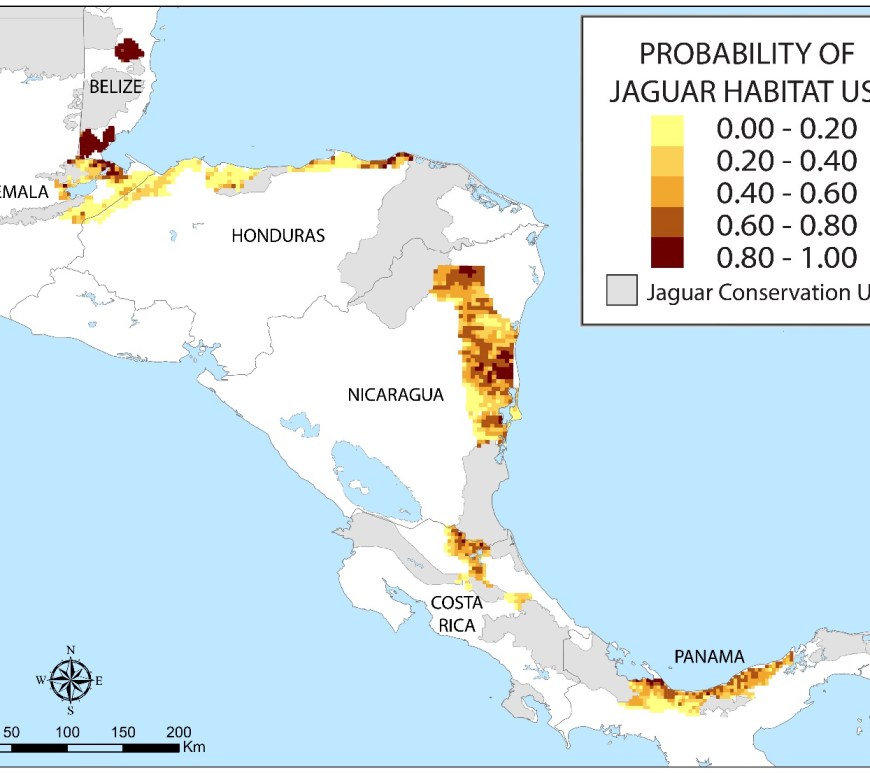
We’re turning our attention to wide-ranging animals, specifically jaguars of Central America. Lisanne Petracca discusses her recent article, Robust inference on large-scale species habitat use with interview data: The status of jaguars outside protected areas in Central America. The team also share video summaries of their work in English and Spanish.  For wide-ranging animals such as our focal species, the jaguar (Panthera onca), it is … Continue reading Jaguar habitat use outside protected areas in Central America: accounting for the detection process generates new insights

Video: What is the future of peer review in ecology?

It’s Peer Review Week and many are thinking about the course peer review may take in the future. What better time to watch the video of our panel discussion on the future of peer review in ecology from the British Ecological Society Annual Meeting, 2016? This post was original shared by Alice Plane on the BES website. Peer review is critical to the research process but … Continue reading Video: What is the future of peer review in ecology?

Video: Population density – a new method using remote cameras and radio collars

In this latest post, Jesse Whittington shares insights into new models for monitoring wildlife, including grizzly bears. Don’t forget to watch the video of some bears captured on camera! Whittington and colleagues’ Open Access article, Generalized spatial mark–resight models with an application to grizzly bears is available in the Journal of Applied Ecology. Wildlife managers around the world strive to estimate population abundance and the related … Continue reading Video: Population density – a new method using remote cameras and radio collars

Video: Managing animals confiscated from the illegal wildlife trade with the Wildlife Rapid Rescue Team

Following his work for the recent Practitioner’s Perspective, Holistic management of live animals confiscated from illegal wildlife trade, Wildlife Alliance’s Director of Science, Dr. Thomas Gray  describes the policy recommendations and conclusions from the paper from the Cardamom Rainforest Landscape in Cambodia. Watch the video and read Tom’s post below. Our Practitioner’s Perspective piece in the Journal of Applied Ecology addresses an often over-looked aspect of the war against … Continue reading Video: Managing animals confiscated from the illegal wildlife trade with the Wildlife Rapid Rescue Team

Forests in 3D

In this post Markus Eichhorn discusses his new article ‘Effects of deer on woodland structure revealed through terrestrial laser scanning‘ About the video: Three-dimensional reconstruction of a transect from Wyre Forest, an area of high deer density. The central 10 X 50 m plot is surrounded by a large number of points which were not used in the analyses. Survey apparatus is still visible. Points … Continue reading Forests in 3D

Hunting and hiking are not so bad for wildlife populations

In this post Roland Kays discusses his paper ‘Does recreation or hunting affect wildlife communities in protected areas?‘ published today in Journal of Applied Ecology. Public wild lands have dual mandates to protect animals and provide recreational opportunities for people. These goals could be at odds if recreation, ranging from quiet hiking to legal hunting and trapping, hurts the wildlife community.  Past studies have clearly … Continue reading Hunting and hiking are not so bad for wildlife populations