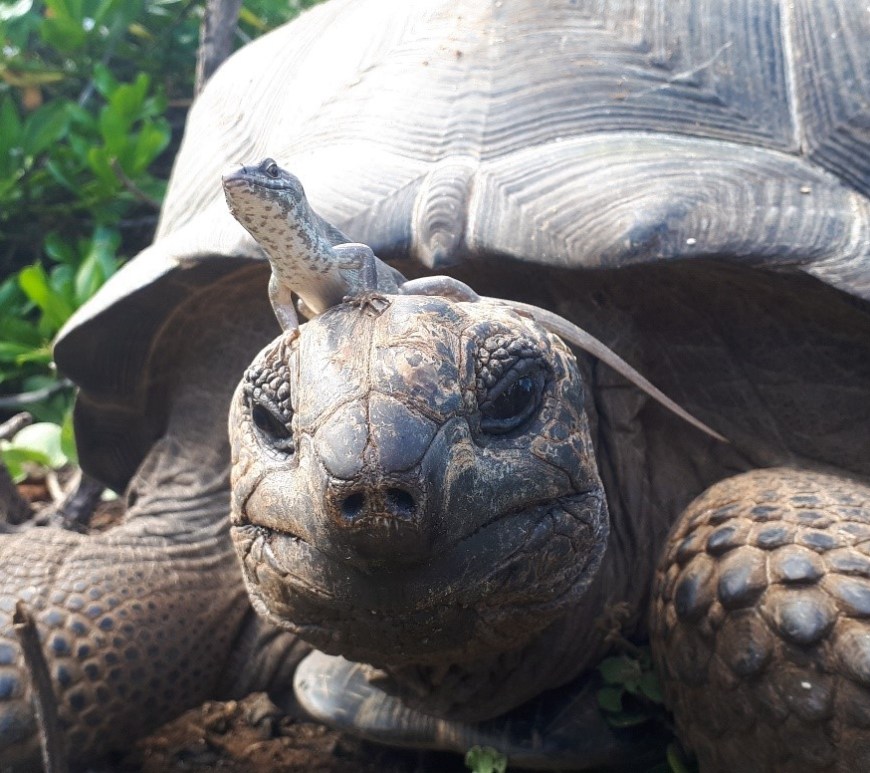
Tortoises are unlikely to be detrimental for endemic skinks. A Telfair’s skink is basking on the head of an introduced Aldabra giant tortoise. Photo Nik Cole.

Seven years of rewilding with giant tortoises

Rosemary Moorhouse-Gann speaks on their latest research which investigates how rewilding Giant Tortoise can affect an Island ecosystem. The dodo, perhaps the most famous animal originating from Mauritius, is tragically extinct. Less well known are the two extinct species of giant tortoise that were found only in Mauritius. You can see shadows of the lost tortoises in Mauritian plant communities today, in the form of … Continue reading Seven years of rewilding with giant tortoises

2021 Spotlight Virtual Issue

We’re delighted to announce that the 2021 Spotlight Virtual Issue is now online. Each year, the  Journal of Applied Ecology Editors select a collection of articles from the previous publication volume for a Spotlight Virtual Issue to showcase important new research from the Global South. The articles within the Virtual Issue are free to read for the year so that they can be accessed by all … Continue reading 2021 Spotlight Virtual Issue

Temporal trends in geographic clines of salmon eggs associated with global warming and hatchery programs

Koh Hasegawa and colleagues describe their latest research examining the geographic clines in Japanese chum salmon (Oncorhynchus keta). Many animal and plant species show geographic clines which are often recognized as adaptations to the associated transitional environments. A well-known example is that the body size of bears increase in more northern regions. Even people may notice clines in their daily lives, such as people in … Continue reading Temporal trends in geographic clines of salmon eggs associated with global warming and hatchery programs

Sensory ecology in conservation breeding programmes: an overlooked, but vital, consideration

Captive breeding programmes are key to species reintroduction strategies, but could potentially be associated with adaptations that are maladaptive in their natural habitat. In a recent paper, Chris Freelance and colleagues explored differences in sensory organ morphology between wild and captive-bred populations of a critically endangered insect. Captive breeding programmes are a well-established part of threatened species conservation strategies. These programs create insurance populations against … Continue reading Sensory ecology in conservation breeding programmes: an overlooked, but vital, consideration

Helping practitioners to make and document conservation decisions: the Evidence-to-Decision tool

In this contribution post, Alec Christie introduces a novel tool guiding and encouraging practitioners to document and report the evidence and reasoning behind conservation decisions. The tool guide and template are permanently archived in Applied Ecology Resources. Originally posted and adapted from the Conservation Evidence blog and Conservation Land Management.. When undertaking actions to restore habitats or conserve wildlife, we often have to make difficult … Continue reading Helping practitioners to make and document conservation decisions: the Evidence-to-Decision tool

Bird-friendly agriculture: finding the right balance to benefit birds and farmers

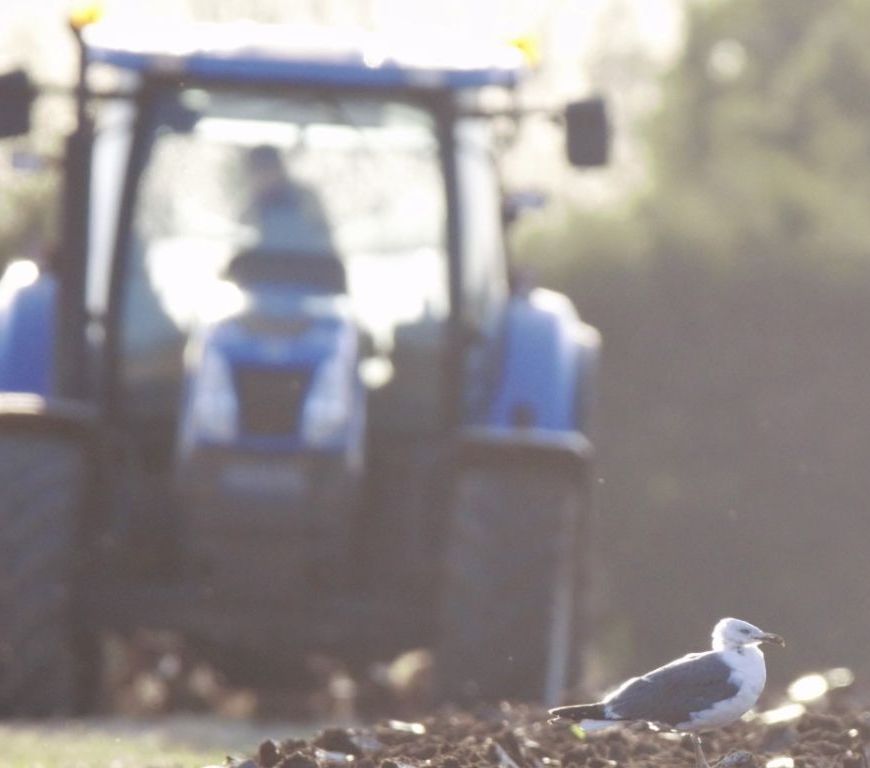
Promoting birds in agroecosystems is contentious. In their latest research, Olivia Smith and colleagues demonstrate how farmers can use landscape and farm diversification practices to harness ecosystem services from birds while reducing negative trade offs. Birds play many roles in human societies, including as consumers of crops and pests, carriers of pathogens and beloved icons. Consider, for example, the nearly globally distributed barn swallow. The … Continue reading Bird-friendly agriculture: finding the right balance to benefit birds and farmers

The surprising connections between deer and the forest canopy

Ungulates place immense consumptive pressure on forest vegetation globally, leaving legacies of reduced biodiversity and simplified vegetative structure. In their latest research, Samuel Reed and colleagues sought to determine whether browse-induced changes occurring early in succession ultimately manifest themselves in the developed forest canopy. Herbivores are incredibly influential around the world and can re-shape entire ecosystems over time. In North American temperate forests, white-tailed deer … Continue reading The surprising connections between deer and the forest canopy

Social distancing between plants may amplify coastal restoration at early stage

Climate change and anthropogenic activities are jeopardising coastal ecosystems world-wide. Once degraded, these valuable ecosystems are not easy to recover. In their latest research, Hao Huang and colleagues conducted transplanting experiments to search for the optimal spatial design of coastal restoration. Few ecosystems can equate to coastal wetlands in terms of connections with humans. They provide many ecosystem services that are vital to current societies, … Continue reading Social distancing between plants may amplify coastal restoration at early stage

Welcome to our new Associate Editor Mentees, 2022.

Journal of Applied Ecology offers a two-year mentoring opportunity for early career researchers to gain experience of the Associate Editor role on a journal. Each mentee works with an assigned Senior Editor mentor and the Editorial Office. They have the opportunity to gain insights into the publishing and review processes as they handle submissions in an Associate Editor capacity. We’re pleased to welcome six new Associate … Continue reading Welcome to our new Associate Editor Mentees, 2022.

Editor’s Choice 59:1: Taking the road less fragmented slows disease spread

Associate Editors, Bret D Elderd and Anibal Pauchard, introduce this month’s Editor’s Choice article by Prist et al., which demonstrates that the building of roads that crisscross pristine habitat can lead to an increase in vector dispersal and Yellow Fever Virus (YFV) cases. The relationship between human and animal disease and environmental integrity has been highlighted by the recent COVID19 pandemic. However, quantitative studies on … Continue reading Editor’s Choice 59:1: Taking the road less fragmented slows disease spread