Albatrosses make distinct flight hops when following fishing vessels

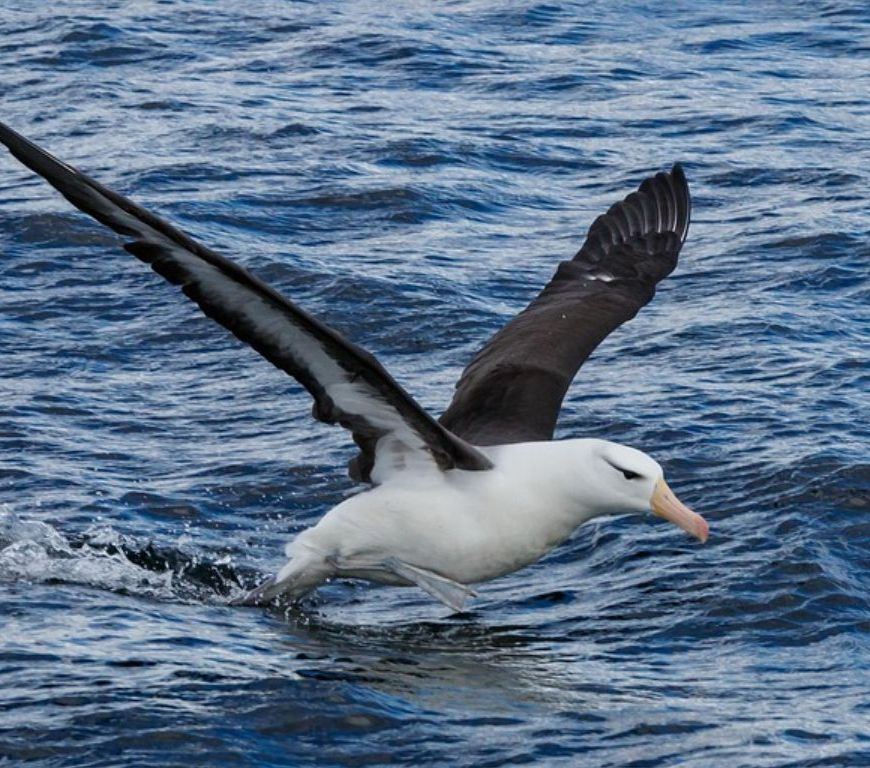
In their new study, “Immersion patterns alone can predict vessel following by albatrosses”, Jonathan Rutter et al. present a new behaviour-based method to detect previously hidden interactions between seabirds and fishing vessels. In oceans around the world, seabirds follow fishing vessels looking for easy meal. This puts them at risk of bycatch, when birds are killed after getting caught or colliding with fishing gear. A … Continue reading Albatrosses make distinct flight hops when following fishing vessels


Spearfishing-fish behavioural interactions as predator-prey systems to envision better management

Author Valerio Sbragaglia and his colleagues guide us through a recent study which advances the understanding of spearfisher-fish behavioural interaction by integrating ecological indicators (i.e., flight and post flight behaviour of fish) with spearfishers’ likelihood to catch a fish. Through modelling and simulating scenarios, their study sheds light on management implications in exploited fish populations. Exploring spearfishing and fish behaviour If you ask spearfishers, they … Continue reading Spearfishing-fish behavioural interactions as predator-prey systems to envision better management

Editor’s Choice 57:02 – Understanding anglers as spatially mobile human predators in freshwater landscapes

Using the example of a spatial recreational fishery for lake trout in northern Canada, Wilson et al. present an exciting analysis of how human behaviour and local ecological dynamics interact to shape landscape-level outcomes. Associate Editor, Robert Arlinghaus highlights why this article has been selected as an Editor’s Choice. The field of applied ecology is increasingly moving towards studies that integrate human behaviour and ecological … Continue reading Editor’s Choice 57:02 – Understanding anglers as spatially mobile human predators in freshwater landscapes

Cover stories: Cheetah chase

Egil Dröge shares the high-energy story behind issue 55:6’s cover photo. See more of how the day unfolded in this gallery. I followed this female cheetah that day on her hunt. She would frequently use the small termite mounts to take the advantage of the elevation to scan the tall grass for prey. At some point, while she was walking through the tall grass, she … Continue reading Cover stories: Cheetah chase

One step back, two steps forward: impacts of disturbance on the population dynamics of an endangered species

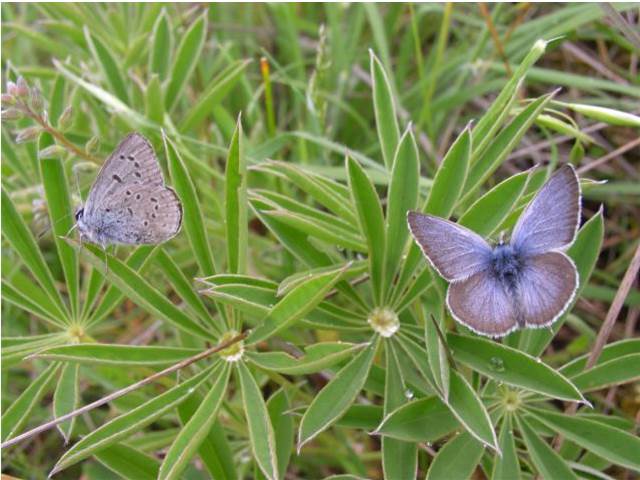
Associate Editor, Bret Elderd discusses the ‘double-edged sword’ fire presents to endangered species, based around the recent article by Warchola et al, Balancing ecological costs and benefits of fire for population viability of disturbance-dependent butterflies. The article features in issue 55:2 of Journal of Applied Ecology. In their recently published paper in Journal of Applied Ecology, Warchola et al. tackle a problem of conservation concern … Continue reading One step back, two steps forward: impacts of disturbance on the population dynamics of an endangered species

Editor’s Choice 54:3 – Prescribing burns to increase forage for cattle: are managers ‘biting off more than they can chew’?

Issue 54:3’s Editor’s Choice is written by Associate Editor, Jennifer Firn. The article chosen by the Editors is Fire-induced negative nutritional outcomes for cattle when sharing habitat with native ungulates in an African savanna by Wilfred O. Odadi and colleagues. Ecological science is increasingly being applied to understand species interactions and to identify thresholds of degradation in more traditional agricultural landscapes (Scherr & McNeely 2008). This … Continue reading Editor’s Choice 54:3 – Prescribing burns to increase forage for cattle: are managers ‘biting off more than they can chew’?

Considering animal behaviour to improve ecological restoration

In this post Robin Hale discusses his Review paper with Stephen Swearer ‘When good animals love bad restored habitats: how maladaptive habitat selection can constrain restoration‘ Restoration is vital to offset the effects of habitat loss on biodiversity Recent biodiversity assessments paint a bleak picture. For example, vertebrates have suffered dramatic population declines (e.g. by 58% since 1970) and been lost at 100 times the … Continue reading Considering animal behaviour to improve ecological restoration

Species assignment from trace DNA – evaluating the reliability of DNA tests

In this post Anna MacDonald discusses her recent paper with Stephen Sarre ‘Species assignment from trace DNA sequences: an in silico assessment of the test used to survey for foxes in Tasmania’ Which species occur in an area and how do they interact with one another? These are crucial questions for ecologists and wildlife managers to address, yet answering them is rarely straightforward. Many animals … Continue reading Species assignment from trace DNA – evaluating the reliability of DNA tests

Helping Hawaiian spinner dolphins rest

In this post Julian Tyne discusses his paper ‘The importance of spinner dolphin (Stenella longirostris) resting habitat: implications for management’ Coastal dolphin populations are exposed to non-consumptive human activities that can pose conservation challenges. Consequently, effective management strategies, using rigorous scientific assessments of exposed populations and their habitats, are needed to mitigate potential negative impacts of these activities. Key habitats may function as critical for … Continue reading Helping Hawaiian spinner dolphins rest

Building better models for environmental decision-making: how can modellers & practitioners collaborate?

In this post, Kevin Wood describes a Practitioner’s Perspective article on the joint development of individual-based models between modellers and practitioners: “Co-creation of individual-based models by practitioners and modellers to inform environmental decision-making” by Wood, Stillman & Goss-Custard. We live in an age of environmental change unprecedented in human history. Such change is due to an array of factors including climate change, growing human population … Continue reading Building better models for environmental decision-making: how can modellers & practitioners collaborate?