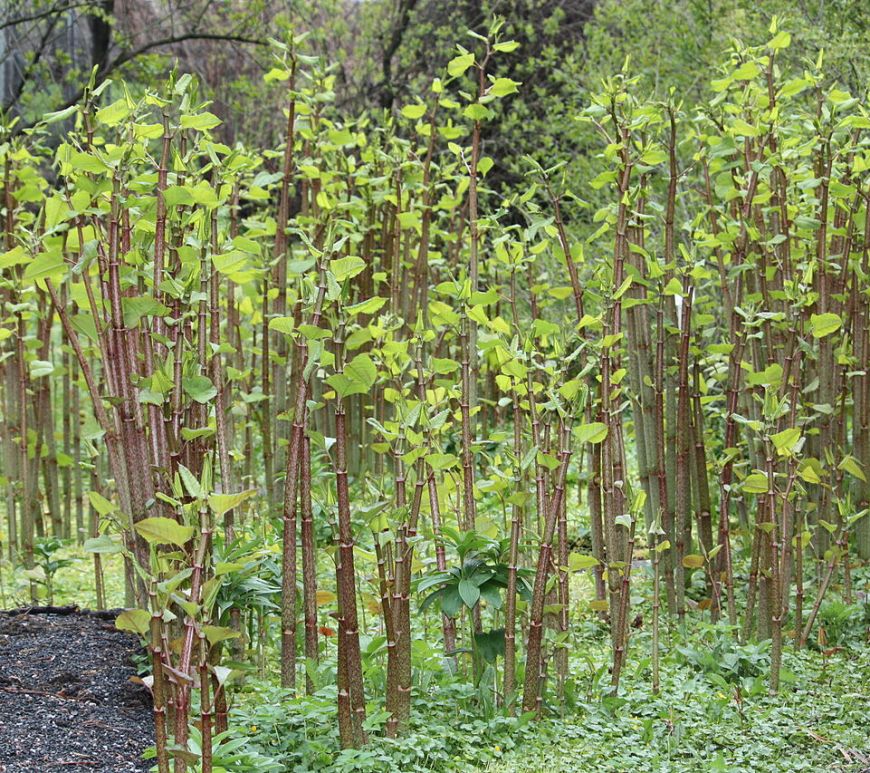
Editor’s Choice 54:1 – A new tool for rapid eradication assessment

The Editor’s Choice for Issue 54:1 is written by Associate Editor Ayesha Tulloch. The article chosen by the Editors as this issue’s Editor’s choice article is ‘Optimizing confirmation of invasive species eradication with rapid eradication assessment‘ by James Russell and colleagues. Invasive species are one of the leading causes of biodiversity declines and extinctions globally. Efforts are increasing around the globe to manage and in … Continue reading Editor’s Choice 54:1 – A new tool for rapid eradication assessment

Spotlight: Ecosystem restoration under the microscope

The Spotlight for Issue 54:1 is on the subject of genetics and restoration. The post about this Spotlight is written by Ryan Sadler from University of Toronto. All five Spotlight papers are currently free to read online. When prompted to think of restoring an ecosystem, many people would surely conjure up memories of themselves standing over a freshly dug hole with a shovel and sapling … Continue reading Spotlight: Ecosystem restoration under the microscope

Innovative measure enables identification of threats to biodiversity

In this post BES Policy Team Intern Rick Parfett discusses a new metric, Relative Impact Potential, which allows rapid and accurate assessment of potential threats to biodiversity and ecosystem services from invasive alien species. The metric was published by Jaimie Dick and colleagues in their article ‘Invader Relative Impact Potential: a new metric to understand and predict the ecological impacts of existing, emerging and future … Continue reading Innovative measure enables identification of threats to biodiversity

Forest thinning: a bat’s friend or foe?

In this post, Rachel Blakey discusses her paper in the latest issue of Journal of Applied Ecology ‘Bat communities respond positively to large-scale thinning of forest regrowth‘ The world’s forests are changing. Most of the remaining forests are re-growing after being cleared, but do these regrowth forests resemble the original primary forests? Often, where large tracts of forests were cleared at once (e.g. clear-felling), they … Continue reading Forest thinning: a bat’s friend or foe?

Ecological intensification of agriculture: ideas that begin to take root – now with Spanish translation

In this post Nahuel Policelli discusses a recent paper by Timothy M. Bowles and colleagues ‘Ecological intensification and arbuscular mycorrhizas: a meta-analysis of tillage and cover crop effects‘ *Update: On 10 November, we added a Spanish translation of this post. Nahuel provided the translation to reach out to Spanish readers interested in this topic. Journal of Applied Ecology is dedicated to making papers more accessible … Continue reading Ecological intensification of agriculture: ideas that begin to take root – now with Spanish translation

Traditional forest management practices stop forest succession and bring back rare plant species

In this post Jan Douda discusses his recent paper ‘Traditional forest management practices stop forest succession and bring back rare plant species‘ The past management practices may continue to influence ecosystem functions and processes for decades, centuries or even longer after they have been abandoned. Until now, few authors have attempted experiments which test the effects of restoring some of these past management practices on long-term forest … Continue reading Traditional forest management practices stop forest succession and bring back rare plant species

A new method for assessing the age of old-growth forests

In this post, Associate Editor Nathalie Butt discusses a recent paper ‘Tree-ring based metrics for assessing the functional naturalness of forests‘ by Alfredo Di Filippo, Franco Biondi, Gianluca Piovesan and Emanuele Ziaco. Valuable ecosystems Primeval forest, or ancient woodland in the UK, is an integral part of many epic stories and myths throughout human history, especially in Europe:  just think of all those old tales … Continue reading A new method for assessing the age of old-growth forests

Caring for and sharing data created by volunteers

In this post Quentin Groom discusses his recent Commentary paper ‘Is citizen science an open science in the case of biodiversity observations?‘ Volunteers are the single largest source of biodiversity observations. Without their work we could not monitor the declines of native species nor the spread of invasive species. Their work provides data on the diversity of life, its geography, the migration of animals and … Continue reading Caring for and sharing data created by volunteers

Getting people working on ecosystem functions connected

There’s news for people working on ecosystem functions and their monitoring: the Ecosystem Function Working Group has been recently launched by the Group on Earth Observations Biodiversity Observation Network (GEO BON), and the group is looking for its members. You may wonder what GEO BON is: GEO BON is an international networking platform part of GEO, the Group on Earth Observations. Within the GEO family, … Continue reading Getting people working on ecosystem functions connected

Landscape structure influences urban vegetation vertical structure

In this post Matthew Mitchell discusses his recent paper ‘Landscape structure influences urban vegetation vertical structure‘. The importance of urban vegetation Odds are that you’re reading this in a city. More than half of humanity today lives in cities, and this is expected to increase to two-thirds by 2050. Living in a city, you almost certainly rely on urban vegetation for key ecosystem services like … Continue reading Landscape structure influences urban vegetation vertical structure