A common currency for connecting the goals of restoration: plant traits can help us understand how plant communities form and help ecosystems function

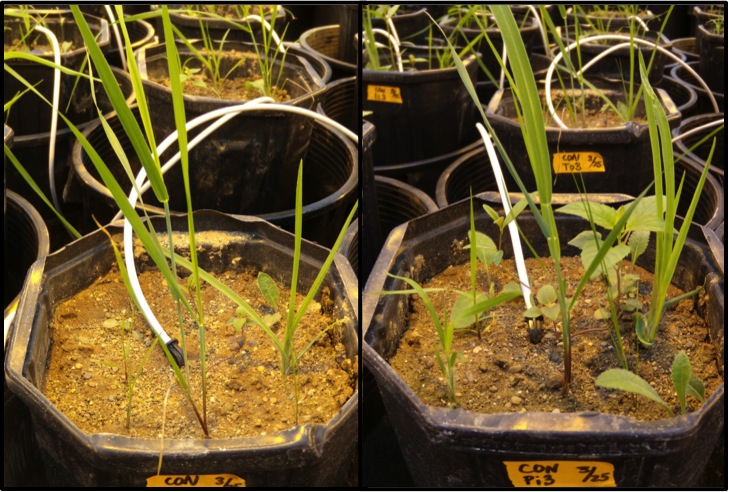
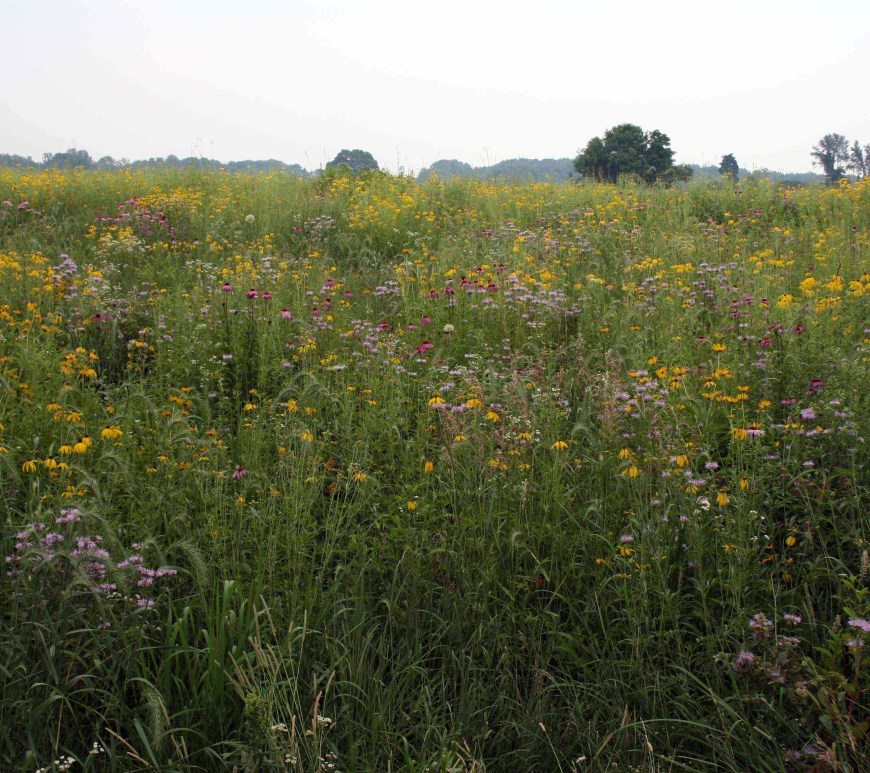
For the latest post in our Toward prediction in the restoration of biodiversity series, Chad Zirbel turns to tallgrass prairies to examine the role of plant traits in predicting restoration outcomes. Chad and colleagues’ paper, Plant functional traits and environmental conditions shape community assembly and ecosystem functioning during restoration, is available in the Journal of Applied Ecology. Two of the major goals of restoration are … Continue reading A common currency for connecting the goals of restoration: plant traits can help us understand how plant communities form and help ecosystems function

Toward prediction in the restoration of biodiversity

Issue 54:4 of the Journal of Applied Ecology features a Special Feature, Toward prediction in the restoration of biodiversity. In the first of a series of blogs accompanying the feature, Guest Editor, Lars Brudvig introduces the work and the ecological ideas behind this collection of articles. By repairing ecosystems damaged through human activities, ecological restoration plays an important role in biodiversity conservation efforts. Furthermore, restoration … Continue reading Toward prediction in the restoration of biodiversity

Editor’s choice 54:4 – The identification of critical catchments for freshwater conservation

Issue 54:4’s Editor’s Choice post is written by Shelley Arnott. The article chosen is Critical catchments for freshwater biodiversity conservation in Europe: identification, prioritisation and gap-analysis by Savrina F. Carrizo and colleagues. Aquatic ecosystems around the world are threatened with environmental changes resulting in critical loss of biodiversity; 81% of freshwater populations monitored for the Living Planet Index have declined in abundance between 1970 and … Continue reading Editor’s choice 54:4 – The identification of critical catchments for freshwater conservation

For the love of trees: the benefits of vegetation and paddock management for reptiles in grazing landscapes

Following her recent paper in the Journal of Applied Ecology, ‘Remnant vegetation, plantings and fences are beneficial for reptiles in agricultural landscapes’, Stephanie Pulsford explores the balancing act of supporting both agriculture and biodiversity conservation. In a recent study of reptiles in grazing landscapes we demonstrated the importance of maintaining and promoting native vegetation within agricultural land for improved biodiversity conservation outcomes. We also showed that … Continue reading For the love of trees: the benefits of vegetation and paddock management for reptiles in grazing landscapes

How does one effectively engage communities for conservation? Try becoming PARTNERS

With a focus on community engagement, Matthias Fiechter, Charudutt Mishra, Steve Redpath, Brad Rutherford and Juliette Young, discuss the PARTNERS principle and importance of working with people towards conservation efforts. This post supports their recent Journal of Applied Ecology Practitioner’s Perspective, Building partnerships with communities for biodiversity conservation: lessons from Asian mountains. We’re currently witnesses to – and in many ways complicit in – the sixth mass … Continue reading How does one effectively engage communities for conservation? Try becoming PARTNERS

PODCAST: Forest restoration as a double-edged sword

In this podcast Simon Kärvemo discusses his paper ‘Forest restoration as a double-edged sword: the conflict between biodiversity conservation and pest control’ published today in Journal of Applied Ecology. Forest fires create open patches and dead wood – both factors that favour biodiversity, but using fire as a restoration tool is both risky and requires a lot of work and planning. What if we could … Continue reading PODCAST: Forest restoration as a double-edged sword

Considering animal behaviour to improve ecological restoration

In this post Robin Hale discusses his Review paper with Stephen Swearer ‘When good animals love bad restored habitats: how maladaptive habitat selection can constrain restoration‘ Restoration is vital to offset the effects of habitat loss on biodiversity Recent biodiversity assessments paint a bleak picture. For example, vertebrates have suffered dramatic population declines (e.g. by 58% since 1970) and been lost at 100 times the … Continue reading Considering animal behaviour to improve ecological restoration

Finding missing branches: Phylogenetic patterns of plant community diversity in restored and remnant tallgrass prairies

To round off our series of posts from the Special Feature, Toward prediction in the restoration of biodiversity, we’re sharing Rebecca Barak’s post from earlier this year on her article Restored tallgrass prairies have reduced phylogenetic diversity compared with remnants.  Tallgrass prairie is one of the most endangered habitats on earth. In my home state of Illinois, USA, back in 1820, almost 60% of the state was … Continue reading Finding missing branches: Phylogenetic patterns of plant community diversity in restored and remnant tallgrass prairies

Editor’s Choice 54:2 – Optimizing the use of species distribution maps for planning new protected areas

The Editor’s Choice for Issue 54:2 is written by Kulbhushansingh Suryawanshi, who is taking part in our Associate Editor mentoring opportunity. The article chosen by the Editors as this issue’s Editor’s choice article is ‘Limitations and trade-offs in the use of species distribution maps for protected area planning‘ by Moreno Di Marco and colleagues. Protected Areas have been the ‘big idea’ of biodiversity conservation over … Continue reading Editor’s Choice 54:2 – Optimizing the use of species distribution maps for planning new protected areas

Measuring dark diversity: what do we know and where do we go from here?

In this post Chris Wilson (The Flory Lab) discusses a recent article from Jesper Moeslund and colleagues ‘Using dark diversity and plant characteristics to guide conservation and restoration‘ Central to ecology and conservation biology is the quest to understand and, more importantly, conserve biodiversity. However, generally you can’t manage what you can’t measure, and you can’t measure what you can’t define! Biodiversity is traditionally defined … Continue reading Measuring dark diversity: what do we know and where do we go from here?