Don’t forget the little guys: improving monitoring efforts for African small carnivores

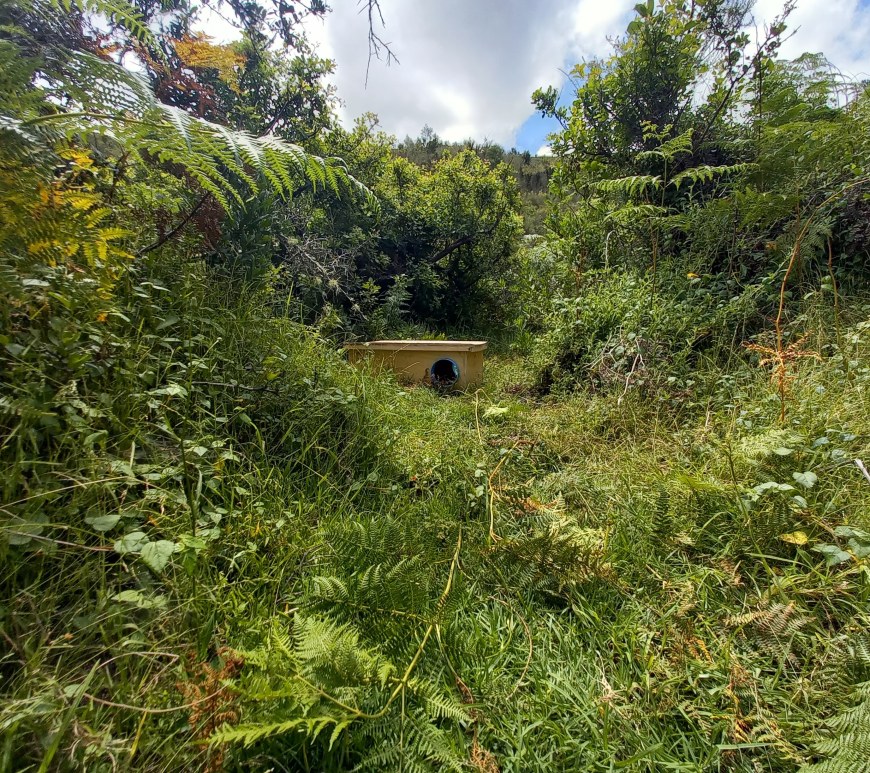
Small carnivores are ecologically important species and key indicators of environmental change. However, for many of these species, we lack robust information on their conservation status, geographic distribution, and tolerance to anthropogenic threats. In this post, researchers from Nelson Mandela University share their experience with an emerging camera trapping method aimed at improving monitoring efforts for African small carnivores. For a wide array of species, … Continue reading Don’t forget the little guys: improving monitoring efforts for African small carnivores

What determines the rarity of large carnivores in the Omo Valley of Ethiopia?

Asfaw et al. investigate the presence of large carnivores in the Omo Valley of Ethiopia and share their experience. Populations of large carnivores have been declining in Ethiopia for many years due to a range of factors including reduced prey populations, pressure from neighbouring human settlements, habitat fragmentation and loss, and low political interest in conservation. Yet large carnivores, including the African wild dog, cheetah, … Continue reading What determines the rarity of large carnivores in the Omo Valley of Ethiopia?

Optimizing disease management in an endangered carnivore

In their new article, Gilbertson et al. discuss how combining preventative and reactive disease interventions synergistically reduces disease-induced mortalities in a simulated carnivore population, whilst at the same time preventing unexpected negative impacts associated with inadequate vaccination. As the COVID-19 pandemic has demonstrated, controlling outbreaks of infectious diseases is incredibly challenging—and that is no less true in wildlife. In fact, wildlife management faces significant hurdles … Continue reading Optimizing disease management in an endangered carnivore

Southwood Prize 2021: early career researcher winner announced

We’re excited to announce Chinmay Sonawane as the winner of this year’s Southwood Prize, celebrating the best paper by an early career researcher in the 2021 (58th) volume of Journal of Applied Ecology. Chinmay’s winning paper is Public health and economic benefits of spotted hyenas Crocuta crocuta in a peri-urban system. About the research Research on interactions between people and wildlife has traditionally concentrated on the negative impacts on … Continue reading Southwood Prize 2021: early career researcher winner announced

Uncovering the role of protected areas and private wildlife businesses for free-ranging carnivores

In their recent Journal of Applied Ecology research, Curveira-Santos et al. look at free-ranging carnivores in South Africa to highlight the importance of maintaining areas under long-term formal protection. Across southern Africa, the attribution of rights over wildlife has deeply transformed the conservation landscape. The private commercial wildlife industry (ecotourism and hunting) now plays an important role in augmenting and connecting formal protected areas. As … Continue reading Uncovering the role of protected areas and private wildlife businesses for free-ranging carnivores

The Web Of Life: Understanding Complex Animal Relationships for Applied Conservation

In this post Susan Cheyne, who is taking part in our Associate Editor mentoring opportunity discusses a paper she recently handled by Paula Perrig and colleagues ‘Puma predation subsidizes an obligate scavenger in the high Andes‘ Of great interest in understanding biological systems is the often complex interplay between animals occupying different niches. Past studies involving ecological indicators of ecosystem function have selected individual indicator … Continue reading The Web Of Life: Understanding Complex Animal Relationships for Applied Conservation

Showing the way for carnivore conservation: lions can survive without fences with the help of Community Conservancies

In this post Sara Blackburn discusses her paper ‘Human–wildlife conflict, benefit sharing and the survival of lions in pastoralist community-based conservancies‘ Recent work on African lions indicates that they’re in trouble. Widespread declines have been identified across the continent, except in intensively managed fenced reserves, signposting a bleak future for free-ranging lions. This is due to conflict with people; lions kill livestock and, understandably, they … Continue reading Showing the way for carnivore conservation: lions can survive without fences with the help of Community Conservancies

Crucial for population management: new model solves old missing data problem and provides mortality estimates for male African lions

In this post Julia Barthold discusses the recent paper “Bayesian estimates of male and female African lion mortality for future use in population management” by her and co-authors A. J. Loveridge, D.W. Macdonald, C. Packer, and F. Colchero. The article is part of the BES cross-journal special feature “Demography Beyond the Population”. In 2013, I wanted to project the population dynamics of African lions. This … Continue reading Crucial for population management: new model solves old missing data problem and provides mortality estimates for male African lions

Managing uncertainties associated with global declines of apex predators

Over three days we have posted a collection of blog posts on a topical Forum discussion published in Issue 2 about the methods used in wildlife conservation and in particular the role of dingoes in conservation. Following acceptance of a peer-reviewed Forum critique of another article in the Journal it is the Journal’s process to invite the original authors to write a peer-reviewed response to … Continue reading Managing uncertainties associated with global declines of apex predators

Scientists need to use robust methods – irrespective of their political affiliations

Over three days we have posted a collection of blog posts on a topical Forum discussion published in Issue 2 about the methods used in wildlife conservation and in particular the role of dingoes in conservation. Following acceptance of a peer-reviewed Forum critique of another article in the Journal it is the Journal’s process to invite the original authors to write a peer-reviewed response to … Continue reading Scientists need to use robust methods – irrespective of their political affiliations