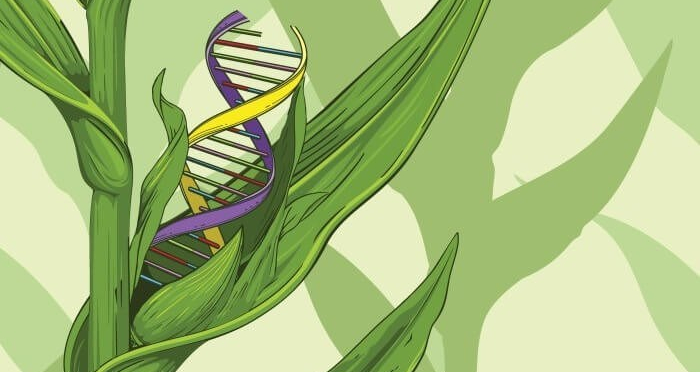
On the horizon: Food for the future – regulating gene-edited plants

Could gene-edited plants provide better food security? And what are the risks and potential consequences presented by this process? Helen Doran (Senior Specialist, Futures, Natural England) explores these questions in the latest instalment to our ‘On the horizon’ series. ‘Imagine that a cheap, easy-to-use, and rapidly deployable technology could make crops more fertile and strengthen their resistance to threats such as climate change and disease’ … Continue reading On the horizon: Food for the future – regulating gene-edited plants

Issue 55:5

Read the highlights from our September issue. Value of information: when to learn and when to manage in conservation This issue’s Editor’s Choice article Better many small than a few large: how landscape configuration affects arthropod communities in rice Can splitting agricultural ecosystems help reduce yield losses for rice farmers? Mejor muchos pequeños que pocos grandes: sobre como la configuración del paisaje afecta las comunidades … Continue reading Issue 55:5

Better many small than a few large: how landscape configuration affects arthropod communities in rice agroecosystems

Can splitting agricultural ecosystems help reduce yield losses for rice farmers? Associate Editor, Juan Corley highlights the importance of Dominik et al.’s recent research, Landscape composition, configuration, and trophic interactions shape arthropod communities in rice agroecosystems. A Spanish version of this post is available here. For many of us city dwellers, rice is common in much modern cuisine, from Sushi to Spanish paella. However more … Continue reading Better many small than a few large: how landscape configuration affects arthropod communities in rice agroecosystems

Crop rotations called into question

Why it’s time to rethink the way we approach this agricultural practice: Mathias Cougnon & Associate Editor, Pieter De Frenne (Ghent University, Belgium) discuss the recent paper, Distantly related crops are not better rotation partners for tomato by by Ingerslew and Kaplan. Crop rotations are central to common agricultural practice and growing related crops year after year on the same patch of land is generally … Continue reading Crop rotations called into question

Editor’s Choice 55:4 – Applying ecology to inform plant disease management policy and avoid regulator-grower conflict

The Editor’s Choice for issue 55:4 is written by Senior Editor, Phil Stephens. The selected article is Grower and regulator conflict in management of the citrus disease Huanglongbing in Brazil: A modelling study by Craig et al. Plant disease is already recognised as a major driver of crop yield losses. With a huge proportion of the growing human population’s food intake dependent on a relatively … Continue reading Editor’s Choice 55:4 – Applying ecology to inform plant disease management policy and avoid regulator-grower conflict

Functional traits in agroecology: advancing description and prediction in agroecosystems

Our series of posts on the Special Feature, Functional traits in agroecology rounds up with a post from one of the series’ editors, Adam Martin. We’ve always thought “commentary” articles – particularly those that outline a vision for a future field of research – to be an interesting enigma in science. On one hand, many commentary-type articles have been undoubtedly influential and can be pointed … Continue reading Functional traits in agroecology: advancing description and prediction in agroecosystems

Ecological diversity metrics can teach us how to feed the world well

For the latest post in our Functional traits in agroecology series, Stephen Wood (The Nature Conservancy, Yale School of Forestry & Environmental Studies) highlights the importance of considering social and human, as well as ecological traits in agricultural systems. The full article, Nutritional functional trait diversity of crops in south-eastern Senegal is a part of a Special Feature in Journal of Applied Ecology. Crop yields have … Continue reading Ecological diversity metrics can teach us how to feed the world well

Strawberry fields forever – with Spanish translation

In this post, Associate Editor, Cristina Garcia comments on the effects of pesticides on pollinators and the recent article by Horth & Campbell, Supplementing small farms with native mason bees increases strawberry size and growth rate. Cristina has also provided a Spanish translation of this post. Most plant species, including crops, require mutualistic interactions with animals to pollinate their flowers and fulfill their demographic cycle. The … Continue reading Strawberry fields forever – with Spanish translation

Editor’s Choice 54:5 – Quantifying the collateral damage of neonicotinoid insecticides on bees

Issue 54:5’s Editor’s Choice is written by Sarah Diamond. The article chosen is Planting of neonicotinoid-treated maize poses risks for honey bees and other non-target organisms over a wide area without consistent crop yield benefit by C. Krupke et al. As humans modify natural environments, we are witnessing the steady accumulation of unintended, cascading effects across biological communities. Biocontrol agents have escaped their intended targets … Continue reading Editor’s Choice 54:5 – Quantifying the collateral damage of neonicotinoid insecticides on bees