LGBTQ+ inclusion in science and society: Resilience in uncertain times and the importance of community

To celebrate Pride Month 2025, we are excited to share a series of blogs and podcasts highlighting useful articles and resources for LGBTQIA+ ecologists and researchers. In each post, the authors behind these resources explain what they are, how they came to produce them, and why they are important. The authors Nathan Alexander (he/him)  ResearchGate: https://www.researchgate.net/profile/Nathan-Alexander   Bluesky: smammalbio@bsky.social  Jaime Coon (they/them, she/her)  ResearchGate: https://www.researchgate.net/profile/Jaime-Coon   Instagram: … Continue reading LGBTQ+ inclusion in science and society: Resilience in uncertain times and the importance of community

Beneath the Waves: Estimating Marine Bird Abundances Outside the Breeding Season

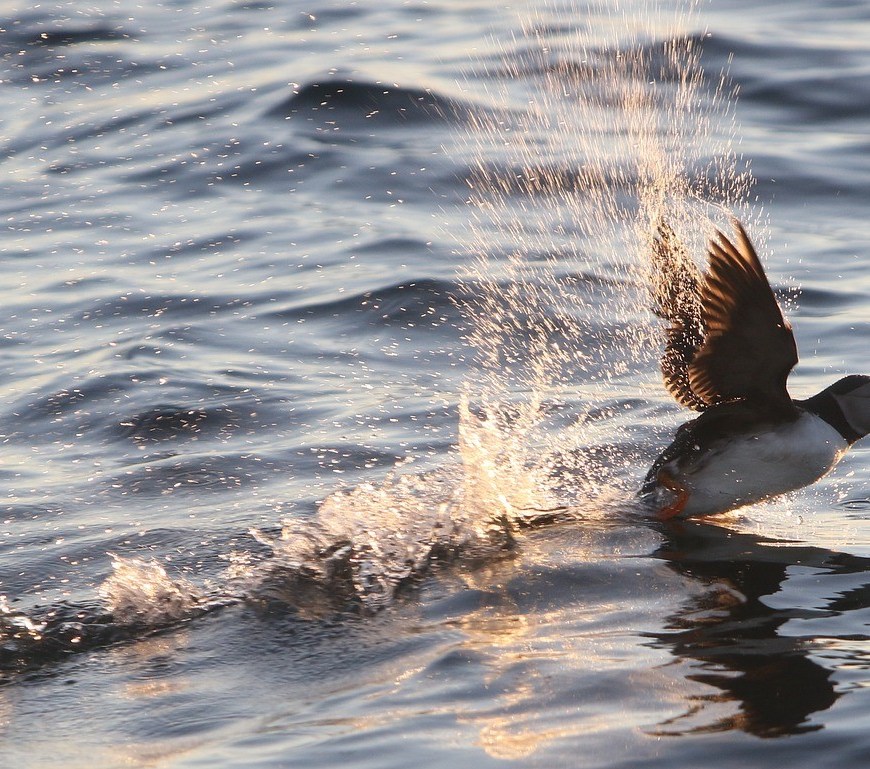
Ruth Dunn shares insights on her latest study where, alongside her colleagues, she investigated the number of marine birds, outside of their breeding seasons, that may be undetectable when underwater during at-sea surveys. Investing in renewable energy developments, as opposed to burning fossil fuels, has been hailed as a route through which humans might be able to counteract anthropogenic-induced climate change. Within western Europe, it … Continue reading Beneath the Waves: Estimating Marine Bird Abundances Outside the Breeding Season

Fieldwork Insights: Himalayan hill streams and data loggers

Aashna Sharma, Associate Editor mentee for Journal of Applied Ecology, recently embarked on a fieldtrip to the Himalayas. In this stand-alone blog post, she details hers and research colleagues’ full experience, told alongside videos and photographs from the field. Introduction Fieldwork is inherent for wildlife researchers, a daily delight! Working in immaculate landscapes such as the Himalaya comes as a blessing and research stipends become … Continue reading Fieldwork Insights: Himalayan hill streams and data loggers

Applied autoethnography: A method for reporting best practice in ecological and environmental research

Kilian Murphy and colleagues propose applied autoethnography, a form of structured reflection whereby researchers use personal experience to contribute to understanding collaborative processes, as a repeatable protocol to describe inter-organisational interactions during the research process in ecology and environmental research. The publication of a scientific manuscript is the culmination of the long process of research, whereby the scientist shares the results of their study in … Continue reading Applied autoethnography: A method for reporting best practice in ecological and environmental research

How can citizen science help solve environmental crises?

Isabel Bishop (Research Manager) and Toos Van Noordwijk (Science, Policy and Innovation Director) from Earthwatch Europe reflect on discussions from the recent British Ecological Society Annual Meeting about how citizen science can deliver real impact. The session was beautifully captured in the graphic recording above by Holly McKelvey, holly draws.  ‘Citizen science’ and the related terms ‘community science’ and ‘participatory monitoring’ have become buzz words … Continue reading How can citizen science help solve environmental crises?

Editor’s Choice 56:10 – How to conduct citizen science that works

Our October Editor’s Choice looks at the value citizen science brings to monitoring programmes and how to ensure that value doesn’t go to waste. Associate Editor, Yolanda F. Wiersma, discusses the selected article, Balancing sampling intensity against spatial coverage for a community science monitoring programme. Citizen science (also termed ‘community science’), the involvement of non-credentialed scientists (‘ordinary citizens’) in a scientific research project, has a … Continue reading Editor’s Choice 56:10 – How to conduct citizen science that works