A new method for predicting time to recovery during restoration

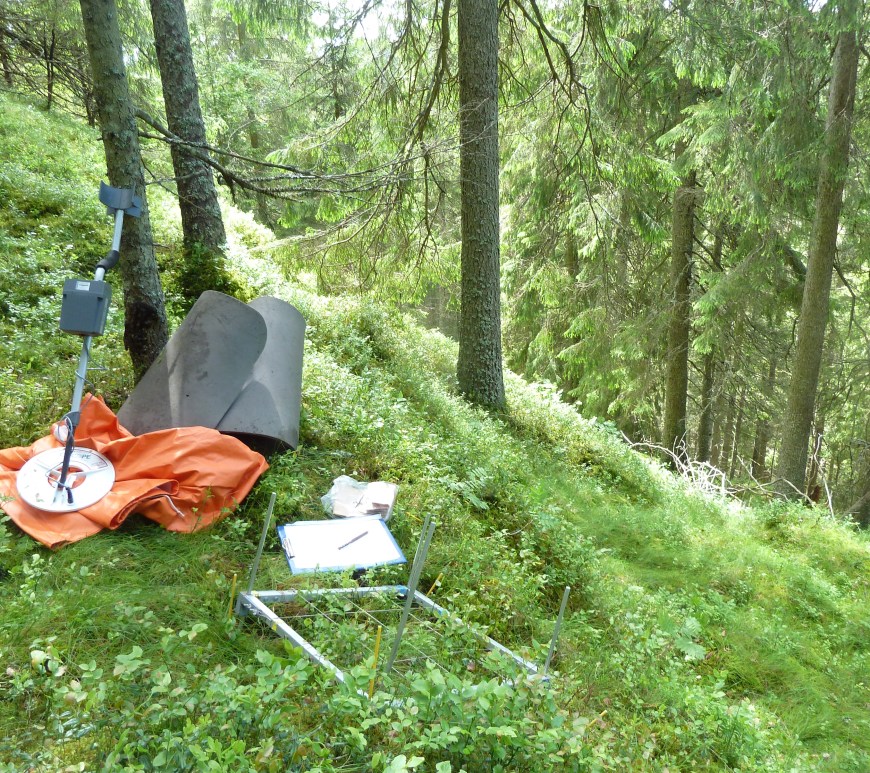
Associate Editor, Lars Brudvig looks at the recently published Review, Advancing restoration ecology: A new approach to predict time to recovery by Rydgren et al. Restoring degraded ecosystems is a global priority, hailed for its potential to recover biodiversity and promote ecosystem functioning and services. Yet successful restoration doesn’t happen overnight. It may take years, decades, or longer for restoration projects to meet their goals … Continue reading A new method for predicting time to recovery during restoration

Issue 55:2

Issue 55:2 includes a Spotlight on Decision making under uncertainty. Other topics include urban ecology, population monitoring, tropical forest restoration and more. Here we take a look at some of the articles published in this issue. Decision making under uncertainty Senior Editor, Michael Bode on this issue’s selection of Spotlight papers How does grazing by wild ungulates and livestock affect plant richness? This issue’s Editor’s Choice Jaguar … Continue reading Issue 55:2

One step back, two steps forward: impacts of disturbance on the population dynamics of an endangered species

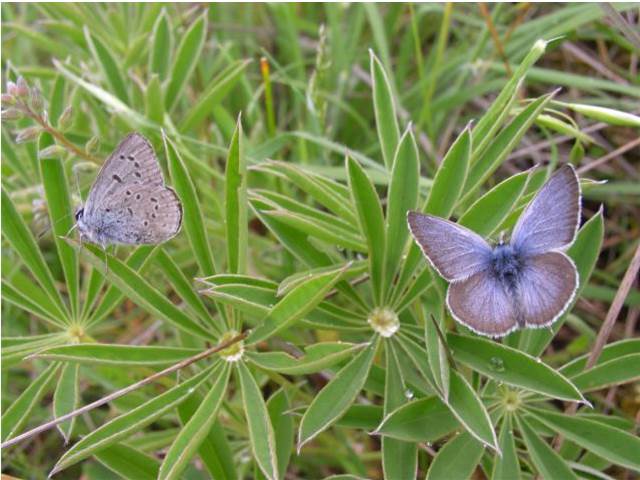
Associate Editor, Bret Elderd discusses the ‘double-edged sword’ fire presents to endangered species, based around the recent article by Warchola et al, Balancing ecological costs and benefits of fire for population viability of disturbance-dependent butterflies. The article features in issue 55:2 of Journal of Applied Ecology. In their recently published paper in Journal of Applied Ecology, Warchola et al. tackle a problem of conservation concern … Continue reading One step back, two steps forward: impacts of disturbance on the population dynamics of an endangered species

A new look at an old problem: Measuring the importance of dispersal in human-impacted systems

In this post Angela Strecker discusses the recent paper ‘A fresh approach reveals how dispersal shapes metacommunity structure in a human-altered landscape‘, by Barbara Downes, Jill Lancaster, Alena Glaister and William Bovill. One of the largest challenges that ecologists face is understanding the importance of dispersal across patches in ecosystems.  In the process of dispersal, organisms move to different habitats, allowing them to potentially escape … Continue reading A new look at an old problem: Measuring the importance of dispersal in human-impacted systems

60-year dataset provides first evidence of waterfowl resilience to wildfire in burning boreal forest

In this post Associate Editor Ayesha Tulloch discusses a paper she recently handled by Tyler L. Lewis, Joel A. Schmutz, Courtney L. Amundson, and Mark S. Lindberg,  ‘Waterfowl populations are resilient to immediate and lagged impacts of wildfires in the boreal forest‘ Across much of the fire-dependent ecosystems of the globe, fire at appropriate intervals and intensities is critical for stimulating growth and reproduction. However, … Continue reading 60-year dataset provides first evidence of waterfowl resilience to wildfire in burning boreal forest

Seals find a quiet place to phone home

In this post Debbie Russell discusses her paper ‘Avoidance of windfarms by harbour seals is limited to pile driving activities‘ published today in Journal of Applied Ecology. Marine renewables in the fight against climate change To fight climate change we have to cut our carbon emissions. One of the main sources of carbon emissions results from burning coal to make electricity. Thus a key weapon … Continue reading Seals find a quiet place to phone home

Can we make ski slopes less damaging to the environment?

In this post, Associate Editor Nathalie Butt discusses a recent paper by Jennifer Burt and Jeffrey Clary Initial disturbance intensity affects recovery rates and successional divergence on abandoned ski slopes Fragile habitats Montane or alpine ecosystems are among the most fragile we have, and they are therefore places where human impact can be very damaging. Of course we are attracted to these beautiful snow-covered mountains … Continue reading Can we make ski slopes less damaging to the environment?

The stage is set: Will expanding development be a sea change?

In this post Matthew Hethcoat discusses his recent paper, with Anna Chalfoun ‘Towards a mechanistic understanding of human-induced rapid environmental change: a case study linking energy development, nest predation and predators‘, which is published in Issue 52:6 of Journal of Applied Ecology, out today. North America’s sagebrush steppe, also known as the big empty, holds a secret. The sparrows, thrashers, and other songbirds that inhabit this … Continue reading The stage is set: Will expanding development be a sea change?

How network analyses can help to find out what happens to ostrich farming after an avian influenza outbreak

In this post Craig Allen and Hannah Birge discuss a paper from Christine Moore, John Grewar and Graeme S. Cumming ‘Quantifying network resilience: comparison before and after a major perturbation shows strengths and limitations of network metrics’ Humans are very good at creating mental models to simplify nature’s complexity, to make its many parts and interactions more understandable. Approaches that exemplify this include hierarchy theory, panarchy … Continue reading How network analyses can help to find out what happens to ostrich farming after an avian influenza outbreak

Harnessing the power of Google Earth

Minerva Singh is a PhD Candidate at the University of Cambridge and she is involved with the BES Conservation Ecology Special Interest Group. Her research focusses on using high resolution airborne data for mapping forest biophysical parameters and evaluating the impact of anthropogenic disturbances on them in the tropical ecosystems of the Greater Mekong region. In this post Minerva looks at harnessing the power of … Continue reading Harnessing the power of Google Earth