Does incorporating complexity into coastal engineering increase fish diversity along urban shorelines?


Authors of a recently published research article explain how, to enhance fish diversity, it is important to provide three-dimensional habitat architecture that incorporates a wide range of microhabitat sizes and types.  Habitat complexity Habitat complexity is a key driver of marine fish diversity and essential for determining structure and function of fish communities. Many fishes use benthic habitat features (e.g. holes, crevices, vertical reliefs, and … Continue reading Does incorporating complexity into coastal engineering increase fish diversity along urban shorelines?

Rewilding the sea

Interest in rewilding the land has boomed in recent years, especially after the success of the rewilded Knepp Estate in England. But what about rewilding the sea? Esther Brooker tells us about her research on marine rewilding. In the UK, the Knepp Estate has sought to lead the way on rewilding, turning an intensively farmed area over to nature. What does rewilding look like in … Continue reading Rewilding the sea

Towards environmentally friendly finfish farming: A potential for mussel farms to compensate fish farm effluents

Jonne Kotta explains new research which uses dynamic energy budget modelling to explore the potential of mussels for bioremediation at finfish farms. Kotta and colleagues suggest that environmentally sustainable finfish farming solutions may be possible in the eutrophic Baltic Sea region. The problem Global demand for fish has risen sharply in recent decades and will surely continue to rise during the next decade. However, this … Continue reading Towards environmentally friendly finfish farming: A potential for mussel farms to compensate fish farm effluents

Research Stories: A mission to tag giant mantas in northern Peru

Authors Kerstin Forsberg and Samantha Andrzejaczek recall their team’s efforts working with NGOs and local government, scientists and community to produce their latest research on the behaviour and conservation of manta rays in northern Peru. It was a sunny day in May 2018, and we were out in the waters of Tumbes, northern Peru, searching for endangered giant oceanic manta rays (Mobula birostris). Our team … Continue reading Research Stories: A mission to tag giant mantas in northern Peru

Habitat selection modelling reveals sea turtles use protected areas in greater proportion to their availability

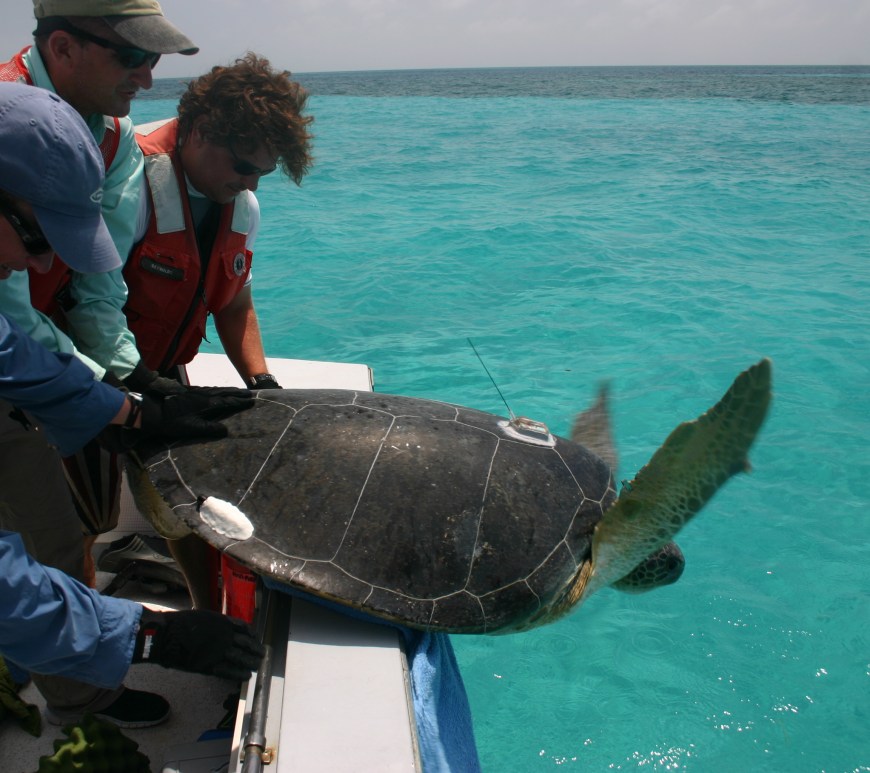
Marine Protected Areas (MPAs) are designated regions to help conserve wildlife but how are they used by the species they protect? In their latest research, Kelsey Roberts and colleagues evaluate the use of these protected areas by sea turtles to help inform better design and management of MPAs. Scientists agree that area-based conservation efforts are key to preserving biodiversity and ecosystems, as well as ocean-based … Continue reading Habitat selection modelling reveals sea turtles use protected areas in greater proportion to their availability

Editor’s Choice 57:12 – Best-practice forestry management delivers diminishing returns for coral reefs with increased land-clearing

Associate Editor, Dr Kiran Dhanjal-Adams, introduces the December Editor’s Choice paper, which demonstrates that sediment runoff from industrial logging can affect food security and livelihoods in the Solomon Islands. Kolombangara is an island in the Western Province of the Solomon Islands in the South West Pacific. The island harbors a large variety of ecosystems, ranging from mangrove ecosystems at sea level to cloud forest ecosystems along the crater, … Continue reading Editor’s Choice 57:12 – Best-practice forestry management delivers diminishing returns for coral reefs with increased land-clearing