Janina Heinen: Diversified cropping strengthens herbivore regulation

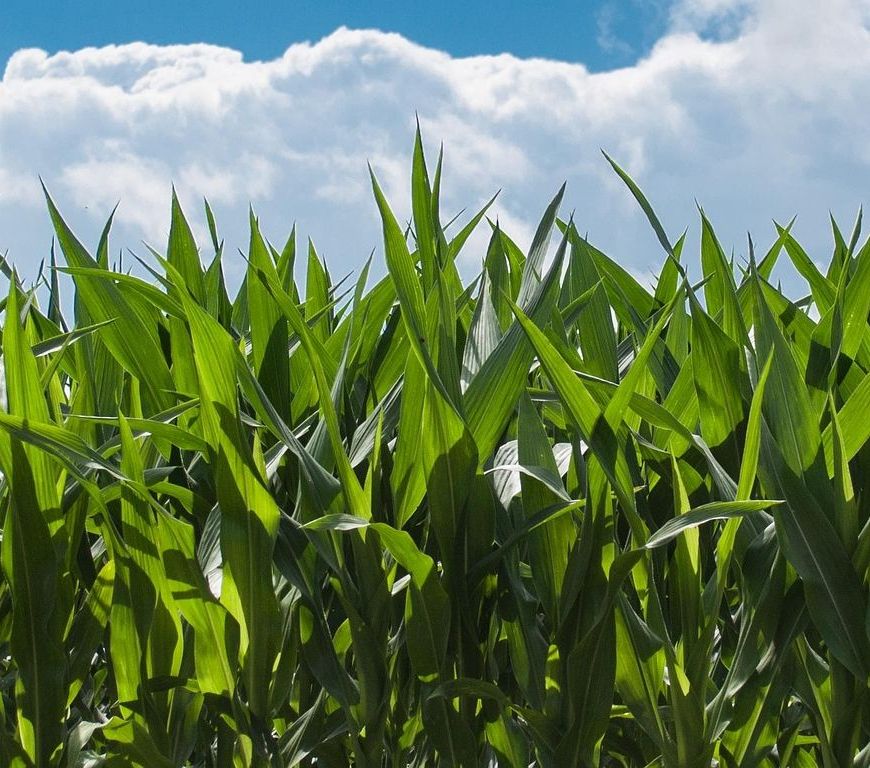
Shortlisted for the 2024 Southwood Prize Janina Heinen talks us through her and colleagues’ latest study which explores how agricultural practices impact predation pressure across prey taxa. About the research Overview We explored predator-prey dynamics in agroecosystems by examining how carabid predator diet preferences shift throughout the crop growing season, and are influenced by the availability of prey under different agricultural management practices. By combining … Continue reading Janina Heinen: Diversified cropping strengthens herbivore regulation

Keeping our havened populations fighting fit: Do native predators help Australian mammals face invasive cats and foxes?

Linking to the recently-published article, Natasha Harrison discusses whether native predators inside ‘predator-free’ havens could be good for the conservation of threatened native prey species. Predator-free havens Since their introduction into the Australian landscape following European settlement, feral cats and red foxes have caused prolific population declines among our native fauna. The extinction of Australian mammals makes up more than two thirds of contemporary global … Continue reading Keeping our havened populations fighting fit: Do native predators help Australian mammals face invasive cats and foxes?

Spearfishing-fish behavioural interactions as predator-prey systems to envision better management

Author Valerio Sbragaglia and his colleagues guide us through a recent study which advances the understanding of spearfisher-fish behavioural interaction by integrating ecological indicators (i.e., flight and post flight behaviour of fish) with spearfishers’ likelihood to catch a fish. Through modelling and simulating scenarios, their study sheds light on management implications in exploited fish populations. Exploring spearfishing and fish behaviour If you ask spearfishers, they … Continue reading Spearfishing-fish behavioural interactions as predator-prey systems to envision better management

Igor Khorozyan: How to protect cattle from leopard attacks

In this Q&A, we discussed with author Igor Khorozyan the background behind his team’s recently published article: “Studded leather collars are very effective in protecting cattle from leopard (Panthera pardus) attacks” and the wider implications of the research, as well as finding a little bit more about the author himself. The research What’s your article about? In this article, we studied how good protective collars … Continue reading Igor Khorozyan: How to protect cattle from leopard attacks

Editor’s Choice 57:02 – Understanding anglers as spatially mobile human predators in freshwater landscapes

Using the example of a spatial recreational fishery for lake trout in northern Canada, Wilson et al. present an exciting analysis of how human behaviour and local ecological dynamics interact to shape landscape-level outcomes. Associate Editor, Robert Arlinghaus highlights why this article has been selected as an Editor’s Choice. The field of applied ecology is increasingly moving towards studies that integrate human behaviour and ecological … Continue reading Editor’s Choice 57:02 – Understanding anglers as spatially mobile human predators in freshwater landscapes

Editor’s Choice 56:12 – Do introduced apex predators suppress introduced mesopredators? The debate continues

Our December Editor’s Choice by Fancourt et al. indicates that the presence of dingoes in Australia is unlikely to suppress introduced feral cats. Associate Editor, Michael Bode, looks at the evidence in this new research and explains why he feels the debate around this topic is far from over. In recent times, Australia has had one of the worst records of extinction in the world. … Continue reading Editor’s Choice 56:12 – Do introduced apex predators suppress introduced mesopredators? The debate continues

Anyone’s game: do gamebird releases lead to increases in generalist predators?

In their new research, published this week, Henrietta Pringle and colleagues recommend the recording of gamebird releases and predator numbers. Every year, 40-50 million non-native gamebirds (ring-necked pheasant Phasianus colchius and red-legged partridge Alectoris rufa) are released in the UK, equivalent to around 46000 tonnes of biomass. Fewer than half these birds are shot, with the remaining birds predated, scavenged or surviving to breed or … Continue reading Anyone’s game: do gamebird releases lead to increases in generalist predators?

BES journal blogs round up: February 2019

February was another busy month across the British Ecological Society blogs. We’ve seen the launch of Special Features on ecological succession and advances in modelling demographic processes, as well as a cross-journal series on rewilding, a look at the physics behind predator and prey size ratios and an exploration of how climate change is affecting penguin interactions. Read on for more highlights. Functional Ecologists – … Continue reading BES journal blogs round up: February 2019

Issue 55:6

Here are some of the highlights from our last issue of 2018 and our last issue to be published in print. You can also read issue 55:6 online here. Disentangling natural vs anthropogenic influences on predation: reducing impacts on sensitive prey Our latest Editor’s Choice article Cover stories: Cheetah chase Take a look at this selection of images telling the story behind our latest cover … Continue reading Issue 55:6

Editor’s Choice 55:6 -Disentangling natural vs anthropogenic influences on predation: reducing impacts on sensitive prey

The Editor’s Choice article for issue 55:6 is Broad‐scale occurrence of a subsidized avian predator: Reducing impacts of ravens on sage‐grouse and other sensitive prey by O’Neil et al. Associate Editor Margaret Stanley explains the importance of this paper and the disentanglement of natural and anthropogenic influences. As a researcher who often fixates on invasive predators, the tricky issues associated with natural predation, from native predators that … Continue reading Editor’s Choice 55:6 -Disentangling natural vs anthropogenic influences on predation: reducing impacts on sensitive prey