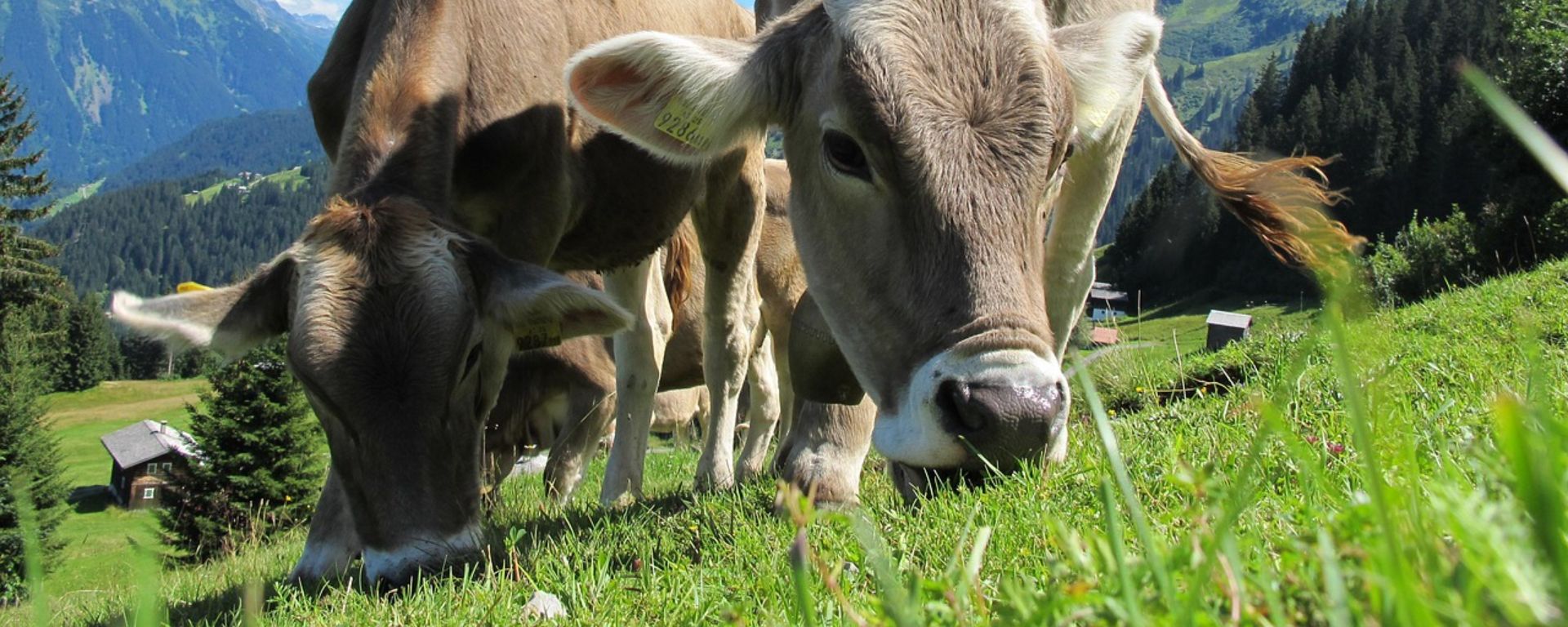
Grasslands account for approximately 40% of the Earth’s land area and are the largest natural ecosystem apart from forests. Livestock grazing is currently the most important human activity in grasslands, with a persistent and strong impact on both the aboveground plant community and underground organisms. Soil microbiota are the most numerous, most diverse, and functionally crucial biological group on the planet. Among them, microbes and nematodes are core components of soil food webs, driving critical belowground ecosystem processes such as nutrient cycling, organic matter transformation, and energy flow. Therefore, understanding how grazing impacts soil microbes and nematodes is essential for the health and sustainable management of grassland ecosystems.
To address this, we conducted a global meta-analysis by collecting 1,560 paired observations from 146 published studies to comprehensively evaluate the impacts of grazing on the abundance and diversity of soil microbes and nematodes.
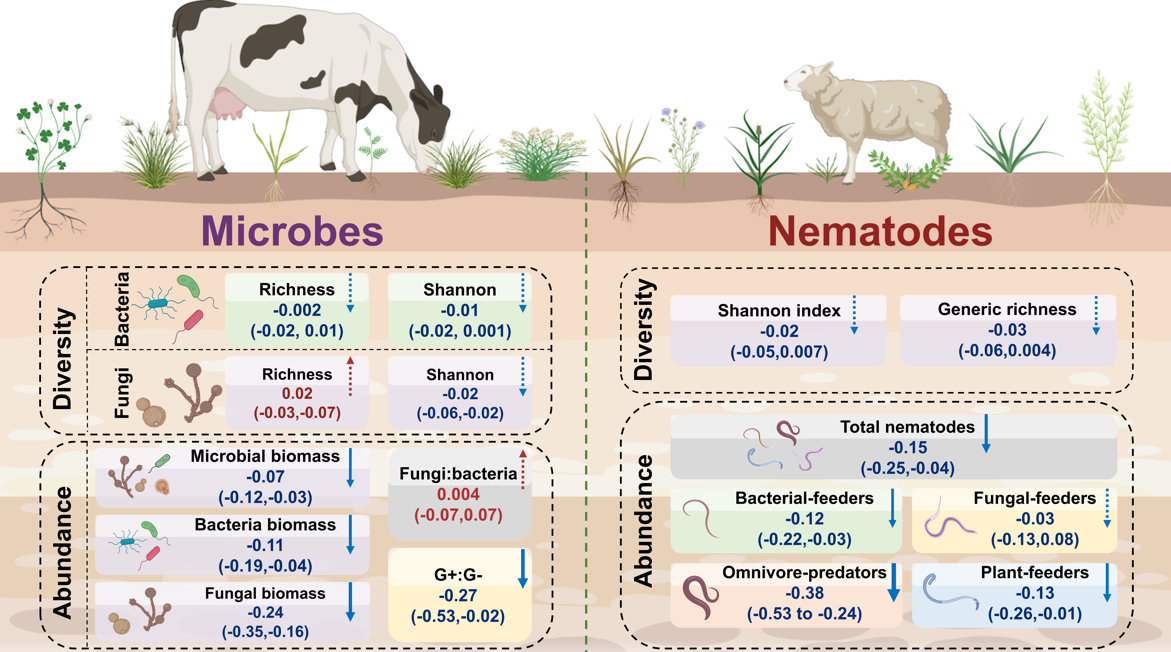
We found that grazing generally reduces the abundance of soil microbes and nematodes, with more pronounced negative effects observed in relatively arid temperate grasslands. In contrast, grazing has a limited effect on the diversity of soil microbes and nematodes. For different grazing management practices, we found that moderate, rotational, short-term, and mixed-livestock grazing tended to increase the diversity of soil microbial and nematode communities compared to heavy, continuous, long-term, and single-species grazing.
We suggest that maintaining moderate grazing intensity, implementing rotational grazing or extended rest periods, and diversifying livestock types are crucial for protecting soil biota in the context of intensifying human activities. In particular, high-intensity grazing should be strictly avoided in arid and semi-arid grasslands to prevent irreversible degradation of the soil food webs.
This is a Plain Language Summary discussing a recently-published article in Journal of Applied Ecology. Find the full article here.

