Rivers are dotted with countless small dams that slow the flow of water and disrupt connections between fish populations. These structures, known as low-head dams, typically stand only a few metres tall, yet millions exist worldwide. Since removing all of them is unrealistic, it is crucial to identify which ones most strongly hinder aquatic wildlife movement. In our study, we set out to understand how the physical characteristics of these dams, combined with natural flow conditions, influence the ability of fish to move freely.
We focused on three common groups of European freshwater fish —Chubs, Minnows, and Gudgeons— and measured the genetic similarity between populations living upstream and downstream of each dam. High genetic similarity indicates that individuals are able to cross the barrier and reproduce, whereas strong genetic differences signal restricted movement. Using this genetic approach, we assessed 63 low-head dams across continental France.
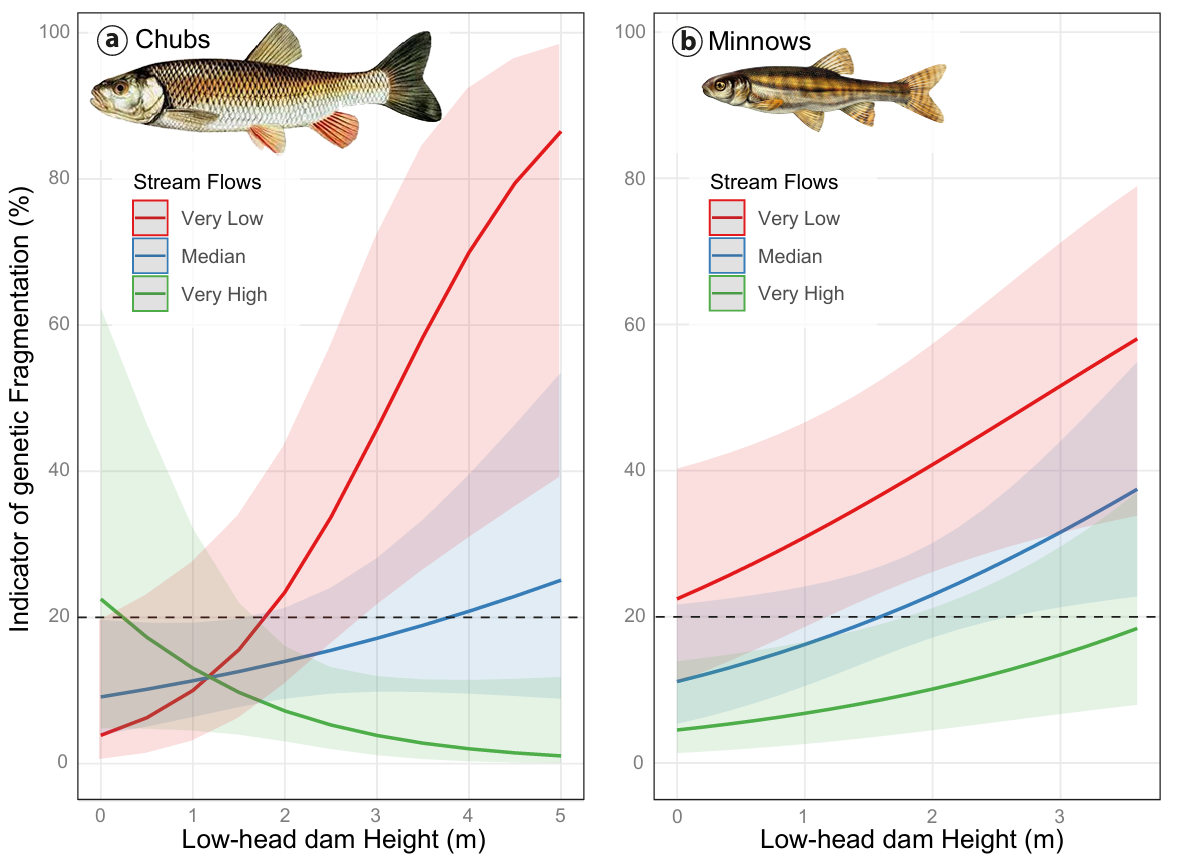
Our results show that dams fitted with structures such as fishways or sluice gates facilitated movement for all three fish groups. However, the effects of dams varied among species. For Chubs and Minnows, taller dams significantly reduced movement, though this negative impact was less pronounced in rivers that frequently experience strong high-flow events. These periods of elevated discharge can temporarily help fish pass obstacles. For Gudgeons, only the presence of fishways and sluice gates explained movement across dams, suggesting that additional, unmeasured factors may also play a role.
These findings provide river managers with practical tools to identify which dams are most likely to impede fish movement, helping to prioritise restoration efforts and guide future dam design. They also underline the importance of preserving natural high-flow events in river systems fragmented by human-made structures. As climate change and water-management policies alter flow regimes, understanding these dynamics becomes increasingly vital for safeguarding freshwater biodiversity.
This is a Plain Language Summary discussing a recently-published article in Journal of Applied Ecology. Find the full article here.

