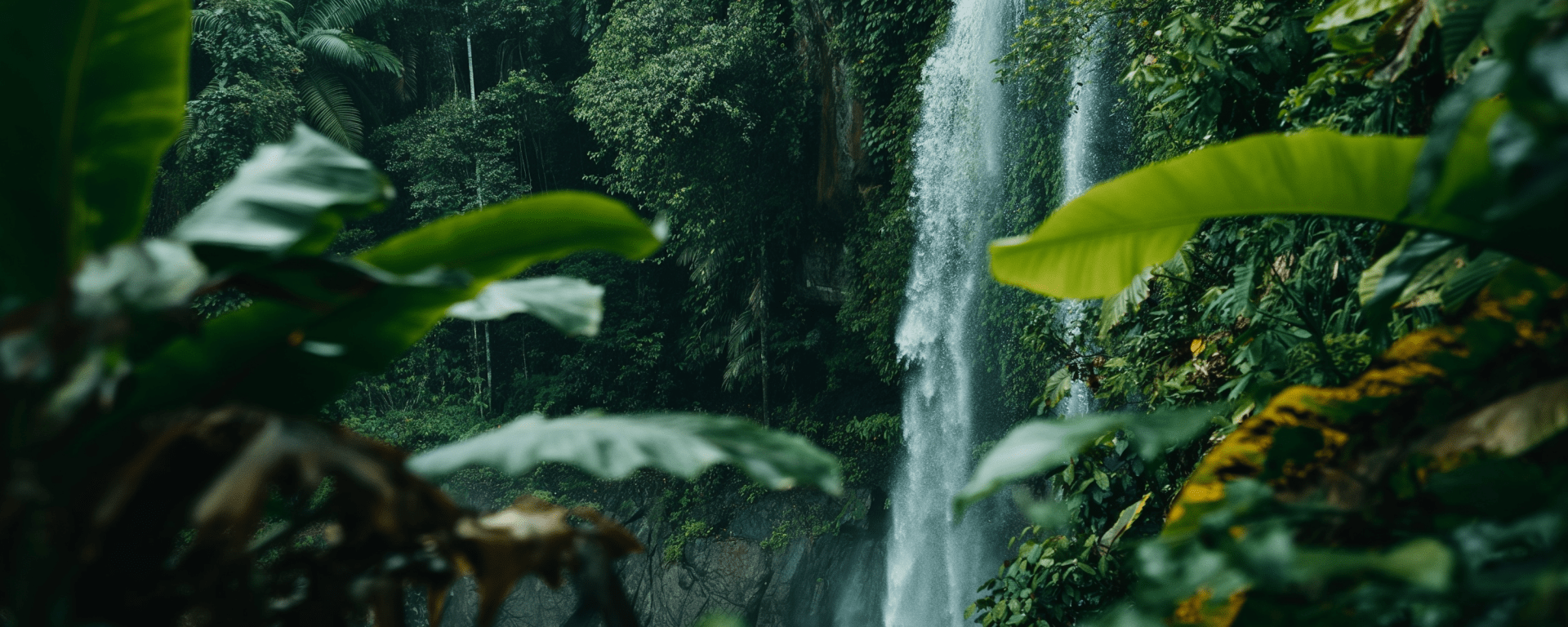
We found that community-managed forests can support wildlife just as well as nearby protection forests, especially when forests remain well connected across the landscape. This has important implications for how community forestry is included in future conservation strategies.
Across the world, governments are increasingly giving local communities the rights to manage forests. Indonesia is rapidly expanding its community forestry programme, and aims to place 12.7 million hectares of forest (an area approaching the size of England) under community management. Yet we still know surprisingly little about how well these community-managed forests support biodiversity.
We used more than 100 camera traps to survey mammals in two contrasting community forestry landscapes in Sumatra. One was still largely covered by connected forest, while the other was a patchwork of agroforestry, degraded forest and patches of mature forest. At both sites, we compared community-managed forests with nearby government-managed protection forests. We also mapped the surrounding landscape at each camera location to understand how forest connectivity, habitat quality and human activity influenced where mammals occurred.

We found that community-managed forests supported a similar number of mammal species as protection forests. However, important differences emerged for animals that depend on forest. In the largely forested landscape, these species were just as diverse in community-managed forests as in protection forests. In the more fragmented landscape, their diversity was lower.
The clearest factor explaining where mammals occurred was how well forest patches were connected. Forest quality, the amount of forest and distance from human activity also influenced wildlife, but less strongly.
Our findings suggest that the conservation value of community-managed forests depends not only on how they are managed, but also the landscapes in which they occur. In well-connected forest landscapes, community forestry can make a meaningful contribution to biodiversity conservation and may qualify for recognition under international conservation frameworks, such as Other Effective Area-based Conservation Measures (OECMs). In more modified production landscapes, restoring and reconnecting the forest is likely to provide the greatest benefits for wildlife. Overall, our study shows that community forestry can benefit both people and nature, but maintaining connected forests is key to achieving its full conservation potential.

