Keeping native oak trees alongside planted pines may help protect soil carbon. Our study suggests that the remains of bacteria, and especially fungi, help explain this benefit.
Forests store carbon below ground as well as in trees. When natural forests are replaced with plantations, changes in tree species can affect how much carbon stays in the soil. Plants supply carbon through fallen leaves and roots. Fungi and bacteria use this material to grow. After they die, carbon in their remains can become protected within the soil.
We compared natural oak forests, mixed oak and pine forests, and pine plantations with three different tree densities in northwestern China. We sampled the upper 40 centimetres of soil beneath the surface layer of dead leaves and other organic material. We measured soil carbon and chemical traces left by plant material, fungi and bacteria.
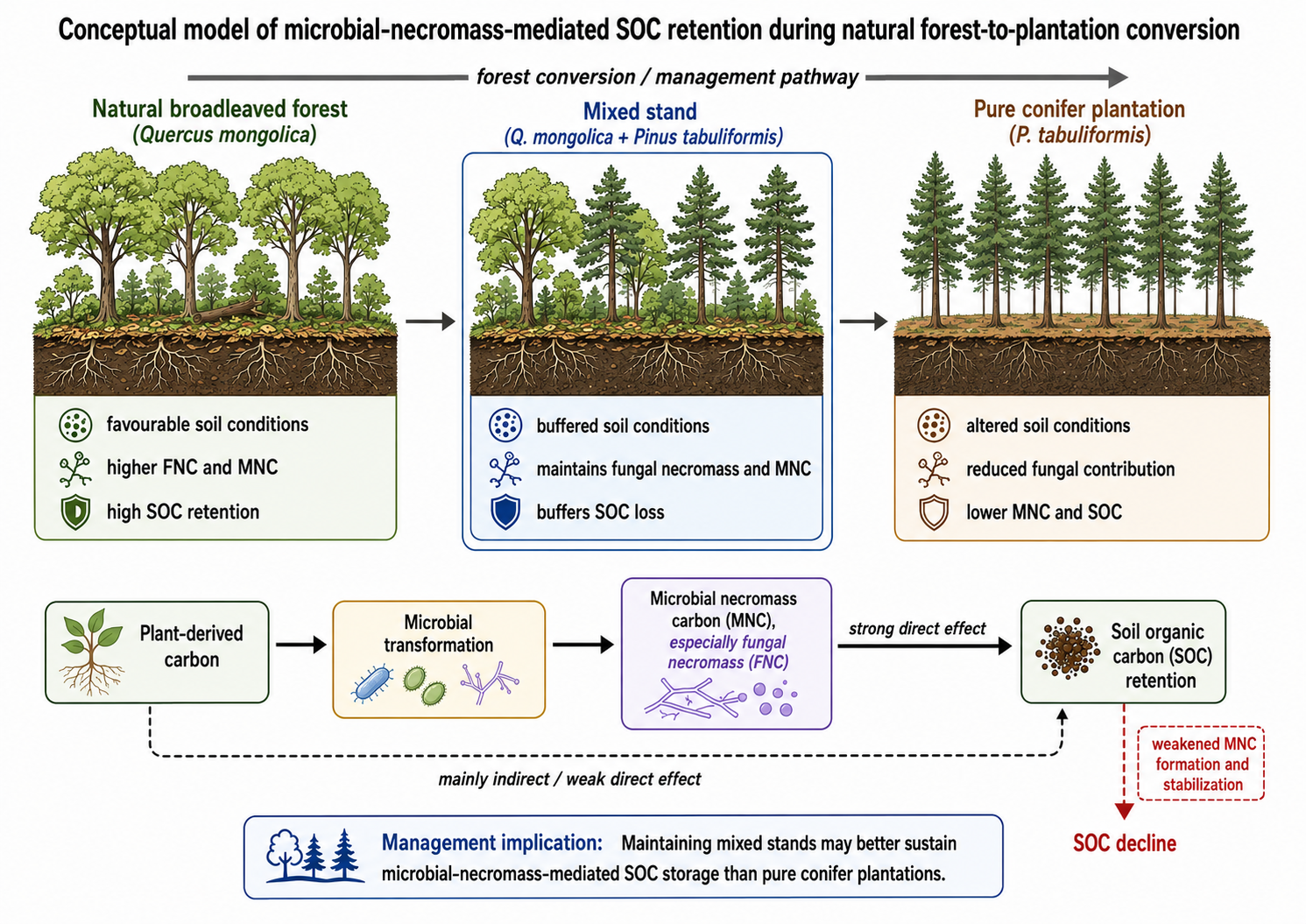
Mixed forests contained more soil carbon, including more carbon from the remains of fungi and bacteria, than plantations containing only pine. Our analyses suggested that these remains, especially those of fungi, were more closely linked to soil carbon retention than the plant traces. However, mixed forests still contained less carbon than natural forests in the upper soil layer. Within the pine plantations, we found no clear differences in soil carbon among the three tree densities.
Our findings support protecting remaining native forests and considering locally suitable mixtures of trees when establishing new plantations. In existing pine plantations, selective tree removal could be combined with encouraging native broadleaved trees to return. Managing tree numbers alone may not deliver the soil carbon benefits associated with keeping different tree species together. Forest carbon management should also consider the carbon left behind by fungi and bacteria in the soil.

