Igor Khorozyan: How to protect cattle from leopard attacks

In this Q&A, we discussed with author Igor Khorozyan the background behind his team’s recently published article: “Studded leather collars are very effective in protecting cattle from leopard (Panthera pardus) attacks” and the wider implications of the research, as well as finding a little bit more about the author himself. The research What’s your article about? In this article, we studied how good protective collars … Continue reading Igor Khorozyan: How to protect cattle from leopard attacks

Join The Applied Ecologist team as a Blog Associate Editor

*Deadline extended to Monday 17 August 2020* The Blog Associate Editor role – This is a voluntary position – The key responsibilities and duties include: Commissioning and/or writing content for the blog Copyediting draft posts from authors Formatting and uploading posts to the blog Providing copy for promoting blog posts on social media accounts and actively helping promote social media posts We’re looking for applicants … Continue reading Join The Applied Ecologist team as a Blog Associate Editor

Ecological Solutions and Evidence: an Associate Editor’s perspective

There is now only one month to go in our open call for Associate Editors as we look to expand the diversity and expertise of our Editorial Board. Find out more about our new journal from the perspective of one of our current Associate Editors, Ian Thornhill. Tell us a little about yourself. I am from Tamworth, Staffordshire, best known for a breed of pig … Continue reading Ecological Solutions and Evidence: an Associate Editor’s perspective

Meet the Editor: Carolyn Kurle

Last month, we announced Carolyn Kurle as our latest addition to the Ecological Solutions and Evidence Senior Editor team. With applications still open for our open call for Associate Editors, find out more about our new Lead Editor in this ‘Meet the Editor’ conversation. What can you tell us about the first paper you published? My first published paper was a nice study based upon … Continue reading Meet the Editor: Carolyn Kurle

Registered Reports at Ecological Solutions and Evidence – a big move for the BES

In our commitment to robust and open science, Ecological Solutions and Evidence has introduced registered reports as a new article submission type – but what exactly are they? We asked Tim Parker, Shinichi Nakagawa and Hannah Fraser, three advocates and experts on transparency and open science in ecology. Registered reports are a new type of scientific paper designed to reduce publication and reporting bias, improve … Continue reading Registered Reports at Ecological Solutions and Evidence – a big move for the BES

A new threat to native bumblebees

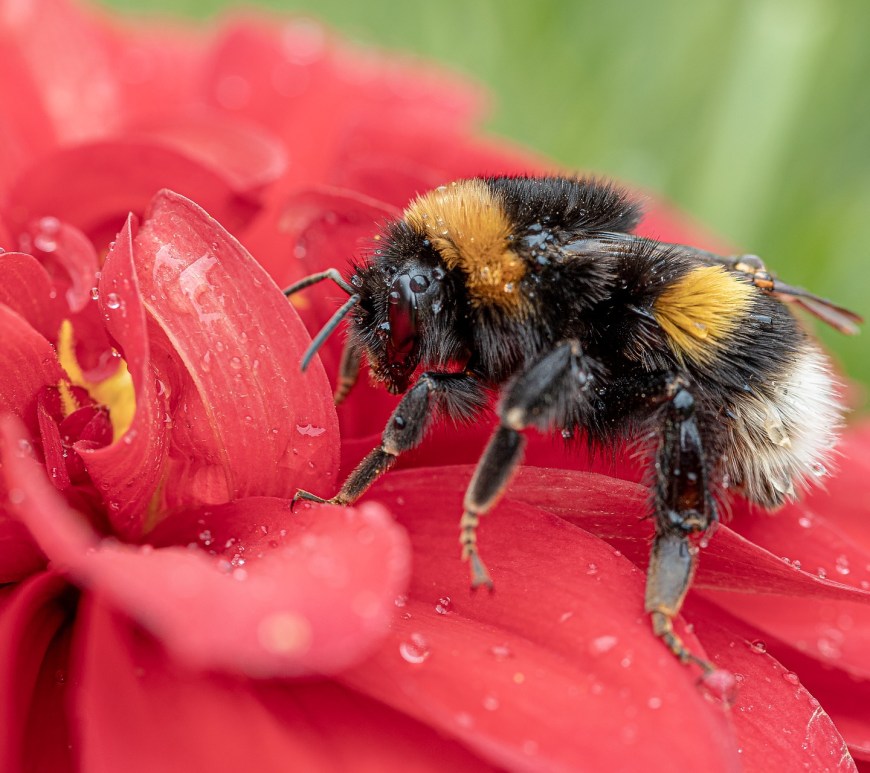
In their recently published article, Bartomeus et al. show how the commercial bumblebee trade is affecting the genetic integrity of native pollinators. Here the authors provide a summary of their work. Bees, especially bumblebees, are threatened by human-induced rapid environmental change such as habitat loss, exotic pathogens and global warming. But some species are more resilient than others. This is the case for the buff-tailed … Continue reading A new threat to native bumblebees

Field research and ecosystem management also suffer in pandemics – but there are glimmers of hope

As the COVID-19 pandemic continues Ecological Solutions and Evidence Lead Editor, Holly Jones, addresses the impact of the pandemic on ecosystems and the people that research and manage them. Long-term datasets with at least a year gap. Graduate students left wondering if they’ll have enough data to graduate on time. Advanced PhD students and post-docs left in a tailspin of uncertainty regarding job prospects. Early … Continue reading Field research and ecosystem management also suffer in pandemics – but there are glimmers of hope

Using phenology to guide invasive plant management

Successful restoration of degraded land often depends on well-timed interventions to control invasive species. In their recently published article, Taylor and colleagues present a case study of the effects of incorporating phenology information into invasive plant control operations at Midway Atoll National Wildlife Refuge (NWR), USA. The authors share their story below. Towards the end of April, millions of birds, including warblers, tanagers, buntings, grosbeaks … Continue reading Using phenology to guide invasive plant management

Age is a better indicator of biodiversity for road verges than surrounding landscape

In their recently published article, Alistair Auffret and Evelina Lindgren show how historical maps can be a useful tool to identify which road verges can best support grassland habitats. Here the authors provide a summary of their work Road verges are by now quite well known to provide valuable habitat for grassland species if they are managed appropriately (Phillips et al., 2019; Vanneste et al., … Continue reading Age is a better indicator of biodiversity for road verges than surrounding landscape

Ecological Solutions and Evidence: perspectives from research, practice and policy (part 2)

The Ecological Solutions and Evidence Editorial Board boasts expertise from a wide range of ecological sectors; from research institutions and NGOs to public body organisations and consultancies. In this second part of our two-part series, we ask our Associate Editors – who work in or in the interface between research, practice and policy – why people should submit to the Journal and what kind of … Continue reading Ecological Solutions and Evidence: perspectives from research, practice and policy (part 2)