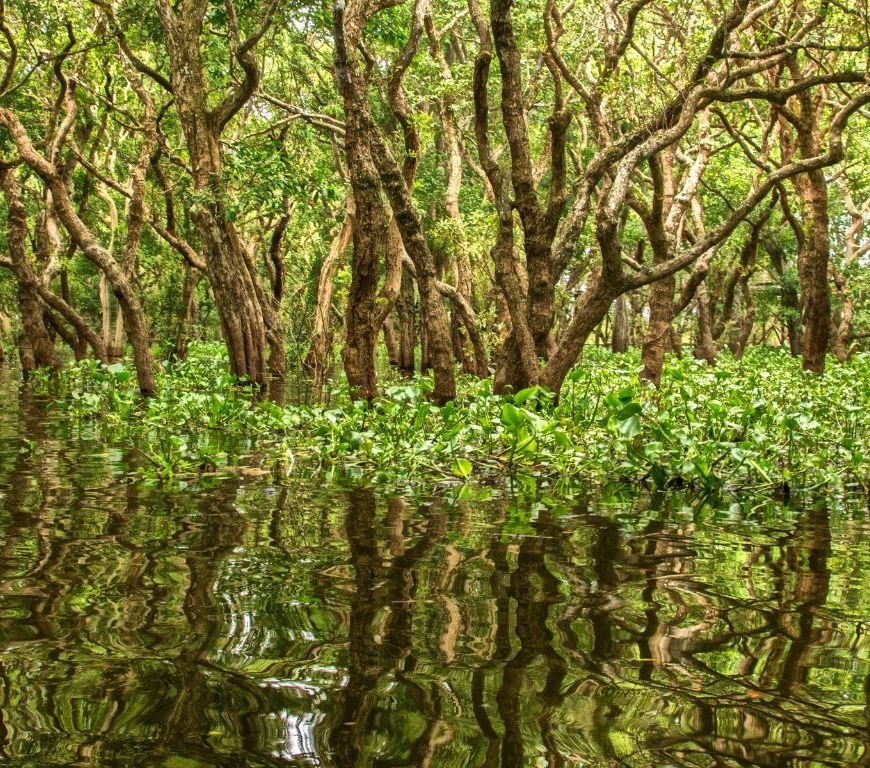
What is the real impact of eco-tourism on the environment?

In this blog post, Andrew Torsney and Yvonne Buckley share findings from their latest research aiming to better understand and identify the drivers of tourism-related impacts on the environment. As we increasingly recognize the ancillary benefits of nature, such as improved mental health, the demand for access to nature is rising. While this presents potential benefits, it also brings conflicts related to environmental management. Research … Continue reading What is the real impact of eco-tourism on the environment?

How can soundscapes enhance recruitment and habitat building on new oyster reef restorations?

Author Dominic McAfee talks us through his and colleagues’ recently published research article which experimented with the use of home-made speakers to boost oyster recruitment at sites throughout Australia. We’ve all, at one time or another, used music as a band aid. Perhaps to mend a broken heart, or to help us through challenging times. And in this regard, it seems we are not alone … Continue reading How can soundscapes enhance recruitment and habitat building on new oyster reef restorations?

The threat to seabirds and the Barents Sea

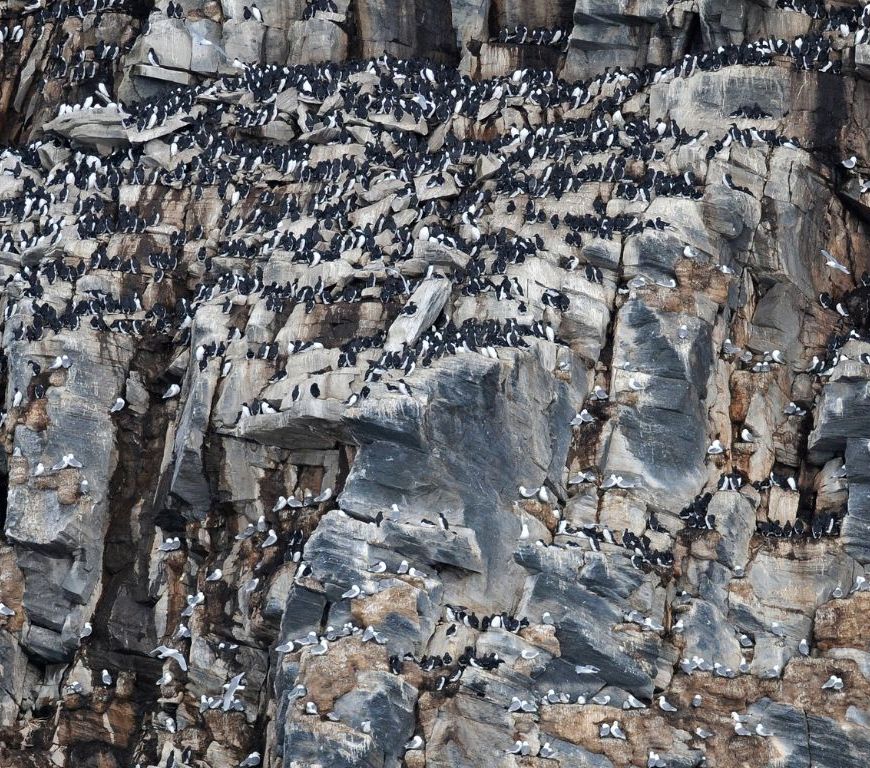
Feature photo: The Hornøya cliffs with nesting seabirds, including Kittiwakes, Common Guillemots and possibly Razorbills © Biotope In their latest research, Sam Hodges and colleagues present a novel solution that may help guide ecosystem management practices by predicting the effects of climate change and yearly variation in sea surface temperature on foraging seabird hotspots in the Barents Sea. Seabirds have historically been shown to be … Continue reading The threat to seabirds and the Barents Sea

Machine learning has an important role to play in marine conservation

Ecological monitoring is critical for conservation efforts, yet these data often feature strong class imbalances which complicate the development of models to predict such events. In their latest research, Michael W. Wade and colleagues propose two modelling frameworks for predicting exceptionally rare aggregatory behaviour of bull and blacktip sharks along the Gulf coast of Texas. Across many industries, leaders have begun leveraging the immense potential of … Continue reading Machine learning has an important role to play in marine conservation

Research stories: Boxing for conservation

Authors Brian Burke and Darren O’Connell discuss the conservation of roseate terns at Europe’s largest colony on Rockabill Island in Dublin, Ireland, with their latest research highlighting the important role artificial nestboxes have played in the species’ population growth and recovery. The role of a tern warden on Rockabill Island has been described on more than one occasion as a dream job. A summer spent … Continue reading Research stories: Boxing for conservation

Editor’s Choice 59:7 The key to seabird conservation – mitigating bycatch from industrial fisheries and eradicating invasive species

Associate Editor, Maria Paniw, introduces this month’s Editor’s Choice article by Dasnon et al., which presents some good news for seabird conservation: combined efforts of avoiding bycatch from commercial fisheries and reducing impacts of invasive species can effectively boost population sizes of vulnerable marine pelagic species. Industrial fishing activities can cause substantial damage, not only to fish stocks but also to pelagic vertebrate predators that … Continue reading Editor’s Choice 59:7 The key to seabird conservation – mitigating bycatch from industrial fisheries and eradicating invasive species

Apparently stable albatross population is actually decreasing due to mouse predation

Conservation organisations struggle to directly assist all threatened species, so deciding where to spend limited resources is a common problem. In a new paper, Oppel and colleagues show that, for long-lived species, a population may decrease long before this trend becomes evident in the part of the population that can be counted. Albatrosses are among the largest flying birds in the world, and they can … Continue reading Apparently stable albatross population is actually decreasing due to mouse predation

A quantitative feasibility assessment for translocating highly mobile, endangered species

Using long-term data, IPMs, & expert judgement, Fischer et al. demonstrate how translocation feasibility can be assessed quantitatively and transparently for endangered, philopatric, and highly mobile species, such as Kuaka. Kuaka, or Whenua Hou Diving Petrels, are in dire straits. The population of this Critically Endangered seabird is estimated at ~200 adults. Kuaka occupy the smallest breeding area of any bird species in Aotearoa New … Continue reading A quantitative feasibility assessment for translocating highly mobile, endangered species

Cutting non-native trees helps, but may not be enough to restore coastal scrub invaded by pines

Invasive non-native trees can cause structural and functional changes in plant communities, but how do their impact change over time? Michele de Sá Dechoum and colleagues explore this in their latest research on a coastal ecosystems in southern Brazil. We learn, since growing up, that we should plant trees. There is no doubt that trees have very important environmental and social roles, especially in the … Continue reading Cutting non-native trees helps, but may not be enough to restore coastal scrub invaded by pines

Functional Biofilm on Intertidal Flats: A New Conservation Priority for Shorebirds

Intertidal flats are essential foraging areas for shorebirds but are severely impacted by climate and anthropogenic change. In their latest review, Kuwae and colleagues explore the effects of interventions that focus on intertidal biofilm for shorebird recovery. A version of this post is available in Japanese. Why shorebird species have been plummeting in numbers worldwide remains a subject of intense speculation and mounting conservation concern. However, … Continue reading Functional Biofilm on Intertidal Flats: A New Conservation Priority for Shorebirds