Editor’s Choice 60:12 Mangrove ecological restoration vs climate variability

David Alejandro Sánchez-Núñez, J. Alexandra Rodríguez-Rodríguez and José Ernesto Mancera Pineda talk us through Journal of Applied Ecology’s December’s Editor’s Choice research article. This study demonstrates that climate-smart restoration in mangroves should implement the types of hydrological rehabilitation measures that offset or avoid reinforcing ENSO strong phases. History of cover fluctuations in a strategic mangrove ecosystem The Ciénaga Grande de Santa Marta (CGSM), one of … Continue reading Editor’s Choice 60:12 Mangrove ecological restoration vs climate variability

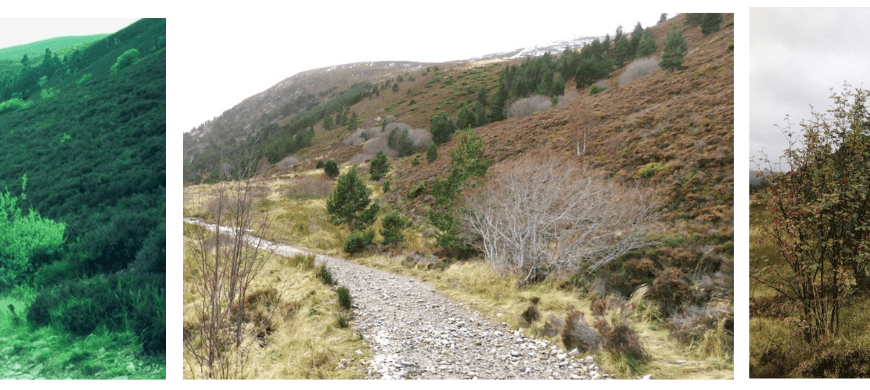
Editor’s Choice 60:11 Woodland Expansion in the Presence of Deer

Pip Gullet, Mark Hancock and Sydney Henderson summarise the Journal of Applied Ecology’s November’s Editor’s Choice research article. This study presents 30 years of regeneration monitoring to show a consistent, large-scale expansion of native woodland, largely through natural regeneration alongside deer culling, without the use of fences. Continue reading Editor’s Choice 60:11 Woodland Expansion in the Presence of Deer

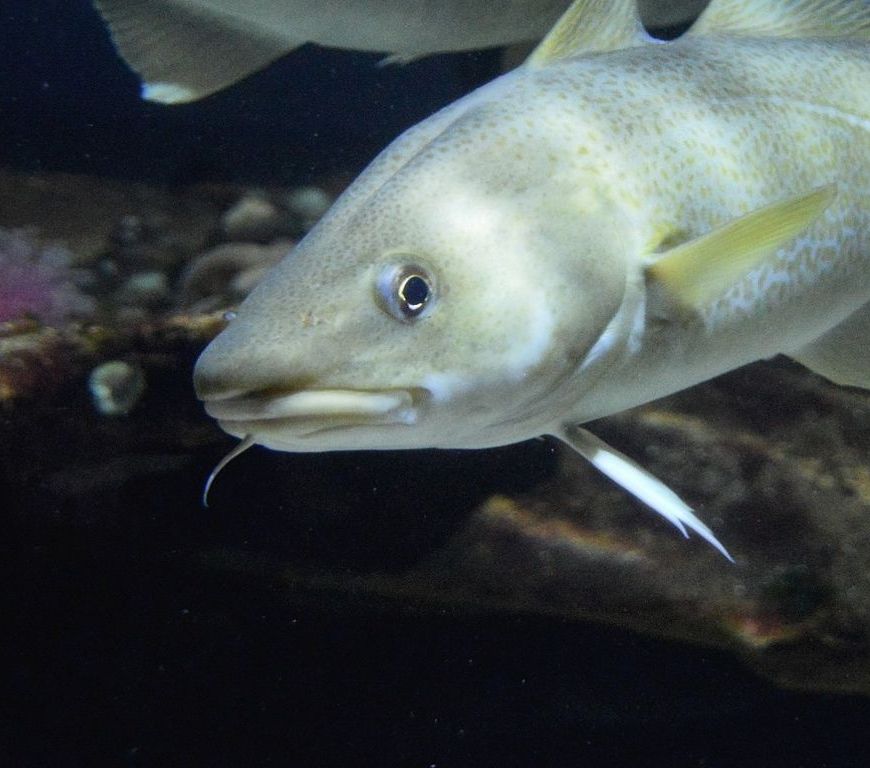
Editor’s Choice 60:10 Can management measures be used to reduce the impact of extreme events in the early life of fish?

Author Lucie Buttay summarises Journal of Applied Ecology’s October’s Editor’s Choice research article. Conducted with colleagues, this study used a life cycle model to simulate ‘what if’ scenarios around Northeast Arctic cod eggs and larvae. Extreme climatic events, (e.g. heat waves and storms) are becoming more frequent and intense, and on top of that, the ever-growing development of human activities at sea, entails an increasing … Continue reading Editor’s Choice 60:10 Can management measures be used to reduce the impact of extreme events in the early life of fish?

Editor’s Choice 60:9 Bat activity falls by over half at solar farms

Author Elizabeth Tinsley summarises Journal of Applied Ecology’s September Editor’s Choice research article. This latest research, conducted alongside colleagues, aimed to assess the impact of solar panel farms on bat activity. The growing need for renewable energy As our planet continues to warm, the need for renewable energy is becoming increasingly urgent. Renewable technologies are important in meeting energy demands sustainably and are of vital importance … Continue reading Editor’s Choice 60:9 Bat activity falls by over half at solar farms

Elección del editor 60:8 Twitter, cuarentenas con COVID y una revisión sistemática

Los autores Kevin Tkach y Maggie Watson nos cuentan como desarrollaron su investigación cuando los cierres por las cuarentenas debido al COVID-19 les impidió reunirse (en persona) para trabajar en un proyecto de doctorado. En lugar de ello, durante tres años trabajaron juntos en una revisión sistemática para intentar comprender cómo se aplicaban las herramientas genéticas en problemas de conservación complejos. Continue reading Elección del editor 60:8 Twitter, cuarentenas con COVID y una revisión sistemática

Editor’s Choice 60:8 Twitter, Covid-19 lockdowns and a systematic review

This blog post is also available in Spanish here. Authors Kevin Tkach and Maggie Watson recall how they kept their focus when lockdowns in both countries prevented their meeting in-person to work on a PhD project. Instead, over a three-year period, they worked together on a systematic review trying to understand how conservation genetics tools were applied to conservation problems. How the project begun Before … Continue reading Editor’s Choice 60:8 Twitter, Covid-19 lockdowns and a systematic review

Editor’s Choice 60:6 Whale shark abundance forecast

Author Oscar Sosa-Nishizaki introduces Journal of Applied Ecology’s June Editor’s Choice research article which was identified by Editors for proposing strong applied ecological guidance. Sosa-Nishizaki et al’s studied whale shark abundance through modelling and photo identification, suggesting that local authorities apply the model each spring. Research conception The foundations of this study began around 2007 with the efforts of the Pejesapo community group from the … Continue reading Editor’s Choice 60:6 Whale shark abundance forecast

Editor’s Choice 60:1 Weed communities are more diverse, but not more abundant, in dense and complex bocage landscapes

Associate Editor Pieter De Frenne talks us through a new research article by Boinot et al which found that the weed communities in bocage landscapes were functionally more diverse, creating important implications for the management of agricultural bocage landscapes. One of the cornerstones of many national and international agricultural policies, such as the EU Green Deal, is to transition to a sustainable food system and … Continue reading Editor’s Choice 60:1 Weed communities are more diverse, but not more abundant, in dense and complex bocage landscapes

Editor’s Choice 58:9 Identifying a pathway towards recovery for depleted wild Pacific salmon populations in a large watershed under multiple stressors

Associate Editor, Hedley Grantham, introduces this month’s Editor’s Choice article by Lia Chalifour and colleagues, which evaluates the potential benefits of 14 management strategies on 19 conservation units of the five Pacific salmon species in the lower Fraser River, British Columbia, Canada. Salmon are an iconic and globally recognisable species. In the Northeast Pacific they are also an important commercial and recreational fish species with … Continue reading Editor’s Choice 58:9 Identifying a pathway towards recovery for depleted wild Pacific salmon populations in a large watershed under multiple stressors

Editor’s Choice 58:8 Tree species that live slow, die older enhance tropical peat swamp restoration: Evidence from a systematic review

Associate Editor, Sharif Mukul speaks to the co-lead author of this month’s Editor’s Choice article, Stuart Smith, which presents results from a systematic review of tropical peat swamp forests reforestation projects across Southeast Asia. The restoration of degraded forested lands is a global priority, incentivised by international commitments to counteract decades of rapid deforestation. However, syntheses using seedling monitoring data from past reforestation projects remain … Continue reading Editor’s Choice 58:8 Tree species that live slow, die older enhance tropical peat swamp restoration: Evidence from a systematic review