Solutions science – Ciencia de soluciones

Claire Wordley (Conservation Evidence project, University of Cambridge) looks at evaluation and evidence in testing interventions and asks the question, ‘What works in conservation’? A Spanish version  of this post is also available. Evidence in conservation: does it matter? What do scaring juvenile offenders, giving steroids to head trauma patients, and bat bridges all have in common? They are all examples of interventions that were … Continue reading Solutions science – Ciencia de soluciones

Mitigating conflicts between agriculture and migratory geese: is shooting a viable option or just passing on the problem?

Following the recent article, Shooting may aggravate rather than alleviate conflicts between migratory geese and agriculture, Silke Bauer explains why management plans for migratory goose populations need to be considered across a broader scale. A challenge with developing management plans for migratory populations is that these populations use several sites in their annual cycle. Therefore, local actions may not only affect how migratory animals behave … Continue reading Mitigating conflicts between agriculture and migratory geese: is shooting a viable option or just passing on the problem?

Using science to inform policy during adverse weather conditions

Andrew Hoodless discusses new research on the effect of cold weather on the Eurasian woodcock and the recent article Regulation of body reserves in a hunted wader: Implications for cold-weather shooting restrictions. Severe winter weather can place a strain on the energy reserves of birds, sometimes resulting in mortality if adverse conditions persist for more than a few days. There are relatively few studies that … Continue reading Using science to inform policy during adverse weather conditions

How to manage city trees in a changing climate?

Without sufficient water, urban trees are susceptible to other stressors, including insect pests. Associate Editor, Pieter De Frenne (Ghent University, Belgium) explains how Meineke and Frank’s recent paper, Water availability drives urban tree growth responses to herbivory and warming, provides key research into the management of a vital ecosystem service. Cities are hot. Not only to taste the best latte macchiato in the fanciest coffee … Continue reading How to manage city trees in a changing climate?

Should we care if angler participation patterns are different?

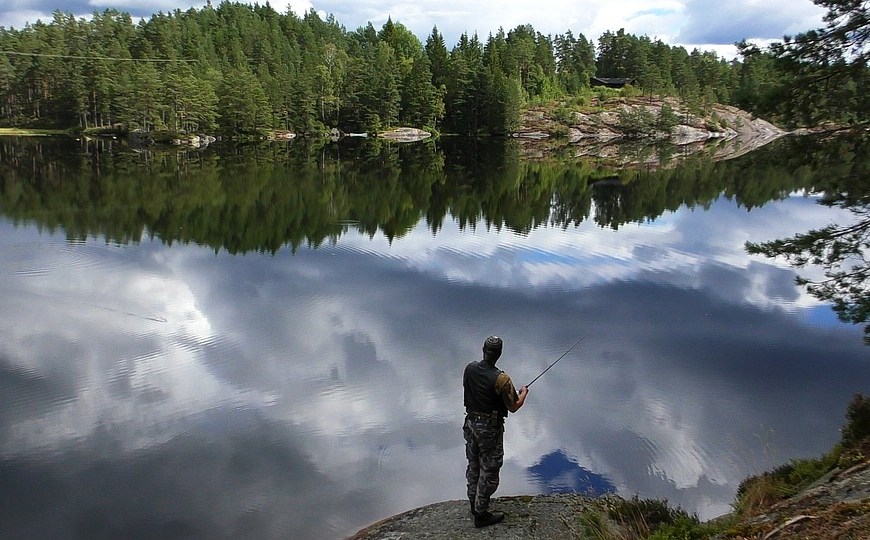
Fisheries management approaches need to consider angler behaviour, or there could be knock-on effects once practices are implemented. Synchrony – an emergent property of recreational fisheries by Kaemingk et al. is published today in Journal of Applied Ecology. Understanding how people use natural resources in space and time is challenging, but necessary for proper management.  Biologists often face difficult and urgent management decisions; these decisions may … Continue reading Should we care if angler participation patterns are different?

How to recover endangered raptor species: the Spanish imperial eagle as a case study

Rounding up our Endangered Species Day series, Miguel Ferrer demonstrates how scientists and managers can work together and succeed in conservation efforts. Ferrer et al.’s paper, Reintroducing endangered raptors: A case study of supplementary feeding and removal of nestlings from wild populations, was our Editor’s Choice article for issue 55:3.  Recently, we published a paper about supplementary feeding of large raptors as a method to increase productivity … Continue reading How to recover endangered raptor species: the Spanish imperial eagle as a case study

Stress on the ski slope: individual capercaillies show different coping styles

As part of our cross-journal series for Endangered Species Day, Journal of Applied Ecology Associate Editor, Marc-André Villard considers Coppes et al.’s research around human-induced stress, and what this means for vulnerable populations. The full article, The importance of individual heterogeneity for interpreting faecal glucocorticoid metabolite levels in wildlife studies is available in Journal of Applied Ecology. Ecologists have long been aware that individual animals vary … Continue reading Stress on the ski slope: individual capercaillies show different coping styles

Infographic: Impacts of underwater noise – a helping hand

In their new Practitioner’s Perspective, Guiding principles for assessing the impact of underwater noise, published today (16th May 2018), Faulkner et al. present practical solutions for mitigating the effects of underwater noise on marine wildlife. See their work presented as an infographic here. Underwater noise pollution poses a global threat to marine wildlife, from charismatic ocean giants like the blue whale to ecosystem cornerstones such as … Continue reading Infographic: Impacts of underwater noise – a helping hand

A win-win for wine

Inter-row vegetation in vineyards can help tackle soil erosion without sacrificing the quality of grapes. Associate Editor, Peter Manning (Senckenberg Biodiversity and Climate Centre) discusses the recent Review by Winter et al., Effects of vegetation management intensity on biodiversity and ecosystem services in vineyards: A meta‐analysis When we think of intensive agriculture most of us conjure images of factory farmed chickens or wheat fields spayed with litres … Continue reading A win-win for wine

Juvenile natural mortality is a hard parameter to estimate, but it can be done with pop-up archival tags

New research published today (9th May 2018) uses electronic tags to highlight the risk of shark mortality through unintentional capture in fishing gear. Associate Editor, Andre Punt, comments on the new paper by Benson et al., Juvenile survival, competing risks, and spatial variation in mortality risk of a marine apex predator. One of the most influential parameters in any population dynamics model is the rate of … Continue reading Juvenile natural mortality is a hard parameter to estimate, but it can be done with pop-up archival tags