Issue 55:5

Read the highlights from our September issue. Value of information: when to learn and when to manage in conservation This issue’s Editor’s Choice article Better many small than a few large: how landscape configuration affects arthropod communities in rice Can splitting agricultural ecosystems help reduce yield losses for rice farmers? Mejor muchos pequeños que pocos grandes: sobre como la configuración del paisaje afecta las comunidades … Continue reading Issue 55:5

Mejor muchos pequeños que pocos grandes: sobre como la configuración del paisaje afecta las comunidades de artrópodos en agro-ecosistemas de arroz

Associate Editor, Juan Corley on Dominik et al.’s research, Landscape composition, configuration, and trophic interactions shape arthropod communities in rice agroecosystems. English version available here. Para muchos de nosotros habitantes de ciudades, el arroz están muy presente en nuestra cocina habitual, desde el Sushi hasta la Paella. No obstante, quizás sea de mayor significación es el hecho de que el arroz sea el cereal más … Continue reading Mejor muchos pequeños que pocos grandes: sobre como la configuración del paisaje afecta las comunidades de artrópodos en agro-ecosistemas de arroz

What’s the meta with bees? Pesticides influence bee learning and memory

Harry Siviter’s article, Quantifying the impact of pesticides on learning and memory, was published yesterday (Wednesday 11th July 2018). Here he explains why policy makers need to consider the effects of agrochemicals on pollinators. Foraging bees have a tough time of it. In social bees, such as bumblebees and honeybees, workers have to forage across large landscapes, collecting nectar and pollen from flowers as they … Continue reading What’s the meta with bees? Pesticides influence bee learning and memory

Crop rotations called into question

Why it’s time to rethink the way we approach this agricultural practice: Mathias Cougnon & Associate Editor, Pieter De Frenne (Ghent University, Belgium) discuss the recent paper, Distantly related crops are not better rotation partners for tomato by by Ingerslew and Kaplan. Crop rotations are central to common agricultural practice and growing related crops year after year on the same patch of land is generally … Continue reading Crop rotations called into question

Editor’s Choice 55:4 – Applying ecology to inform plant disease management policy and avoid regulator-grower conflict

The Editor’s Choice for issue 55:4 is written by Senior Editor, Phil Stephens. The selected article is Grower and regulator conflict in management of the citrus disease Huanglongbing in Brazil: A modelling study by Craig et al. Plant disease is already recognised as a major driver of crop yield losses. With a huge proportion of the growing human population’s food intake dependent on a relatively … Continue reading Editor’s Choice 55:4 – Applying ecology to inform plant disease management policy and avoid regulator-grower conflict

Mitigating conflicts between agriculture and migratory geese: is shooting a viable option or just passing on the problem?

Following the recent article, Shooting may aggravate rather than alleviate conflicts between migratory geese and agriculture, Silke Bauer explains why management plans for migratory goose populations need to be considered across a broader scale. A challenge with developing management plans for migratory populations is that these populations use several sites in their annual cycle. Therefore, local actions may not only affect how migratory animals behave … Continue reading Mitigating conflicts between agriculture and migratory geese: is shooting a viable option or just passing on the problem?

Issue 55:3

From fisheries management, to reintroductions and land use policies, here are some highlights from issue 55:3: Addressing global fisheries management challenges in a changing world Our latest Spotlight, showcasing high-quality and topical research Targeted supplementary feeding supports reintroduction of endangered raptors This issue’s Editor’s Choice Is environmental legislation conserving tropical stream faunas? Looking beyond the trees in tropical forest landscapes Evaluating the temporal effectiveness of marine reserves Species recovery … Continue reading Issue 55:3

Issue 55:2

Issue 55:2 includes a Spotlight on Decision making under uncertainty. Other topics include urban ecology, population monitoring, tropical forest restoration and more. Here we take a look at some of the articles published in this issue. Decision making under uncertainty Senior Editor, Michael Bode on this issue’s selection of Spotlight papers How does grazing by wild ungulates and livestock affect plant richness? This issue’s Editor’s Choice Jaguar … Continue reading Issue 55:2

Ensuring sustainable açaí fruit production in the Amazon river delta

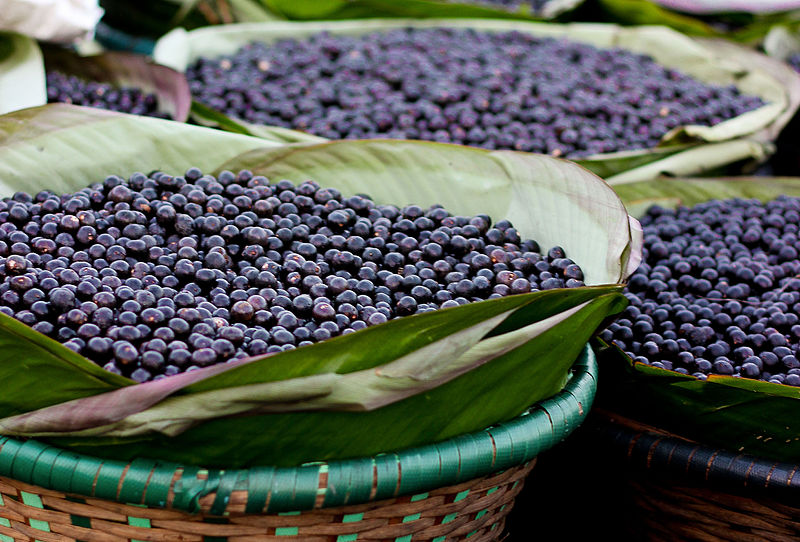
With açaí fruit becoming increasingly popular, it is important to understand how farming management practices are affecting vital pollination services. Associate Editor, Ainhoa Magrach comments on the recent article, Anthropogenic disturbance of tropical forests threatens pollination services to açaí palm in the Amazon river delta by Campbell et al. Worldwide the demand for the berries of the açaí palm is increasing. These anti-oxidant rich foods have … Continue reading Ensuring sustainable açaí fruit production in the Amazon river delta

Functional traits in agroecology: advancing description and prediction in agroecosystems

Our series of posts on the Special Feature, Functional traits in agroecology rounds up with a post from one of the series’ editors, Adam Martin. We’ve always thought “commentary” articles – particularly those that outline a vision for a future field of research – to be an interesting enigma in science. On one hand, many commentary-type articles have been undoubtedly influential and can be pointed … Continue reading Functional traits in agroecology: advancing description and prediction in agroecosystems