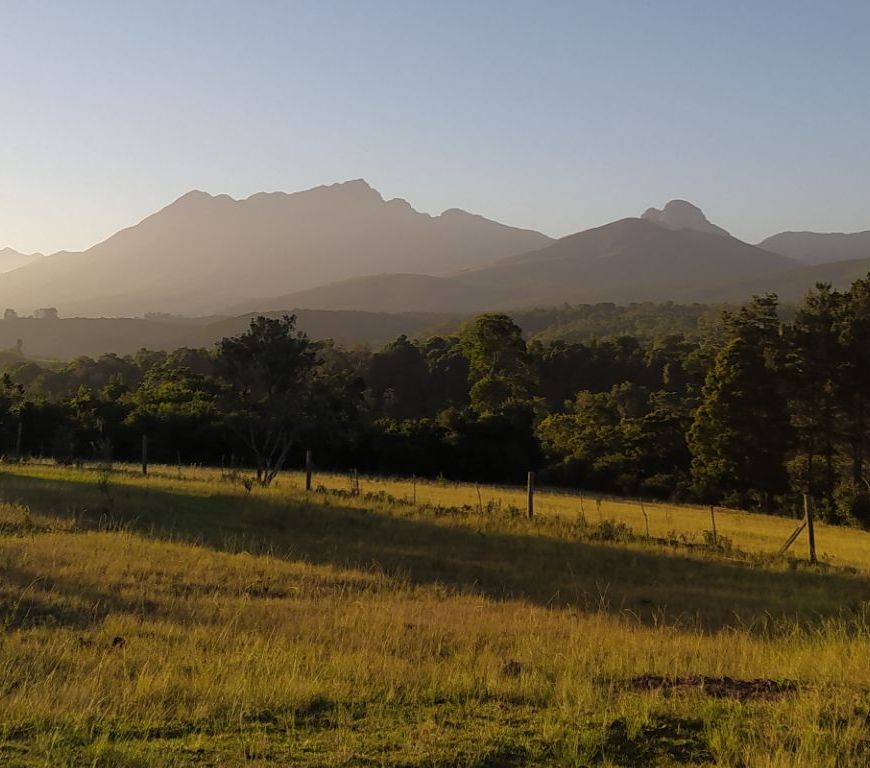
Combining local ecological knowledge with camera traps: African mammal life-history traits and their occurrence in anthropogenic landscapes

Alice Bernard and co-authors describe how they have jointly used local ecological knowledge and camera trap data. With hindsight, they discuss how involving local people in research projects can enhance conservation efforts in the Garden Route Biosphere Reserve (GRBR), South Africa. The Garden Route National Park (GRNP), in the eponym Biosphere Reserve, is one of the only truly unfenced National Parks in South Africa. The … Continue reading Combining local ecological knowledge with camera traps: African mammal life-history traits and their occurrence in anthropogenic landscapes

Research stories: Using accelerometers to uncover wildlife behaviour

How can we study wildlife behaviours associated with disease transmission without altering those behaviours ourselves, via our presence? Authors Van de Vuurst and Alexander share their latest Practice Insights that explore a new method to overcome this problem. Wildlife research is a job made of calluses, sweat and patience. From sample gathering along stream banks to telemetry surveys across frozen tundra, all wildlife professionals are … Continue reading Research stories: Using accelerometers to uncover wildlife behaviour

(A) Hodgson’s frogmouth, (B) Gould’s shortwing, (C) Fire-tailed myzornis (Phub Dorji)

The fragile Himalayas and the balancing act!

Ugyen Penjor discusses their latest research, conducted with colleagues Sherub Sherub and Rinzin Jamtsho, which explores the effects of land-use change on the functional and phylogenetic diversity of Eastern Himalayan bird communities. Envision the Himalayas – snow-clad mountains, jagged peaks, ruddy-cheeked people, and of course the ‘Abominable Snowman’ or The Yeti. But what is more exciting about the Himalayas is the biodiversity. The Himalayas can … Continue reading The fragile Himalayas and the balancing act!

Mountain lions in LA moved more efficiently during the COVID-19 pandemic

The COVID-19 pandemic and the subsequent shutdowns in many regions around the world offered a new “human-less” environment for urban wildlife in 2020. In their latest research, Benson et al. share their findings from tracking mountain lion movements in greater Los Angeles, USA during spring 2020. Early on during the global pandemic, ecologists quickly realised that changes in human behaviour and activity brought on by … Continue reading Mountain lions in LA moved more efficiently during the COVID-19 pandemic

The importance of forest remnants in human-modified landscapes

In a recently published study, Karp et al. explore the role of working landscapes in the conservation of species diversity. Here, Associate Editor, Ricardo Solar, discusses what their research means for today’s ecologists and conservation scientists. A Spanish version of this post is available here. We are witnessing a novel moment in our planet’s history, in which human-driven changes in the Earth’s system are among … Continue reading The importance of forest remnants in human-modified landscapes

La importancia de los remanentes de bosque en paisajes modificados

An English version of this post is available here. Nuestra generación está presenciando un nuevo momento en la historia de nuestro planeta, en el que los cambios impulsados por los humanos en el sistema de la Tierra se encuentran entre las amenazas más incontrolables para la conservación de la biodiversidad, así como la persistencia humana en sí misma. Aunque es un desafío para la biodiversidad … Continue reading La importancia de los remanentes de bosque en paisajes modificados

Editor’s Choice 55:6 -Disentangling natural vs anthropogenic influences on predation: reducing impacts on sensitive prey

The Editor’s Choice article for issue 55:6 is Broad‐scale occurrence of a subsidized avian predator: Reducing impacts of ravens on sage‐grouse and other sensitive prey by O’Neil et al. Associate Editor Margaret Stanley explains the importance of this paper and the disentanglement of natural and anthropogenic influences. As a researcher who often fixates on invasive predators, the tricky issues associated with natural predation, from native predators that … Continue reading Editor’s Choice 55:6 -Disentangling natural vs anthropogenic influences on predation: reducing impacts on sensitive prey

Spotlight: How do renewable energy installations affect wildlife?

In the first post of its kind for The Applied Ecologist’s blog, Dr Lucy Wright, RSPB Principal Conservation Scientist, discusses five articles published in the latest issue of Journal of Applied Ecology, which have been grouped into a special profile on wildlife and renewable energy. All five papers are currently free to read online. Renewable energy is widely accepted to be a vital part of … Continue reading Spotlight: How do renewable energy installations affect wildlife?