The impact of downhill skiing on birds

Mattia Brambilla & Francesca Roseo share their experience researching the impact of skiing on biodiversity. Up and down mountains, along with their winged inhabitants For many years, both of us have been passionate skiers. We engaged in ski competitions in our youth and deeply enjoyed downhill skiing, along with the other various outdoor activities in the mountains. But then something changed along the way. Ski … Continue reading The impact of downhill skiing on birds

Revealing the hidden lives of non-breeding Black-tailed Godwits

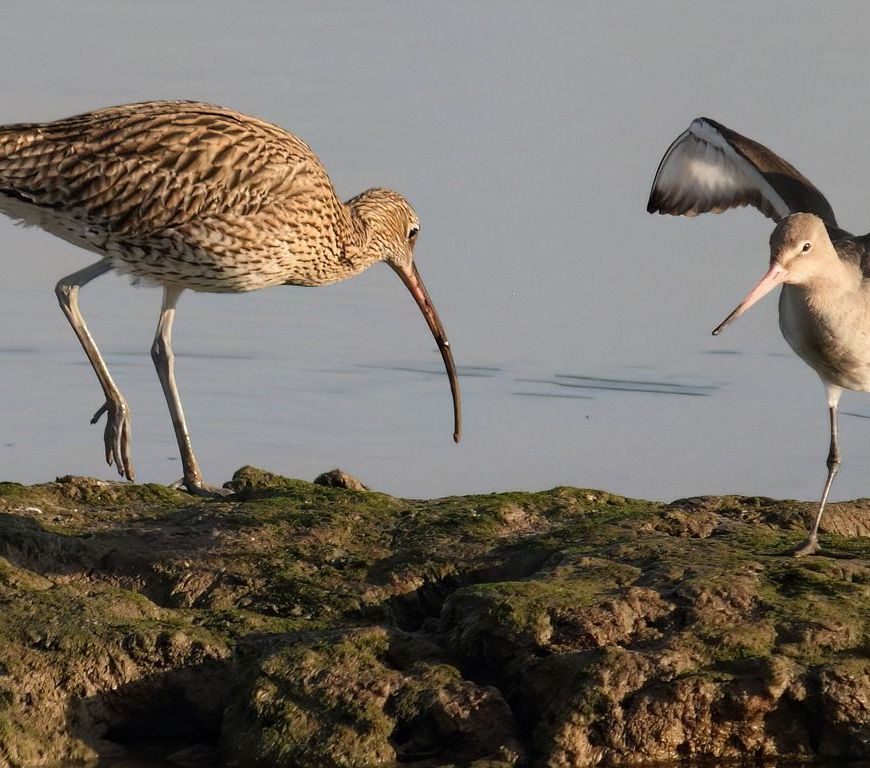
In this blog post, Taylor Craft discusses the use of GPS tracking and satellite imagery to uncover the lives of Black-tailed Godwits in the Senegal Delta. You can read their latest study, published alongside co-authors, here. A pressing challenge The landscapes of the endangered continental Black-tailed Godwit face increasing pressures at nearly every key site along their migratory route. With poor recruitment limiting population growth, … Continue reading Revealing the hidden lives of non-breeding Black-tailed Godwits

Beneath the Waves: Estimating Marine Bird Abundances Outside the Breeding Season

Ruth Dunn shares insights on her latest study where, alongside her colleagues, she investigated the number of marine birds, outside of their breeding seasons, that may be undetectable when underwater during at-sea surveys. Investing in renewable energy developments, as opposed to burning fossil fuels, has been hailed as a route through which humans might be able to counteract anthropogenic-induced climate change. Within western Europe, it … Continue reading Beneath the Waves: Estimating Marine Bird Abundances Outside the Breeding Season

The landscape of fear in cattle farms? How the presence of barn swallow influences the activity of pest flies

Authors of a research article recently published in Journal of Applied Ecology talk us through how barn swallows are effective biological control agents for lowering pest fly activity in livestock farms. Preamble: Farmland birds, filth flies and the landscape of fear Birds are key suppliers of crucial ecosystem services worldwide, and insectivorous species can consume up to 400 – 500 million tons of prey each … Continue reading The landscape of fear in cattle farms? How the presence of barn swallow influences the activity of pest flies

A decadal study reveals that restoration guided by an umbrella species does not reach target levels

Author Albin Larsson Ekström discusses how their latest research evaluates the decadal effects of restoration aimed at the white-backed woodpecker on the biodiversity of saproxylic beetles. The study suggests that, for restoration to be successful, both continuous and repeated restoration efforts are needed. Restoration guided by the umbrella species concept A long history of intensive forest management has transformed the forests of Sweden into well-managed … Continue reading A decadal study reveals that restoration guided by an umbrella species does not reach target levels

Weather forecasts can help us save migratory birds from collisions with city buildings

In their latest research article, Sara Kross, Katherine Chen, Benjamin Van Doren and colleagues utilise 5 years of bird collision counts in New York City to determine the influence of nocturnal weather conditions and bird migration traffic rates on collisions with buildings. Migration is already a particularly dangerous part of the annual life cycle of many birds, and it’s estimated that collisions with windows kills up … Continue reading Weather forecasts can help us save migratory birds from collisions with city buildings

Regulation is required to mitigate the high cumulative propagule pressure exerted by escaped pet parrots

Margaret Stanley, Ellery McNaughton, Rachel Fewster and Josie Galbraith talk us through their recent research that uses reports of lost pet birds to estimate the cumulative propagule pressure that the pet trade exerts on the establishment of introduced bird species. Although concerns about the billion-dollar global pet trade industry have usually focused on issues associated with the trade of endangered species, the pet trade also … Continue reading Regulation is required to mitigate the high cumulative propagule pressure exerted by escaped pet parrots

How much agri-environment provision is required to reverse farmland bird declines?

Dr Robert Hawkes, RSPB Conservation Scientist, explains the findings of a recently published article. Here, RSPB and BTO scientists, in partnership with Natural England, explore how much bird-friendly agri-environment management is needed to stabilise or reverse farmland bird declines. The UK government has recently committed to halting species abundance declines in England by 2030, with similar timebound EU targets currently under discussion. With many species … Continue reading How much agri-environment provision is required to reverse farmland bird declines?

Farmstead modernization affects farmland birds

Martin Mayer and Martin Šálek take us through their latest research into how old ‘messy’ farmsteads may actually be bird hotspots and how modernization changes this. Old cow sheds are a great place for farmland birds. There are many cracks, corners and beams in these old brick buildings where birds can build their nests. The bedding material for the cows is straw or hay, and … Continue reading Farmstead modernization affects farmland birds

(A) Hodgson’s frogmouth, (B) Gould’s shortwing, (C) Fire-tailed myzornis (Phub Dorji)

The fragile Himalayas and the balancing act!

Ugyen Penjor discusses their latest research, conducted with colleagues Sherub Sherub and Rinzin Jamtsho, which explores the effects of land-use change on the functional and phylogenetic diversity of Eastern Himalayan bird communities. Envision the Himalayas – snow-clad mountains, jagged peaks, ruddy-cheeked people, and of course the ‘Abominable Snowman’ or The Yeti. But what is more exciting about the Himalayas is the biodiversity. The Himalayas can … Continue reading The fragile Himalayas and the balancing act!