Listening to solitary bees to learn about their activity patterns

Susič et al. share their experience studying solitary bee activity at nesting boxes using passive acoustic monitoring and analysing the data using neural networks. There are thousands of species of solitary bees and they play important roles in their ecosystems, the best known being the pollinators of various plants. Several species choose holes in wood to make their nests – they fill each chamber they … Continue reading Listening to solitary bees to learn about their activity patterns

Field Diaries: Space4Nature project

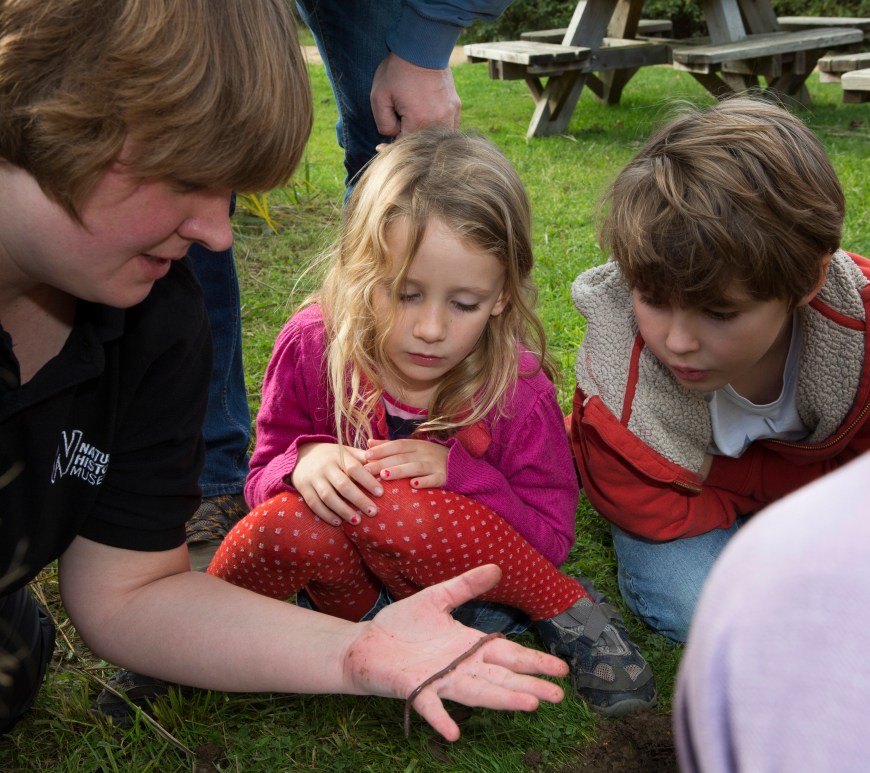
In our ‘Field Diaries’ series, The Applied Ecologist is sharing stories from a range of different fieldwork experiences. In this post, Daniel Banks shares their story collecting citizen science data as part of the Surrey Wildlife Trust’s Space4Nature project. Tell us about yourself My name is Daniel Banks and I work at the Surey Wildlife Trust as the Citizen Science Officer. What project are you … Continue reading Field Diaries: Space4Nature project

ECR Journeys: PREDICTS – Using data for Conservation

This month, The Applied Ecologist is amplifying the voice of early career ecologists from around the world working in the field of applied ecology to help inspire the next generation. In this post, Victoria Burton at the Natural History Museum, shares her story below. My Background I am a post-doctoral research assistant at the Natural History Museum and a trustee for the Amateur Entomologists’ Society. … Continue reading ECR Journeys: PREDICTS – Using data for Conservation

MammalWeb: The potential of citizen science for large-scale mammal monitoring

Feature photo: A camera trap photo © MammalWeb (CC BY-SA 2.0) In their latest article, Pen-Yuan Hsing et al. describe the processes involved in launching and running MammalWeb – a successful camera trapping project that has produced over 440,00 classified image sequences and videos over the past decade. It is unlikely to come as a shock to readers of the Applied Ecologist that the world … Continue reading MammalWeb: The potential of citizen science for large-scale mammal monitoring

Research stories: The power of participatory research

Lead author Rachel Aronoff recalls her discovery of Hackuarium, a community laboratory, whose study on lake water quality demonstrates how meaningful environmental monitoring can be achieved with participatory research. It was late in 2015 when I first encountered Hackuarium and its ‘biohacker’ members while organising a biosensor course in collaboration with several of its members – I had never seen anything like it. Who were … Continue reading Research stories: The power of participatory research

Drones and Citizen Scientists – the future of ecology

Why are the United Nations advocating for citizen science and technology? Using an Australian case study, let’s see how drones and local communities may be the answer to large scale and ongoing ecological monitoring. In the past, research in inaccessible areas has been limited to either small samples sizes, due to high costs and safety issues, or lower resolution data from satellites. However, drones can … Continue reading Drones and Citizen Scientists – the future of ecology

Tanja Petersen: Uncovering biases in Citizen Science data

Photo © Andreas Frisch In this Q&A, we ask author Tanja Petersen about her team’s research on the GBIF database, and find out a little bit more about the author herself. This article is part of the BES cross-journal special feature on Citizen Science. The research What’s your article about? The article is about skews and biases in GBIF data. Specifically, how the origin of … Continue reading Tanja Petersen: Uncovering biases in Citizen Science data

Catch them if you can! A combined effort by citizens and scientists to monitor mosquitoes in Germany

In their latest research, Pernat and colleagues evaluate the performance of the German citizen science project ‘Mückenatlas’, in comparison to professional mosquito monitoring efforts. Mosquitoes – everyone knows them, hardly anyone likes them, and as carriers of pathogens, they can also pose a threat to the health of humans and animals. These negative connotations associated with mosquitos have been put to use by Mückenatlas, a … Continue reading Catch them if you can! A combined effort by citizens and scientists to monitor mosquitoes in Germany

Can ‘Citizen Scientists’ play a valid role in conservation management?

The emergence of citizen science in biodiversity monitoring has transformed the methods by which biodiversity surveys can be conducted. With the recent development of automatic visual identification tools, Pierre Bonnet and colleagues present two distinct case studies implementing citizen science and the use of Pl@ntNet, an automatic plant identification platform. This article is part of the BES cross-journal special feature on Citizen Science. Effective monitoring … Continue reading Can ‘Citizen Scientists’ play a valid role in conservation management?

How can citizen science help solve environmental crises?

Isabel Bishop (Research Manager) and Toos Van Noordwijk (Science, Policy and Innovation Director) from Earthwatch Europe reflect on discussions from the recent British Ecological Society Annual Meeting about how citizen science can deliver real impact. The session was beautifully captured in the graphic recording above by Holly McKelvey, holly draws.  ‘Citizen science’ and the related terms ‘community science’ and ‘participatory monitoring’ have become buzz words … Continue reading How can citizen science help solve environmental crises?