Sentinel wildlife: GPS-tracking of scavengers to inform compliance with regulations on carcass disposal

Patricia Mateo Tomás talks us through her and colleagues’ new study which aims to assess how remotely tracking wildlife can contribute to the better monitoring of environmental laws. Through experimentally tracking wolves and vultures via GPS, researchers were able to locate a total of 489 livestock carcasses across Spain and Portugal. Continue reading Sentinel wildlife: GPS-tracking of scavengers to inform compliance with regulations on carcass disposal

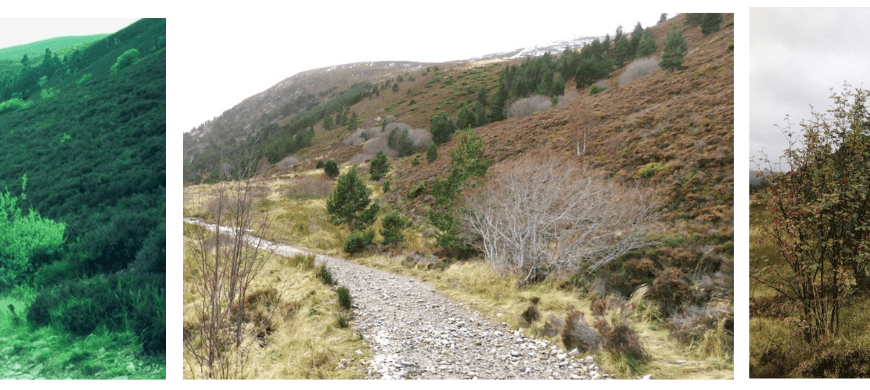
ECR Journeys: Treescapes for People and Nature 

This month, The Applied Ecologist is amplifying the voice of early career ecologists from around the world working in the field of applied ecology to help inspire the next generation. In this post, Melissa Minter, Conservation Scientist within the RSPB Centre for Conservation Science, shares their story below.    My background In my spare time, I love to play board games, (the favourite is Wingspan, of … Continue reading ECR Journeys: Treescapes for People and Nature 

ECR Journeys:  We are the Polar Alien Hunters 

This month, The Applied Ecologist is amplifying the voice of early career ecologists from around the world working in the field of applied ecology to help inspire the next generation. In this post, Jasmine Lee (British Antarctic Survey) and Christy Hehir (University of Surrey) share their story below.  Our backgrounds Christy: I am an environmental psychologist lecturer from the University of Surrey. In my spare … Continue reading ECR Journeys:  We are the Polar Alien Hunters 

Elección del editor 60:8 Twitter, cuarentenas con COVID y una revisión sistemática

Los autores Kevin Tkach y Maggie Watson nos cuentan como desarrollaron su investigación cuando los cierres por las cuarentenas debido al COVID-19 les impidió reunirse (en persona) para trabajar en un proyecto de doctorado. En lugar de ello, durante tres años trabajaron juntos en una revisión sistemática para intentar comprender cómo se aplicaban las herramientas genéticas en problemas de conservación complejos. Continue reading Elección del editor 60:8 Twitter, cuarentenas con COVID y una revisión sistemática

Editor’s Choice 60:8 Twitter, Covid-19 lockdowns and a systematic review

This blog post is also available in Spanish here. Authors Kevin Tkach and Maggie Watson recall how they kept their focus when lockdowns in both countries prevented their meeting in-person to work on a PhD project. Instead, over a three-year period, they worked together on a systematic review trying to understand how conservation genetics tools were applied to conservation problems. How the project begun Before … Continue reading Editor’s Choice 60:8 Twitter, Covid-19 lockdowns and a systematic review

Drone-induced flight initiation distances for shorebirds in mixed-species flocks

Joshua Wilson discusses recent research at Moreton Bay, Australia which saw Wilson and colleagues conduct over 200 drone approaches of shorebird flocks to measure how the birds respond to drones. Particular attention is paid to the critically endangered Eastern Curlew. Stress responses Imagine you’re resting in your bed when, out of the corner of your eye, you see something scuttling along the roof towards you. … Continue reading Drone-induced flight initiation distances for shorebirds in mixed-species flocks

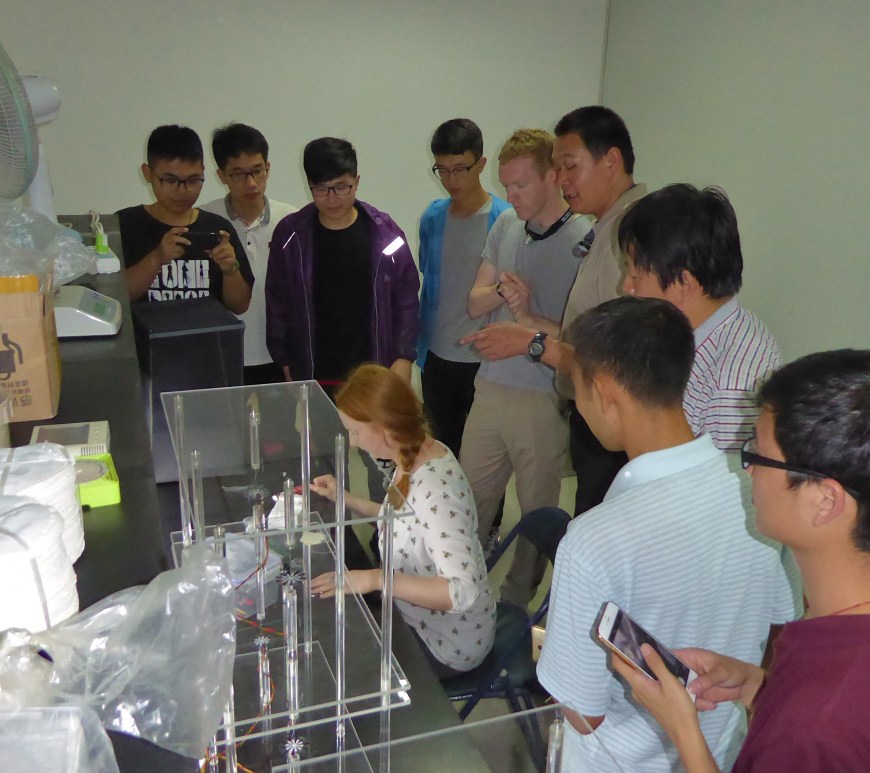
ECR Journeys: Rainforest invertebrates, woody vines and ecosystem functions

This month, The Applied Ecologist is amplifying the voice of early career ecologists from around the world working in the field of applied ecology to help inspire the next generation. In this post, Charlotte Raven, a second-year PhD student at the University of the Sunshine Coast, Australia, shares her story. My background I have had a passion for insects my entire life; I think it … Continue reading ECR Journeys: Rainforest invertebrates, woody vines and ecosystem functions

Biodiversity in landscape mosaics: Local land use, landscape and dung beetle assemblages

Raquel Carvalho and Ellen Andresen explain new research that evaluates the impact of land use, landscape structure, and their interactions, on dung beetles, a group of insects that provides many ecosystem services. Carvalho et al demonstrated that both factors act together to shape biodiversity patterns, and that the effect of landscape structure often depends on the specific land use studied. The problem Understanding the impact … Continue reading Biodiversity in landscape mosaics: Local land use, landscape and dung beetle assemblages

Using salt marshes for coastal protection: effective but hard to get where needed most

Beatriz Marin-Diaz talks about her and research colleagues’ latest article, where they monitored wave run-up on Dutch dikes over the course of 3 years. Through comparing different dike locations, some fronted by salt marshes and others fronted by bare tidal flats without vegetation, results could be linked to the long-term marsh development in the area. Introduction Salt marshes are wetlands in coastal areas that provide … Continue reading Using salt marshes for coastal protection: effective but hard to get where needed most

Multiple incentives to harvest can increase the extinction risk of rare species

Ryan Almeida talks us through recent research on extinction risk with Juan Bonachela and Julie Lockwood. Through a case study on the ground pangolin, or the Smutsia temminckii, the study uses models to consider rare species extinction risk and the rate at which overexploitation occurs. The economics of exploitation Overexploitation, the unsustainable harvest of species from the wild, is recognized as one of the “big … Continue reading Multiple incentives to harvest can increase the extinction risk of rare species