Samuel Fischer: How can invasive species management benefit from smartphone data?

Shortlisted for the 2023 Southwood Prize Samuel Fischer discusses how he and colleagues researched and utilised an angler smartphone app to build a stochastic model for angler traffic in the Canadian province of Alberta. Anglers facilitate the spread of whirling disease, a parasite-induced fish disease, meaning this model demonstrates the importance of individual-specific behaviour of vectors for propagule transport. From smartphone data to invasive species … Continue reading Samuel Fischer: How can invasive species management benefit from smartphone data?

Salomé Jaramillo Gil: Whale shark and ecotourism management

Shortlisted for the 2023 Southwood Prize Salomé Jaramillo Gil talks us through her research, conducted with colleagues, which aimed to predict whale shark abundance. Through results obtained via modelling and photo identification, it is suggested that local authorities apply the model each spring. Ecotourism and conservation Nowadays, ecotourism with wildlife has witnessed unprecedented growth, attracting tourists seeking immersive experiences with nature. However, when ecotourism guidelines … Continue reading Salomé Jaramillo Gil: Whale shark and ecotourism management

Will fish passages alone resolve our river fragmentation problems?

Shortlisted for the Chico Mendes Prize 2023 In their latest Practice Insights article, Henry Hansen and colleagues present a case study that applies a new method to improve current fish habitat models and better guide future restoration efforts. Fragmentation has become a consistent impact in rivers as society’s need for renewable energy continues to grow. The proliferation of hydropower plants supports the world’s shared goal … Continue reading Will fish passages alone resolve our river fragmentation problems?

Andrea Radici: Looking for winners and losers of marine resources management

Shortlisted for the 2023 Southwood Prize Andrea Radici talks us through his team’s development of a comprehensive metapopulation framework, which provides a tool for assessing area-based management measures aimed at improving fisheries outcomes and describing the spatial distribution of costs and benefits. This can help guide effective spatially-distributed management. Ecosystems and mathematics In Chapter 151 of The Curious Incident of the Dog in the Night-Time, … Continue reading Andrea Radici: Looking for winners and losers of marine resources management

Georgina Mace Prize 2023: Shortlist announced for early career researcher award

Each year, Ecological Solutions and Evidence awards the Georgina Mace Prize to the best article published by an early career author. Today, we present the shortlisted articles for this year’s award based on the previous volume of the journal. This is the fourth year we’ll be awarding the prize in honour of Professor Dame Georgina Mace, a pioneer in conservation science and policy who was a strong advocate for supporting … Continue reading Georgina Mace Prize 2023: Shortlist announced for early career researcher award

Chico Mendes Prize 2023: Shortlist announced for early career practitioner award

Every two years, Ecological Solutions and Evidence awards the Chico Mendes Prize to the best Practice Insights article published by an early career author. Today, we present the shortlisted articles for this year’s award based on the previous two volumes of the journal. This is the second time we’ll be awarding the prize in honour of Chico Mendes, an environmental activist whose fight and defence for the Amazon rainforest, … Continue reading Chico Mendes Prize 2023: Shortlist announced for early career practitioner award

Research stories: Building partners in high altitudes through participatory action research

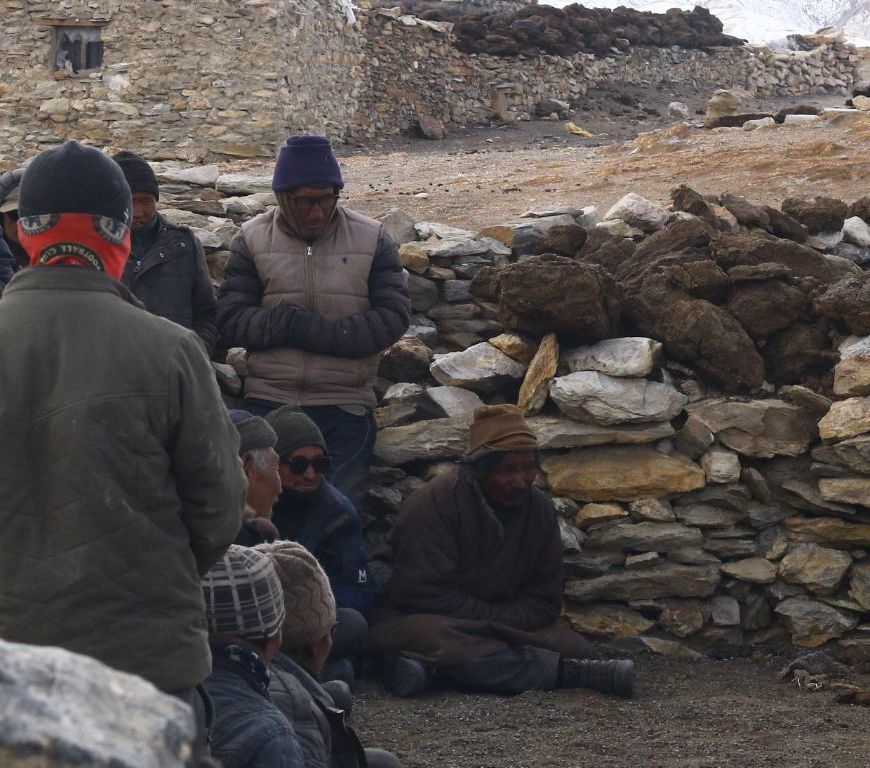
Shortlisted for the Chico Mendes Prize 2023 Lead author Munib Khanyari takes us through his team’s journey through the high altitudes of Changthang in trans-Himalayan India to co-design conservation interventions that benefit the communities who live alongside the wildlife. A video presentation about the study can also be found here. “We have solutions, but often we don’t have the ability to operationalise it”, whispered the Acho … Continue reading Research stories: Building partners in high altitudes through participatory action research

Associate Editor Mentoring: 2024 applications now open!

***Please note that applications for the 2024 scheme are now closed. If you would like to apply for the 2025 scheme, applications will reopen in September 2024*** Are you less than five years post-PhD, live in or are from the Global South, and looking to gain hands-on experience with an editorial board? Why not apply for the 2024 mentoring scheme with Journal of Applied Ecology! … Continue reading Associate Editor Mentoring: 2024 applications now open!

Cheap microclimate sensor networks in the wild

Shortlisted for the Georgina Mace Prize 2023 Author Lina K. Mühlbauer summarises her team’s latest study exploring the use of Arduinos as a novel cost-effective method for microclimate monitoring in remote systems. Why measure microclimate? A great challenge of our times is to predict and mitigate the impacts of global climate change on the world’s ecosystems. To do so, a lot of information is needed … Continue reading Cheap microclimate sensor networks in the wild

ECR Journeys: A socio-cultural expedition into environmental governance

This month, The Applied Ecologist is amplifying the voice of early career ecologists from around the world working in the field of applied ecology to help inspire the next generation. In this post, Wayne Stanley Rice from the Asia Research Institute at the National University of Singapore shares his story below. How would you describe yourself? I love the outdoors and travel, reading, and cooking. … Continue reading ECR Journeys: A socio-cultural expedition into environmental governance