To share or to spare…

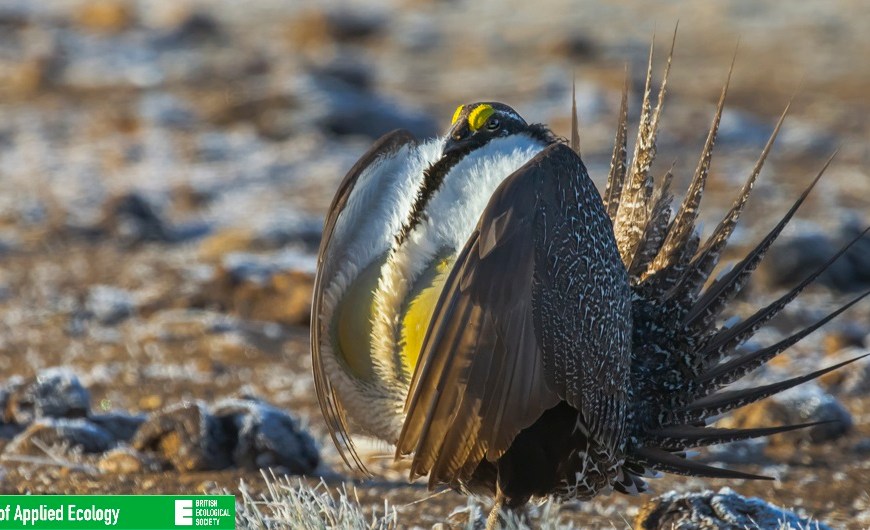
That is the question Associate Editor, Gavin Siriwardena (British Trust for Ornithology) invites you to explore at a new Interactive Session during this year’s British Ecological Society Annual Meeting. Here he offers an insight into ‘When and how are land-sparing and land-sharing appropriate for environmental management’? Find out how you can get involved here. Recent studies have proposed land-sparing as an optimal solution for biodiversity … Continue reading To share or to spare…

The orchard guardian: pest vole control by owls

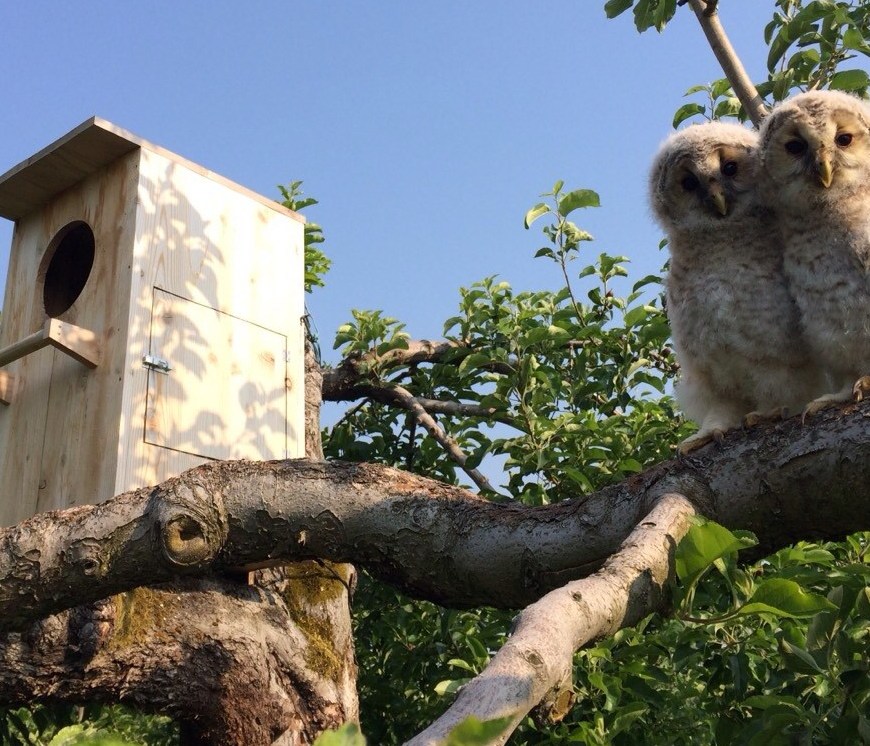
Following the recently published article, Effectiveness of vole control by owls in apple orchards, Chie Murano highlights the vital role predators such as Ural owls play in protecting farmers’ produce from pests.   Voles are one of the world’s major pests. For the past few decades, Japanese farmers, especially apple producers have suffered from escalating levels of apple tree damage caused by the Japanese field … Continue reading The orchard guardian: pest vole control by owls

Better many small than a few large: how landscape configuration affects arthropod communities in rice agroecosystems

Can splitting agricultural ecosystems help reduce yield losses for rice farmers? Associate Editor, Juan Corley highlights the importance of Dominik et al.’s recent research, Landscape composition, configuration, and trophic interactions shape arthropod communities in rice agroecosystems. A Spanish version of this post is available here. For many of us city dwellers, rice is common in much modern cuisine, from Sushi to Spanish paella. However more … Continue reading Better many small than a few large: how landscape configuration affects arthropod communities in rice agroecosystems

Mejor muchos pequeños que pocos grandes: sobre como la configuración del paisaje afecta las comunidades de artrópodos en agro-ecosistemas de arroz

Associate Editor, Juan Corley on Dominik et al.’s research, Landscape composition, configuration, and trophic interactions shape arthropod communities in rice agroecosystems. English version available here. Para muchos de nosotros habitantes de ciudades, el arroz están muy presente en nuestra cocina habitual, desde el Sushi hasta la Paella. No obstante, quizás sea de mayor significación es el hecho de que el arroz sea el cereal más … Continue reading Mejor muchos pequeños que pocos grandes: sobre como la configuración del paisaje afecta las comunidades de artrópodos en agro-ecosistemas de arroz

Crop functional traits can help to predict the effects of organic farming on soil carbon sequestration

Focusing on functional traits of crop residues and their connection to soil carbon storage, Pablo Garcia Palacios comments on recent article, Crop traits drive soil carbon sequestration under organic farming. Soil organic carbon is a major agricultural resource for two different reasons. First, it is a measurable component of soil organic matter, which has a key influence on the capacity of soils to retain moisture and … Continue reading Crop functional traits can help to predict the effects of organic farming on soil carbon sequestration

Functional traits in agroecology: advancing description and prediction in agroecosystems

Our series of posts on the Special Feature, Functional traits in agroecology rounds up with a post from one of the series’ editors, Adam Martin. We’ve always thought “commentary” articles – particularly those that outline a vision for a future field of research – to be an interesting enigma in science. On one hand, many commentary-type articles have been undoubtedly influential and can be pointed … Continue reading Functional traits in agroecology: advancing description and prediction in agroecosystems

Functional traits represent a key nexus between scientific and local knowledge

Continuing our Special Feature series, Functional traits in agroecology, Marney Isaac comments on her paper, Farmer perception and utilization of leaf functional traits in managing agroecosystems. Using leaf functional traits to understand plant response to environmental change is well-established for research in a wide number of natural ecosystems, and now being more widely applied to agroecosystems. Yet, little is known about if, or how, farm managers … Continue reading Functional traits represent a key nexus between scientific and local knowledge

Leveraging functional diversity in farm fields for sustainability

The latest issue of Journal of Applied Ecology includes a Special Feature, Functional traits in agroecology. To accompany the feature, we’re introducing a series of blog posts from the authors themselves. The first of these comes from Jennifer Blesh and discusses her article, Functional traits in cover crop mixtures: Biological nitrogen fixation and multifunctionality. Global climate, energy, and water crises pose immense challenges for agricultural systems. … Continue reading Leveraging functional diversity in farm fields for sustainability

What happens to honeybees and beekeepers when farmlands lack flowers?

In this post Fabrice Requier discusses his recent article, The carry-over effects of pollen shortage decrease the survival of honeybee colonies in farmlands, available in issue 54:4 of the Journal of Applied Ecology. Over the past 50 years, landscapes have been profoundly modified to meet growing food requirements. Current human-dominated landscapes result in a loss of habitats and associated biodiversity. These often-simplified landscapes limit the … Continue reading What happens to honeybees and beekeepers when farmlands lack flowers?

For the love of trees: the benefits of vegetation and paddock management for reptiles in grazing landscapes

Following her recent paper in the Journal of Applied Ecology, ‘Remnant vegetation, plantings and fences are beneficial for reptiles in agricultural landscapes’, Stephanie Pulsford explores the balancing act of supporting both agriculture and biodiversity conservation. In a recent study of reptiles in grazing landscapes we demonstrated the importance of maintaining and promoting native vegetation within agricultural land for improved biodiversity conservation outcomes. We also showed that … Continue reading For the love of trees: the benefits of vegetation and paddock management for reptiles in grazing landscapes