Long-term Monitoring: The key to unlocking effective Marine Protected Area Management?

Christopher Honeyman talks us through recently published work which compared three Marine Protected Area (MPA) monitoring techniques, along with colleagues. Interestingly, each technique was shown to survey distinct groundfish community assemblages with varying levels of species diversity and richness. Therefore, combining multiple techniques may better allow managers to create the most comprehensive, effective and inclusive MPA monitoring regimes. A global phenomenon In response to human-caused … Continue reading Long-term Monitoring: The key to unlocking effective Marine Protected Area Management?

Editor’s Choice 60:10 Can management measures be used to reduce the impact of extreme events in the early life of fish?

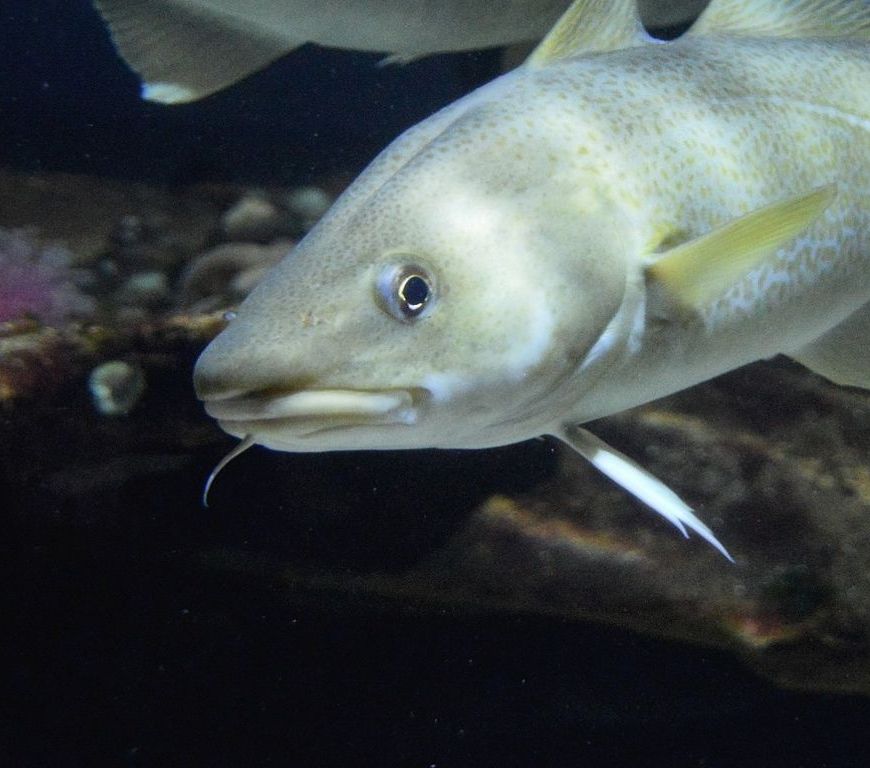
Author Lucie Buttay summarises Journal of Applied Ecology’s October’s Editor’s Choice research article. Conducted with colleagues, this study used a life cycle model to simulate ‘what if’ scenarios around Northeast Arctic cod eggs and larvae. Extreme climatic events, (e.g. heat waves and storms) are becoming more frequent and intense, and on top of that, the ever-growing development of human activities at sea, entails an increasing … Continue reading Editor’s Choice 60:10 Can management measures be used to reduce the impact of extreme events in the early life of fish?

Towards environmentally friendly finfish farming: A potential for mussel farms to compensate fish farm effluents

Jonne Kotta explains new research which uses dynamic energy budget modelling to explore the potential of mussels for bioremediation at finfish farms. Kotta and colleagues suggest that environmentally sustainable finfish farming solutions may be possible in the eutrophic Baltic Sea region. The problem Global demand for fish has risen sharply in recent decades and will surely continue to rise during the next decade. However, this … Continue reading Towards environmentally friendly finfish farming: A potential for mussel farms to compensate fish farm effluents

From blind amoeba to Nemo: the evolution of fish (and vertebrate) vision

This blog is part of our colourful countdown to the holiday season where we’re celebrating the diversity and beauty of the natural world. In this post, Martin Luehrmann of The University of Queensland takes us on a journey through the development of sight through the evolution of fish and early vertebrates. Imagine waking up and the world is black, your eyelids won’t open. You are … Continue reading From blind amoeba to Nemo: the evolution of fish (and vertebrate) vision

Go with the flow

Exploring the importance of autocorrelation in flow-ecology management, Associate Editor, Angela Strecker discusses the recent article by Bruckerhoff et al., Flow–ecology relationships are spatially structured and differ among flow regimes. In ecology, it is widely accepted that stream flow is a master variable for fishes. Human alterations to rivers have changed the flow regime significantly, often dampening the natural variability and changing the timing of … Continue reading Go with the flow

Designing waterfronts that work for fish and people

In this post Stuart Munsch discusses his new article ‘Effects of shoreline armouring and overwater structures on coastal and estuarine fish: opportunities for habitat improvement‘ Shallow ecosystems facilitate the development and survival of juvenile fish. These areas are productive and provide fish with an abundance of small invertebrates produced in intertidal substrate, backshore vegetation, and the water column. In addition, predators are rare or ineffective … Continue reading Designing waterfronts that work for fish and people

New techniques for Atlantic sturgeon conservation

In this post Associate Editor Verena Trenkel discusses a paper she recently handled from Michael Melnychuk and colleagues ‘Informing conservation strategies for the endangered Atlantic sturgeon using acoustic telemetry and multi-state mark–recapture models‘ According to the International Union for Conservation of Nature (ICUN), ten out 17 sturgeon species are currently critically endangered. Among the two species listed as least concern is Atlantic sturgeon which occurs … Continue reading New techniques for Atlantic sturgeon conservation

Using reef fish movement to inform marine reserve design

In this post Rebecca Weeks discusses her recent paper ‘Using reef fish movement to inform marine reserve design‘. The majority of marine protected areas in Pohnpei (Federated States of Micronesia) are too small to protect the species that people care about most. But when livelihoods depend on fishing, establishing large no-take areas is a big challenge. Overfishing and unsustainable fishing practices are amongst the greatest threats … Continue reading Using reef fish movement to inform marine reserve design

Fine-scale salmon diversity sustains fisheries and supports food security of indigenous communities

A new study from Holly Nesbitt and Jonatahn Moore at Simon Fraser University shows that high biodiversity in salmon fisheries supports the food security of indigenous people. Salmon-folios Instead of analyzing market returns of different financial portfolios, this study examined indigenous fisheries with different “salmon-folios”. Like a well-balanced financial portfolio that can smooth market fluctuations, fisheries that caught a more diverse portfolio of salmon populations … Continue reading Fine-scale salmon diversity sustains fisheries and supports food security of indigenous communities

New spatio-temporal model improves the ability of fishery managers to set sustainable catch limits

In this post Associate Editor Andre Punt discusses a paper he recently handled by James T. Thorson, Jason Jannot and Kayleigh Somers ‘Using spatio-temporal models of population growth and movement to monitor overlap between human impacts and fish populations‘ In many jurisdictions, including the U.S., conservation management of fish stocks involves comparing catches with estimates of an overfishing limit (OFL). The OFL is a catch … Continue reading New spatio-temporal model improves the ability of fishery managers to set sustainable catch limits