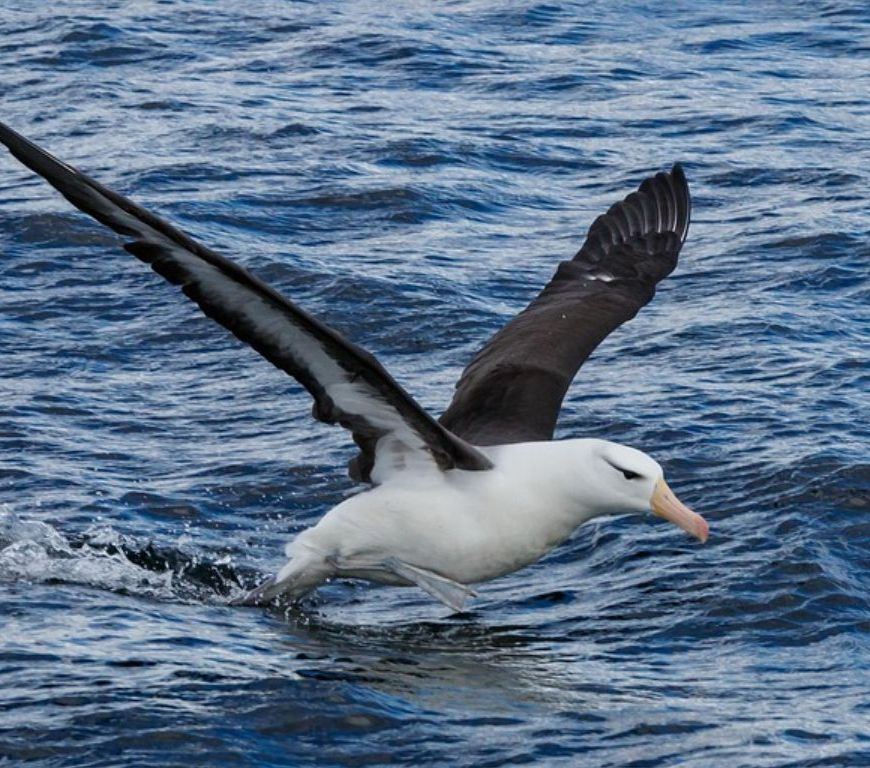
Albatrosses make distinct flight hops when following fishing vessels

In their new study, “Immersion patterns alone can predict vessel following by albatrosses”, Jonathan Rutter et al. present a new behaviour-based method to detect previously hidden interactions between seabirds and fishing vessels. In oceans around the world, seabirds follow fishing vessels looking for easy meal. This puts them at risk of bycatch, when birds are killed after getting caught or colliding with fishing gear. A … Continue reading Albatrosses make distinct flight hops when following fishing vessels

Andrea Radici: Looking for winners and losers of marine resources management

Shortlisted for the 2023 Southwood Prize Andrea Radici talks us through his team’s development of a comprehensive metapopulation framework, which provides a tool for assessing area-based management measures aimed at improving fisheries outcomes and describing the spatial distribution of costs and benefits. This can help guide effective spatially-distributed management. Ecosystems and mathematics In Chapter 151 of The Curious Incident of the Dog in the Night-Time, … Continue reading Andrea Radici: Looking for winners and losers of marine resources management

Editor’s Choice 60:10 Can management measures be used to reduce the impact of extreme events in the early life of fish?

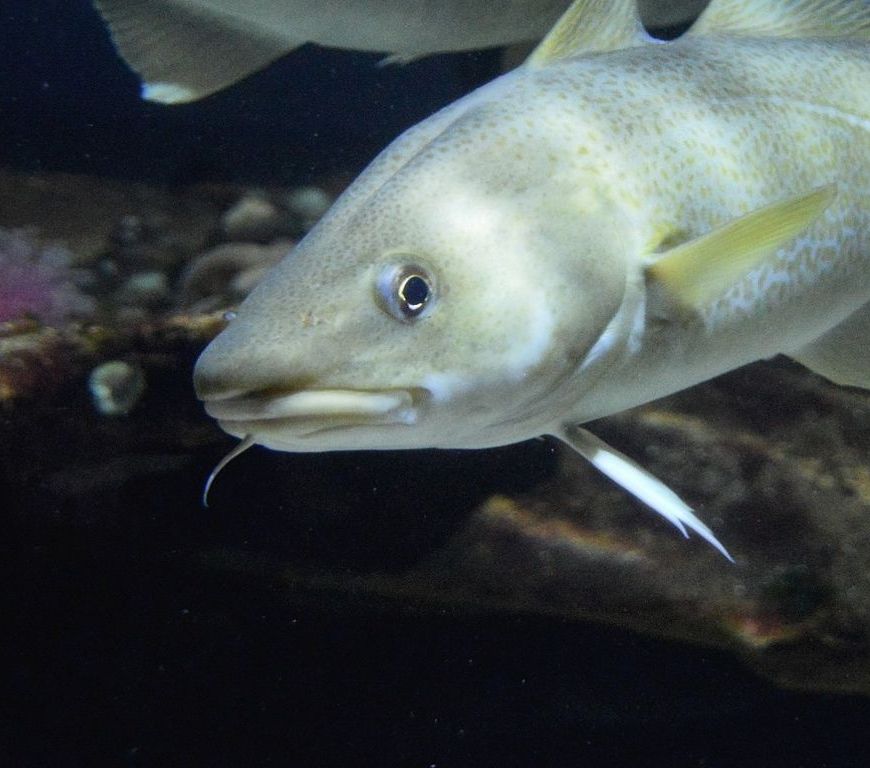
Author Lucie Buttay summarises Journal of Applied Ecology’s October’s Editor’s Choice research article. Conducted with colleagues, this study used a life cycle model to simulate ‘what if’ scenarios around Northeast Arctic cod eggs and larvae. Extreme climatic events, (e.g. heat waves and storms) are becoming more frequent and intense, and on top of that, the ever-growing development of human activities at sea, entails an increasing … Continue reading Editor’s Choice 60:10 Can management measures be used to reduce the impact of extreme events in the early life of fish?

Modelling spatial variation in an exploited species across marine reserve boundaries

In their new study, Benn Hanns and Nick Shears evaluate common modelling assumptions used to assess the extent of spill-over and edge effects of marine species from protected-areas. Their findings highlight the potential for erroneous conclusions about these phenomena when inappropriate modelling strategies are used. Species dynamics in marine reserves Increases in exploited species within marine reserves can benefit adjacent fished areas as individuals move … Continue reading Modelling spatial variation in an exploited species across marine reserve boundaries

Deqiang Ma: The consequences of coastal offsets for fisheries

Shortlisted for the Southwood Prize 2022 Deqiang Ma talks us through his and colleagues’ research article which uses a case study of mangrove and seagrass habitats in Queensland, Australia to consider different policies regarding offsetting impacts on fish habitats. The issue Globally, ecosystem services are imperiled due to development, especially in coastal and marine areas. To achieve no net loss of ecosystem services through offsetting … Continue reading Deqiang Ma: The consequences of coastal offsets for fisheries

Editor’s Choice 58:9 Identifying a pathway towards recovery for depleted wild Pacific salmon populations in a large watershed under multiple stressors

Associate Editor, Hedley Grantham, introduces this month’s Editor’s Choice article by Lia Chalifour and colleagues, which evaluates the potential benefits of 14 management strategies on 19 conservation units of the five Pacific salmon species in the lower Fraser River, British Columbia, Canada. Salmon are an iconic and globally recognisable species. In the Northeast Pacific they are also an important commercial and recreational fish species with … Continue reading Editor’s Choice 58:9 Identifying a pathway towards recovery for depleted wild Pacific salmon populations in a large watershed under multiple stressors

The road to recovery: New research identifies priority actions for lower Fraser River salmon

In their latest research, Dr Lia Chalifour and colleagues evaluate the potential benefits of 14 management strategies – spanning fisheries, habitat, pollution, pathogens, hatcheries and predation management dimensions – on 19 genetically and ecologically distinct populations of the five Pacific salmon species in the lower Fraser River, British Columbia, Canada. Fisheries closures in British Columbia have become the norm, with ‘good years’ for returning stocks … Continue reading The road to recovery: New research identifies priority actions for lower Fraser River salmon

Editor’s Choice 59:7 The key to seabird conservation – mitigating bycatch from industrial fisheries and eradicating invasive species

Associate Editor, Maria Paniw, introduces this month’s Editor’s Choice article by Dasnon et al., which presents some good news for seabird conservation: combined efforts of avoiding bycatch from commercial fisheries and reducing impacts of invasive species can effectively boost population sizes of vulnerable marine pelagic species. Industrial fishing activities can cause substantial damage, not only to fish stocks but also to pelagic vertebrate predators that … Continue reading Editor’s Choice 59:7 The key to seabird conservation – mitigating bycatch from industrial fisheries and eradicating invasive species

Temporal trends in geographic clines of salmon eggs associated with global warming and hatchery programs

Koh Hasegawa and colleagues describe their latest research examining the geographic clines in Japanese chum salmon (Oncorhynchus keta). Many animal and plant species show geographic clines which are often recognized as adaptations to the associated transitional environments. A well-known example is that the body size of bears increase in more northern regions. Even people may notice clines in their daily lives, such as people in … Continue reading Temporal trends in geographic clines of salmon eggs associated with global warming and hatchery programs

Smaller adults and bigger juveniles: how global warming is affecting our fish populations.

There is mounting evidence that climate change is affecting commercial fish species. In their latest research, Ikpewe and colleagues investigate the effect of temperature on fish sizes in two neighbouring regions, displaying contrasting trends in warming. The warming of our oceans due to climate change is affecting marine life in numerous ways.  Fish populations, in particular, are experiencing changes in productivity, distribution, growth and the … Continue reading Smaller adults and bigger juveniles: how global warming is affecting our fish populations.