Andrea Radici: Looking for winners and losers of marine resources management

Shortlisted for the 2023 Southwood Prize Andrea Radici talks us through his team’s development of a comprehensive metapopulation framework, which provides a tool for assessing area-based management measures aimed at improving fisheries outcomes and describing the spatial distribution of costs and benefits. This can help guide effective spatially-distributed management. Ecosystems and mathematics In Chapter 151 of The Curious Incident of the Dog in the Night-Time, … Continue reading Andrea Radici: Looking for winners and losers of marine resources management

Long-term Monitoring: The key to unlocking effective Marine Protected Area Management?

Christopher Honeyman talks us through recently published work which compared three Marine Protected Area (MPA) monitoring techniques, along with colleagues. Interestingly, each technique was shown to survey distinct groundfish community assemblages with varying levels of species diversity and richness. Therefore, combining multiple techniques may better allow managers to create the most comprehensive, effective and inclusive MPA monitoring regimes. A global phenomenon In response to human-caused … Continue reading Long-term Monitoring: The key to unlocking effective Marine Protected Area Management?

Editor’s Choice 60:10 Can management measures be used to reduce the impact of extreme events in the early life of fish?

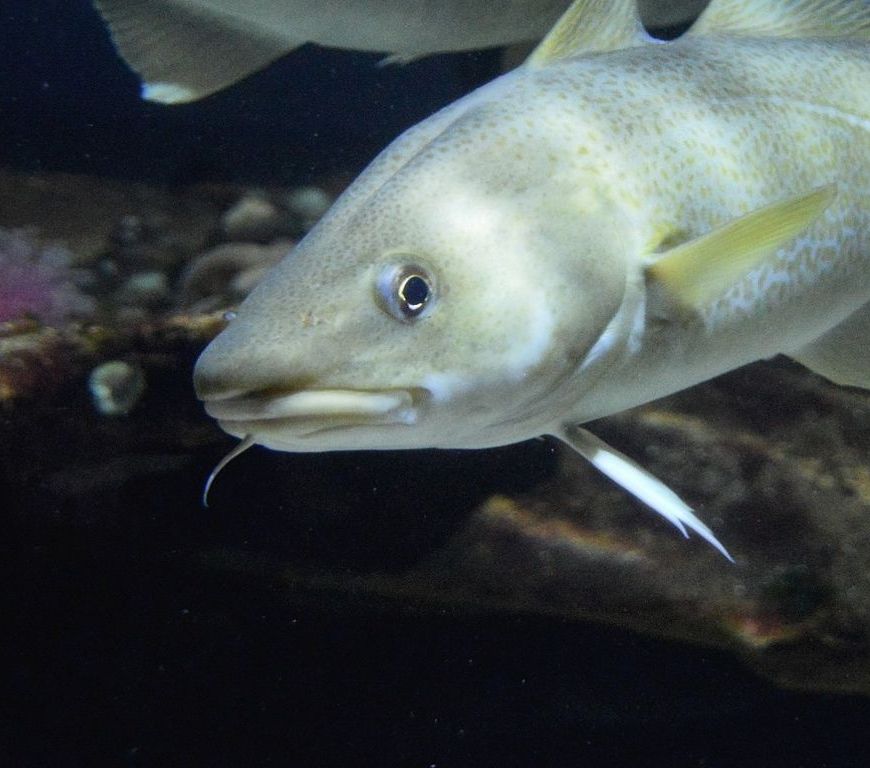
Author Lucie Buttay summarises Journal of Applied Ecology’s October’s Editor’s Choice research article. Conducted with colleagues, this study used a life cycle model to simulate ‘what if’ scenarios around Northeast Arctic cod eggs and larvae. Extreme climatic events, (e.g. heat waves and storms) are becoming more frequent and intense, and on top of that, the ever-growing development of human activities at sea, entails an increasing … Continue reading Editor’s Choice 60:10 Can management measures be used to reduce the impact of extreme events in the early life of fish?

Editor’s Choice 58:9 Identifying a pathway towards recovery for depleted wild Pacific salmon populations in a large watershed under multiple stressors

Associate Editor, Hedley Grantham, introduces this month’s Editor’s Choice article by Lia Chalifour and colleagues, which evaluates the potential benefits of 14 management strategies on 19 conservation units of the five Pacific salmon species in the lower Fraser River, British Columbia, Canada. Salmon are an iconic and globally recognisable species. In the Northeast Pacific they are also an important commercial and recreational fish species with … Continue reading Editor’s Choice 58:9 Identifying a pathway towards recovery for depleted wild Pacific salmon populations in a large watershed under multiple stressors

Editor’s Choice 59:7 The key to seabird conservation – mitigating bycatch from industrial fisheries and eradicating invasive species

Associate Editor, Maria Paniw, introduces this month’s Editor’s Choice article by Dasnon et al., which presents some good news for seabird conservation: combined efforts of avoiding bycatch from commercial fisheries and reducing impacts of invasive species can effectively boost population sizes of vulnerable marine pelagic species. Industrial fishing activities can cause substantial damage, not only to fish stocks but also to pelagic vertebrate predators that … Continue reading Editor’s Choice 59:7 The key to seabird conservation – mitigating bycatch from industrial fisheries and eradicating invasive species

Smaller adults and bigger juveniles: how global warming is affecting our fish populations.

There is mounting evidence that climate change is affecting commercial fish species. In their latest research, Ikpewe and colleagues investigate the effect of temperature on fish sizes in two neighbouring regions, displaying contrasting trends in warming. The warming of our oceans due to climate change is affecting marine life in numerous ways.  Fish populations, in particular, are experiencing changes in productivity, distribution, growth and the … Continue reading Smaller adults and bigger juveniles: how global warming is affecting our fish populations.

Benthos longevity matters …

Long-lived species take longer to recover from the effects of bottom trawling by commercial fisheries according to recent research from Hiddink et al. Watch this video from PROJECT BENTHIS to discover more about the importance of longevity and benthic animal traits. Introduction by Associate Editor, Verena Trenkel. Combining knowledge on the local benthos community and the results of this study, managers will now be able … Continue reading Benthos longevity matters …

Dynamic technology for dynamic ecosystems

When it comes to developing management tools, how do we keep up with constantly changing ecosystems? Associate Editor, Annabel Smith explains the important step forward made by Welch et al’s research into dynamic management tools. Scientists have been very good at developing guidelines for management of natural systems. Streams of conceptual frameworks are published every year, to the point that we now have frameworks for … Continue reading Dynamic technology for dynamic ecosystems

Should we care if angler participation patterns are different?

Fisheries management approaches need to consider angler behaviour, or there could be knock-on effects once practices are implemented. Synchrony – an emergent property of recreational fisheries by Kaemingk et al. is published today in Journal of Applied Ecology. Understanding how people use natural resources in space and time is challenging, but necessary for proper management.  Biologists often face difficult and urgent management decisions; these decisions may … Continue reading Should we care if angler participation patterns are different?

Issue 55:3

From fisheries management, to reintroductions and land use policies, here are some highlights from issue 55:3: Addressing global fisheries management challenges in a changing world Our latest Spotlight, showcasing high-quality and topical research Targeted supplementary feeding supports reintroduction of endangered raptors This issue’s Editor’s Choice Is environmental legislation conserving tropical stream faunas? Looking beyond the trees in tropical forest landscapes Evaluating the temporal effectiveness of marine reserves Species recovery … Continue reading Issue 55:3