Quarries and garbage dumps inside the Galapagos National Park: How can we restore them?

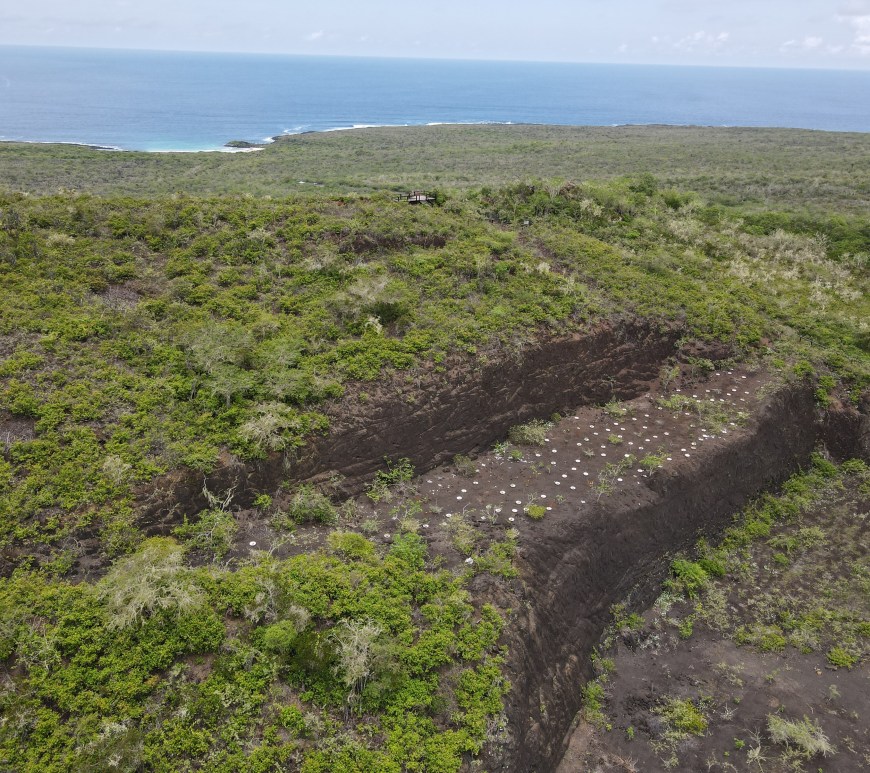
Anna Calle-Loor, co-author of a new publication, shares her team’s experience assessing the survival of plant species in the Galapagos to inform decision-making amongst stakeholders. When you think of the Galapagos Islands, what comes to mind? Perhaps volcanic landscapes, giant tortoises and other unique wildlife, scenes that could easily belong in a nature documentary. But behind this iconic scenery lies a less picturesque reality: the … Continue reading Quarries and garbage dumps inside the Galapagos National Park: How can we restore them?

Passive tree diversity increase after intense forest exploitation? A matter of drought-tolerant and animal-dispersed species

Miriam Selwyn discusses their latest study’s findings, conducted with colleagues. Results find ca. 30 years of passive tree species diversity increase following intense forest management release. This is largely thought to be led by animal-dispersed and higher drought tolerant species in the context of increasing temperatures and decreasing precipitations. Why does diversity matter? Tree species diversity is considered one of the main attributes promoting forest … Continue reading Passive tree diversity increase after intense forest exploitation? A matter of drought-tolerant and animal-dispersed species

Impacting habitat connectivity of the endangered Florida panther for the transition to utility‐scale solar energy

In a new study, Leskova and colleagues examined the impacts of utility-scale solar energy (USSE) facility installations on habitat connectivity for Florida Panther within Peninsular Florida. Faced with the challenge of meeting increasing global energy demands and pressure to shift from conventional fossil fuels to renewable energy sources to mitigate climate change, the environmental trade-offs associated with renewable energy’s implementation are becoming increasingly apparent. Unfortunately, … Continue reading Impacting habitat connectivity of the endangered Florida panther for the transition to utility‐scale solar energy

Una mayor cobertura forestal y matrices menos contrastantes mejoran el servicio de remoción de carroña por insectos carroñeros en paisajes tropicales

This post is also available in English (here) and Portuguese (here). Animales muertos es algo que mucha gente prefiere evitar: son visualmente desagradable, huelen realmente… simplemente son espantosos. Sin embargo, los animales involucrados en la descomposición de la carroña juegan un papel clave en la funcionalidad del ecosistema. Animales carroñeros (como buitres, algunos mamíferos o insectos) previene la acumulación de cadáveres, facilitan la distribución y … Continue reading Una mayor cobertura forestal y matrices menos contrastantes mejoran el servicio de remoción de carroña por insectos carroñeros en paisajes tropicales

Maior cobertura florestal e matrizes menos contrastantes melhoram o serviço de remoção de carniça por insetos necrófagos em paisagens tropicais

This post is also available in English (here) and Spanish (here). Carniça é algo que as pessoas evitam: é algo visualmente desagradável, cheira muito mal… é simplesmente horrível. Entretanto, os animais envolvidos na decomposição da carniça tem um papel chave na funcionalidade do ecossistema. Animais necrófagos (i.e., que se alimentam de carniça) como os urubús, alguns mamíferos e insetos, previnem a acumulação de carcaças, facilitam … Continue reading Maior cobertura florestal e matrizes menos contrastantes melhoram o serviço de remoção de carniça por insetos necrófagos em paisagens tropicais

Higher forest cover and less contrasting matrices improve carrion removal service by scavenger insects in tropical landscapes

This post is also available in Spanish (here) and Portuguese (here) In their latest research, Alvarado-Montero et al. assess the impact of landscape structure and matrix contrast on carrion removal by scavenger insects, an often overlooked but crucial ecosystem service which is important for nutrient cycling and disease control. Carrion is something that many people choose to avoid. However, animals involved in carrion decomposition play … Continue reading Higher forest cover and less contrasting matrices improve carrion removal service by scavenger insects in tropical landscapes

Least‐cost path analysis for urban greenways planning: A test with moths and birds across two habitats and two cities

Urbanization is a major threat to biodiversity. In a new paper, Balbi and colleagues test the efficiency and ecological validity of least-cost path modelling in predicting effective corridors in urban environments. Urban biodiversity contributes to global biodiversity conservation and provides multiple ecosystem services. The growth of human populations living in urban environments and the associated expansion of urbanized land therefore means that conserving urban biodiversity … Continue reading Least‐cost path analysis for urban greenways planning: A test with moths and birds across two habitats and two cities

Why did the mammal cross the road?

A new long-term study from Canada explores the effectiveness of wildlife passages for smaller mammals. Check out the infographic below for a look at some of the major highlights and findings from the work. As you’ll see, at both the global and species level, some of the structural and environmental characteristics associated with the passages influenced the discovery (step 1) and use (step 2) of … Continue reading Why did the mammal cross the road?

Forest cover change in the Greater Mekong sub-region

This blog post is part of the blog series ‘Authors in Asia’, to accompany the recent Virtual Issue in Journal of Applied Ecology. You can read other posts in this series here. Minerva Singh is a PhD Candidate at the University of Cambridge and she is involved with the BES Conservation Ecology Special Interest Group. Her research focuses on using high resolution airborne data for … Continue reading Forest cover change in the Greater Mekong sub-region