Field Diaries: Mariana Silva Ferriera

In our ‘Field Diaries’ series, The Applied Ecologist is sharing stories from a range of different fieldwork experiences. Mariana Silva Ferreira shares being involved in the largest long-term monitoring study on small mammals based in Brazil. About the Author Mariana Silva Ferreira, she/her Affiliation: Ecology interests: Population ecology, life histories, mammals Overview of fieldwork For over 10 years, I was part of the team at the Vertebrate … Continue reading Field Diaries: Mariana Silva Ferriera

Grizzly bears and wolves avoid busy hiking trails more than previously thought

Peter Thompson explains how, alongside colleagues, the spatial distribution and interactions of grizzly bears (Ursus arctos), grey wolves (Canis lupus), and humans within the central Canadian Rocky Mountains were monitored and assessed in their latest study. Human recreation and wildlife The Bow River Valley in Alberta, Canada is a global hotspot for outdoor recreation, attracting millions of visitors annually to enjoy the spectacular landscapes of … Continue reading Grizzly bears and wolves avoid busy hiking trails more than previously thought

Keeping our havened populations fighting fit: Do native predators help Australian mammals face invasive cats and foxes?

Linking to the recently-published article, Natasha Harrison discusses whether native predators inside ‘predator-free’ havens could be good for the conservation of threatened native prey species. Predator-free havens Since their introduction into the Australian landscape following European settlement, feral cats and red foxes have caused prolific population declines among our native fauna. The extinction of Australian mammals makes up more than two thirds of contemporary global … Continue reading Keeping our havened populations fighting fit: Do native predators help Australian mammals face invasive cats and foxes?

Forestry raises the predation risk to caribou – we found ways to reduce it

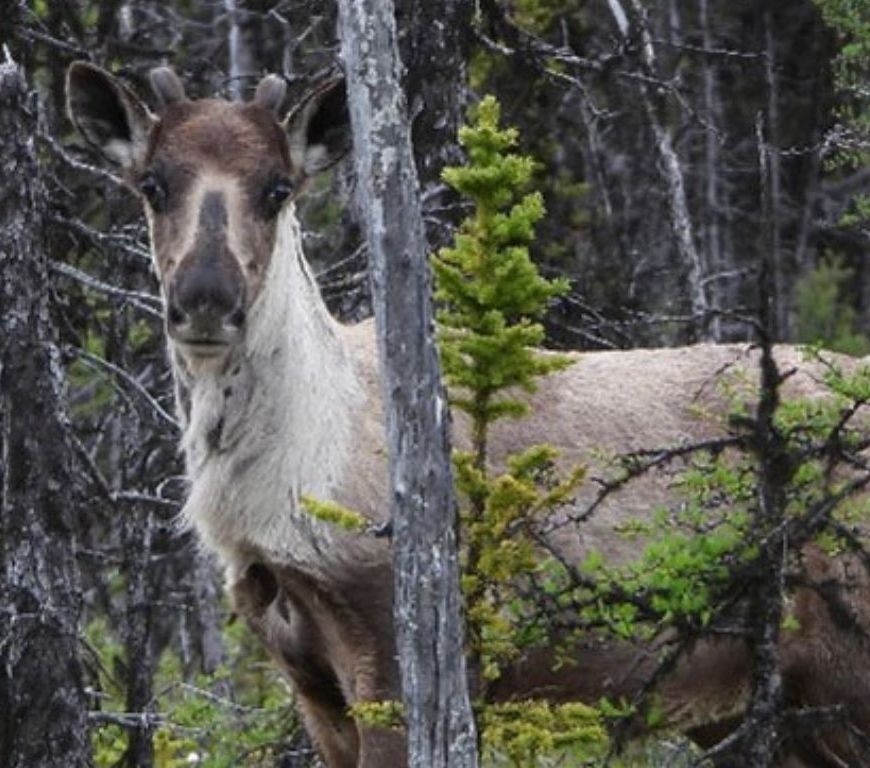
Tracy McKay and Laura Finnegan share their latest research investigating what affects ungulate occurrence  in forest harvest blocks in west-central Alberta, Canada. Five years ago, our research group developed an idea with forest companies to help conserve woodland caribou – Rangifer tarandus, the same species as the Eurasian reindeer – in western Canada. Summer after summer, our crews drove the mud and gravel roads spiderwebbing … Continue reading Forestry raises the predation risk to caribou – we found ways to reduce it

MammalWeb: The potential of citizen science for large-scale mammal monitoring

Feature photo: A camera trap photo © MammalWeb (CC BY-SA 2.0) In their latest article, Pen-Yuan Hsing et al. describe the processes involved in launching and running MammalWeb – a successful camera trapping project that has produced over 440,00 classified image sequences and videos over the past decade. It is unlikely to come as a shock to readers of the Applied Ecologist that the world … Continue reading MammalWeb: The potential of citizen science for large-scale mammal monitoring

Editor’s Choice 57:11 – An integrated approach using passive acoustic monitors and camera traps to measure hunting activity and its impacts on mammalian populations

Associate Editor, Sharif A. Mukul, introduces the November Editor’s Choice paper, which demonstrates that acoustic monitoring technologies detect far more instances of hunting than camera traps. Unsustainable hunting is one of the major challenges to wildlife and healthy forests worldwide. While subsistence hunting is widespread in many parts of the tropics, over-hunting can have a detrimental effect on wildlife populations, particularly mammals. In recent years, … Continue reading Editor’s Choice 57:11 – An integrated approach using passive acoustic monitors and camera traps to measure hunting activity and its impacts on mammalian populations

Fishing for mammals: using environmental DNA from rivers to monitor mammals on land

New research by Sales and colleagues looks at the monitoring of terrestrial mammal communities and compares the efficacy of landscape-level monitoring using environmental DNA (eDNA) to that of conventional methods. Here the authors summarise their findings. Accurately and effectively monitoring biodiversity is a key consideration in this rapidly changing world. Consistent and regular monitoring of species communities is pivotal for ongoing management, conservation and policy … Continue reading Fishing for mammals: using environmental DNA from rivers to monitor mammals on land

How to prioritise management when human and natural worlds collide

Udell et al. recently published a new way to prioritise and allocate speed restriction zones that will best protect wildlife from boat collisions. Associate Editor, Jonathan Rhodes explains how this research could be applied to a range of conservation efforts around biodiversity and human movements. Many threats to species of conservation concern arise due to collisions or interactions between species and people or between species … Continue reading How to prioritise management when human and natural worlds collide

African forest elephants are really slow breeders

In this post, Associate Editor Johan du Toit discusses new Policy Direction “Slow intrinsic growth rate in forest elephants indicates recovery from poaching will require decades” by Andrea Turkalo, Peter Wrege, and George Wittemyer, published today. Intrinsic population growth is related to body mass The rate at which a population grows (r) under ideal conditions with no resource limitation, disease, or predation, is governed by … Continue reading African forest elephants are really slow breeders

Differences in the shape of wildlife population declines can guide conservation action

In this post Martina Di Fonzo discusses her paper ‘Patterns of mammalian population decline inform conservation action‘ published in Issue 4 of Journal of Applied Ecology, online today. Wildlife monitoring programmes play a key role in understanding ecological systems and this information forms the basis of many management decisions and conservation actions. Monitoring population declines, in particular, is an important step in tackling biodiversity loss, … Continue reading Differences in the shape of wildlife population declines can guide conservation action