Agostina Torres: The order and timing of removal of invasive species influence community reassembly

Shortlisted for the 2024 Southwood Prize Agostina Torres introduces us to her latest research which evaluated the dependence of community reassembly on inverse priority effects by experimentally removing the target invasives in field and mesocosm communities. About the research Overview The study emerged as part of my PhD doctorate. Along with my supervisors, Drs. Martin Nuñez and Mariano Rodriguez-Cabal, we were trying to understand why … Continue reading Agostina Torres: The order and timing of removal of invasive species influence community reassembly
Human-wildlife coexistence: The need for evidence-based solutions

Chen Huang provides an overview of their investigation into human-wildlife conflict, and explains how research gaps can be turned into opportunities. Humans and wildlife share the planet, often in proximity. In many parts of the world, villagers see elephants, lions, dolphins, and seabirds as part of their daily lives—much like city dwellers spot starlings feeding in a park. While wildlife is culturally valuable and a … Continue reading Human-wildlife coexistence: The need for evidence-based solutions

Spearfishing-fish behavioural interactions as predator-prey systems to envision better management

Author Valerio Sbragaglia and his colleagues guide us through a recent study which advances the understanding of spearfisher-fish behavioural interaction by integrating ecological indicators (i.e., flight and post flight behaviour of fish) with spearfishers’ likelihood to catch a fish. Through modelling and simulating scenarios, their study sheds light on management implications in exploited fish populations. Exploring spearfishing and fish behaviour If you ask spearfishers, they … Continue reading Spearfishing-fish behavioural interactions as predator-prey systems to envision better management

Learning from failure: attempted eradication of red swamp crayfish in Malta did not deliver

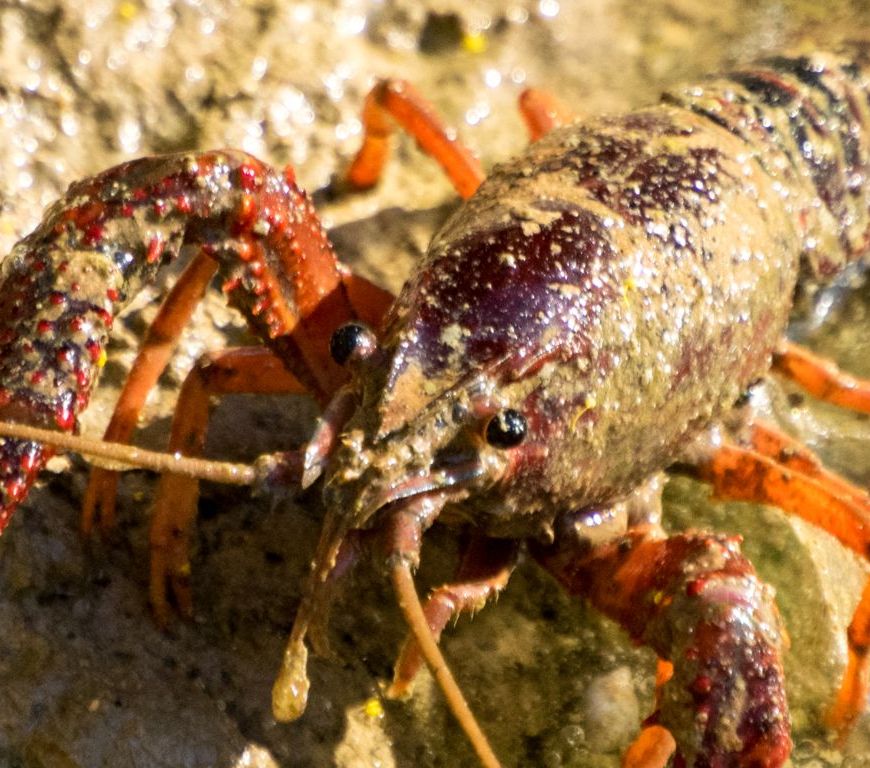
Feature image: Invasive Red swamp crayfish (Procambarus clarkii) © Alex Caruana Author Alex Caruana shares learnings from their failed attempts to eradicate invasive crayfish from the Fiddien Valley in Malta. Invasive alien crayfish, like the Red Swamp Crayfish (Procambarus clarkii), are a major threat to freshwater ecosystems all over the world. They have a significant impact on freshwater food webs, can carry diseases such as … Continue reading Learning from failure: attempted eradication of red swamp crayfish in Malta did not deliver

Explore Before You Restore: Enhancing ecosystem restoration with complex systems science

Sybryn L. Maes explains how they, alongside colleagues, developed an Explore Before You Restore framework, and illustrates how these concepts may impact restoration outcomes by influencing degradation and recovery trajectories. To help restore ecosystems, we, a group of international experts in resilience & restoration, propose using a new framework called Explore Before You Restore (EBYR) throughout the restoration project cycle. Even though there are international, … Continue reading Explore Before You Restore: Enhancing ecosystem restoration with complex systems science

Linking research and action: protecting seabirds in the face of climate change

In their latest research, Henry Hakkinen and colleagues explore how existing knowledge can be brought together in a pressure-state-response framework that connects climate change ecology, conservation evidence assessments and management. The impacts of human activities on ecosystems and natural resources across the world are well known, and now extend to nearly every ecosystem on Earth. Given the scale and severity of human-driven impacts on the … Continue reading Linking research and action: protecting seabirds in the face of climate change