Come migliorare la stima dell’abbondanza locale dei pesci costieri del Mediterraneo

Stimare quanti pesci vivono nelle aree costiere è fondamentale per proteggere gli ecosistemi marini e gestire le risorse in modo sostenibile. In questo studio, mettiamo in evidenza che il DNA presente nell’acqua di mare può aiutare a stimare meglio l’abbondanza dei pesci. Infatti, contare i pesci non è sempre facile. I metodi tradizionali, come quelli basati su catture di pesca, possono essere costosi, distruttivi o … Continue reading Come migliorare la stima dell’abbondanza locale dei pesci costieri del Mediterraneo

Mejorando las estimaciones de la abundancia de los peces costeros del Mediterráneo

Conocer cuántos peces hay en nuestras costas es esencial para proteger los ecosistemas marinos y asegurar una gestión sostenible de los recursos. En este estudio, demostramos que el ADN que hay en agua de mar puede ser una herramienta clave para ayudar a predecir mejor la abundancia de dichos peces. Contar peces no siempre es tarea fácil. Los métodos tradicionales, como la pesca, pueden ser … Continue reading Mejorando las estimaciones de la abundancia de los peces costeros del Mediterráneo

Comment mieux estimer l’abondance locale des poissons côtiers de Méditerranée

Estimer combien de poissons vivent dans les zones côtières est essentiel pour protéger les écosystèmes marins et gérer durablement les ressources. Dans cette étude, nous montrons que l’ADN présent dans l’eau de mer peut aider à mieux prédire l’abondance des poissons. En effet, compter les poissons n’est pas toujours simple. Les méthodes classiques, comme les captures de pêche, peuvent être coûteuses, destructrices ou difficiles à … Continue reading Comment mieux estimer l’abondance locale des poissons côtiers de Méditerranée

How to better estimate local abundance of Mediterranean coastal fish

Estimating how many fish live in coastal areas is essential for protecting marine ecosystems and managing resources sustainably. In this study, we show that DNA present in seawater can help better predict fish abundance. Indeed, counting fish is not always easy. Traditional methods, such as fishing catches, can be costly, destructive, or difficult to implement in certain protected or dangerous areas. A recent method involves … Continue reading How to better estimate local abundance of Mediterranean coastal fish

Andrea Radici: Looking for winners and losers of marine resources management

Shortlisted for the 2023 Southwood Prize Andrea Radici talks us through his team’s development of a comprehensive metapopulation framework, which provides a tool for assessing area-based management measures aimed at improving fisheries outcomes and describing the spatial distribution of costs and benefits. This can help guide effective spatially-distributed management. Ecosystems and mathematics In Chapter 151 of The Curious Incident of the Dog in the Night-Time, … Continue reading Andrea Radici: Looking for winners and losers of marine resources management

Rewilding the sea

Interest in rewilding the land has boomed in recent years, especially after the success of the rewilded Knepp Estate in England. But what about rewilding the sea? Esther Brooker tells us about her research on marine rewilding. In the UK, the Knepp Estate has sought to lead the way on rewilding, turning an intensively farmed area over to nature. What does rewilding look like in … Continue reading Rewilding the sea

Long-term Monitoring: The key to unlocking effective Marine Protected Area Management?

Christopher Honeyman talks us through recently published work which compared three Marine Protected Area (MPA) monitoring techniques, along with colleagues. Interestingly, each technique was shown to survey distinct groundfish community assemblages with varying levels of species diversity and richness. Therefore, combining multiple techniques may better allow managers to create the most comprehensive, effective and inclusive MPA monitoring regimes. A global phenomenon In response to human-caused … Continue reading Long-term Monitoring: The key to unlocking effective Marine Protected Area Management?

Modelling spatial variation in an exploited species across marine reserve boundaries

In their new study, Benn Hanns and Nick Shears evaluate common modelling assumptions used to assess the extent of spill-over and edge effects of marine species from protected-areas. Their findings highlight the potential for erroneous conclusions about these phenomena when inappropriate modelling strategies are used. Species dynamics in marine reserves Increases in exploited species within marine reserves can benefit adjacent fished areas as individuals move … Continue reading Modelling spatial variation in an exploited species across marine reserve boundaries

Habitat selection modelling reveals sea turtles use protected areas in greater proportion to their availability

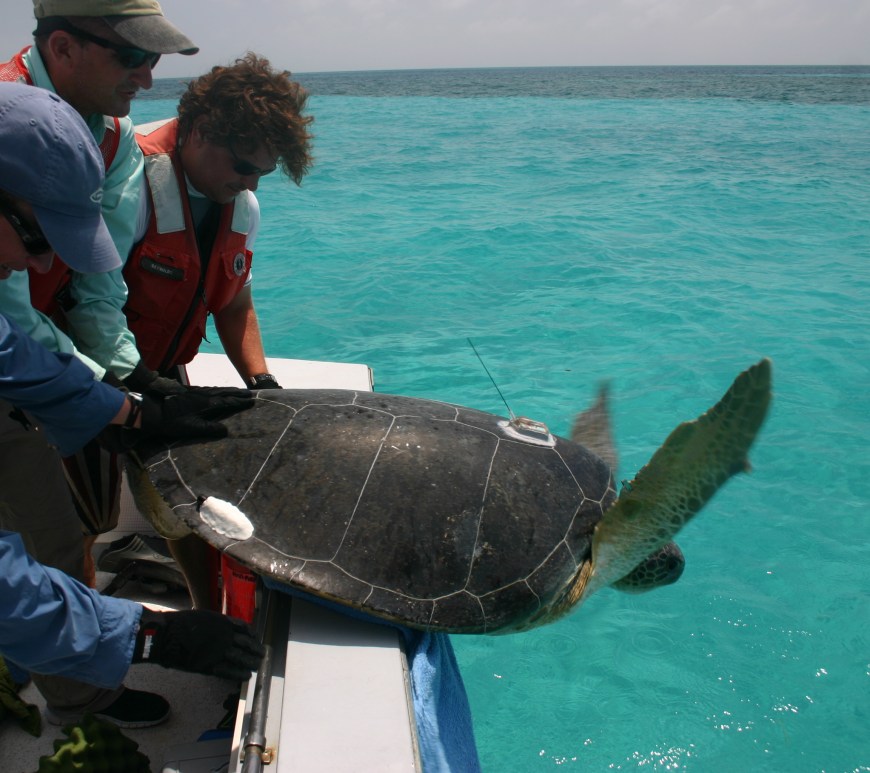
Marine Protected Areas (MPAs) are designated regions to help conserve wildlife but how are they used by the species they protect? In their latest research, Kelsey Roberts and colleagues evaluate the use of these protected areas by sea turtles to help inform better design and management of MPAs. Scientists agree that area-based conservation efforts are key to preserving biodiversity and ecosystems, as well as ocean-based … Continue reading Habitat selection modelling reveals sea turtles use protected areas in greater proportion to their availability

Protected high-value reefs and movement pathways improve conservation of reef sharks

New research from Gerardo Martín and colleagues looks at how we might support shark species if protected areas are multi-use and still open to fishing. The key is focusing on reefs preferred by sharks and developing our knowledge of shark movement pathways. Here the authors share their work and look at how we can improve species conservation while still supporting communities that depend on coral … Continue reading Protected high-value reefs and movement pathways improve conservation of reef sharks